‘A big, historic day’: Quebecers in long-term care homes start getting COVID vaccine

Advertisement

Advertise with us

MONTREAL - It was declared a "historic" day in Quebec as the first COVID-19 vaccines were given Monday to residents of two long-term care homes in the province.

Read this article for free:


By clicking the button above, an account will be created and you will begin to receive some of our recommended newsletters. You may opt out of any newsletter by visiting your Email and Communication Preferences page or by clicking "unsubscribe" at the bottom of any email.

or

Already have an account? Log in here »

To continue reading, please subscribe:

Digital Subscription

One year of digital access for only $1.44 a week*

  • Enjoy unlimited reading on winnipegfreepress.com
  • Read the E-Edition, our digital replica newspaper
  • Access News Break, our award-winning app
  • Play interactive puzzles

*Billed as $5.77 plus GST every four weeks. After 52 weeks, price increases to the regular rate of $19.95 plus GST every four weeks. Offer available to new and qualified returning subscribers only. Cancel any time.

To continue reading, please subscribe:

Add Free Press access to your Brandon Sun subscription for only an additional

$1 for the first 4 weeks*

  • Enjoy unlimited reading on winnipegfreepress.com
  • Read the E-Edition, our digital replica newspaper
  • Access News Break, our award-winning app
  • Play interactive puzzles
Start now

*Your next Brandon Sun subscription payment will increase by $1.00 and you will be charged $17.95 plus GST for four weeks. After four weeks, your payment will increase to $24.95 plus GST every four weeks.

Hey there, time traveller!
This article was published 14/12/2020 (2148 days ago), so information in it may no longer be current.

MONTREAL – It was declared a “historic” day in Quebec as the first COVID-19 vaccines were given Monday to residents of two long-term care homes in the province.

Gloria Lallouz, a resident of Montreal’s Maimonides Geriatric Centre, said she felt “fabulous” after receiving the first Pfizer-BioNTech vaccination in the city.

The stakes, the 78-year-old said, couldn’t be higher.
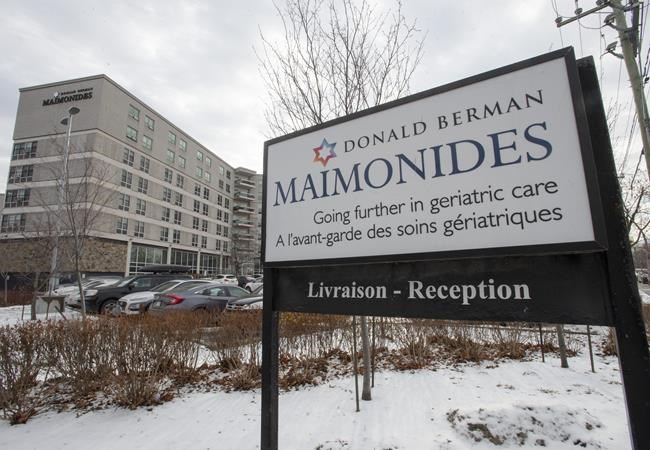
The Maimonides CHSLD is seen Friday, December 11, 2020 in Montreal. The long term care facility is slated to be one of the first in Quebec to administer the Pfizer-BioNTech COVID-19 vaccine.THE CANADIAN PRESS/Ryan Remiorz

“It’s my life,” Lallouz told reporters outside the long-term care home, which received the first batches of the vaccine Monday morning. “It gives me the opportunity to see my family, to see my friends.” She added that she is eager for others to follow suit.

“We’re not going to be able to live properly until everybody gets a vaccination,” Lallouz said.

Provincial health officials began administering the vaccine to residents and staff at Maimonides and the Saint-Antoine residence in Quebec City after receiving a shipment Sunday night. The remaining doses from the first shipment will go to health-care workers from other facilities.

Gisele Levesque, an 89-year-old living in the Saint-Antoine care home, was the first Quebecer to receive a COVID-19 vaccination, Premier Francois Legault announced on Twitter. Quebec deputy premier Genevieve Guilbault later told reporters that Levesque’s 11:25 a.m. vaccination also made her the first person in Canada to get the shot.

“It gives us hope, concrete hope,” Guilbault said about the vaccine rollout.

The Quebec City health authority said it received 3,000 doses of the vaccine Monday morning and that 220 Saint-Antoine residents and 400 staff will be the first vaccinated. In Montreal, the health authority expected to receive 1,950 initial doses.

“This is the first ray of light that we foresee after a very long period of darkness, and if we want to make the most of that hope, we have to remain very, very, very careful,” Guilbault said.

That was echoed by Quebec Health Minister Christian Dube, who urged continued caution despite what he said was “a big, historic day for Quebec.”

“You know, they say that it’s a big marathon that we’ve been doing for nine months. We’re starting to see … the light at the end of the tunnel,” he said during a news conference outside Maimonides.

Speaking alongside Dube, federal Health Minister Patty Hajdu said she was emotional seeing the first people get vaccinated. “I see this as the first step forward into the light,” Hajdu said.

The first vaccines were distributed as Quebec reported 1,620 new COVID-19 cases Monday and 25 more deaths linked to the novel coronavirus. The province has reported a total of 165,535 infections and 7,533 deaths since the pandemic began.

Quebec is expected to announce new COVID-related restrictions this week. In an interview on Montreal radio station 98.5 FM Monday, Legault said the holiday period presents an opportunity to get the pandemic under control.

But, he said, his government won’t go as far in closing the province as it did during the first wave in the spring.

The first doses of the Pfizer-BioNTech COVID-19 vaccine are delivered to the Maimonides CHSLD, Monday, December 14, 2020 in Montreal. The long-term care facility is slated to be one of the first in Canada to administer the vaccine.THE CANADIAN PRESS/Ryan Remiorz

“Construction is closed for two weeks during the holiday break,” Legault said. “Schools are closed for two weeks; a lot of businesses are closed for at least one week. Do we need to close shops for a certain time? It’s there we are looking at.

For the families and loved ones of those set to be inoculated, the vaccine brought a much-needed sense of relief after months of anxiety.

Kitra Cahana, whose 67-year-old father Rabbi Ronnie Cahana is quadriplegic and has lived at Maimonides since 2012, said she wasn’t sure whether her father would receive the vaccine on Monday or Tuesday. But she said the family was “so thrilled” to see the vaccinations begin.

Kitra said a recent COVID-19 outbreak at Maimonides had been extremely stressful. “It really felt like the building was on fire, and my father was in the middle of it, and there was no way to rescue him,” she said in an interview. “To hear that he’s going to get vaccinated, it really feels like a little bit of light in the darkness.”

That feeling was shared by Brenda Sachin, whose mother, Mildred, is also a resident at Maimonides. Sachin said she was happy the facility was among the first places to get the vaccine. But she said she will worry about residents during the 21-day period between when they receive the first and second doses of the vaccine.

She also said she had concerns some staff members would not get vaccinated. “I know there’s some that absolutely will, but there’s always going to be people that won’t get vaccinated,” Sachin said. “The quicker everybody gets vaccinated, the more relaxed we will all be.”

Health-care workers in Quebec can choose whether or not to receive the COVID-19 vaccine. Dube said Monday it was too early to say how many would opt out, adding that he wasn’t overly concerned.

“We’ve always said that we wanted to work on a voluntary basis with our employees. I would let a few hours go by and then I think we’ll see how things will evolve,” Dube said.

This report by The Canadian Press was first published Dec. 14, 2020.

Report Error Submit a Tip

More Stories

Teemu Selanne living the good life in southern California

Mike McIntyre 19 minute read Preview

Teemu Selanne living the good life in southern California

Mike McIntyre 19 minute read Friday, Oct. 15, 2021

LAGUNA BEACH — He likes his coffee black. His steak “medium rare plus.” And he’s an extremely generous pour, especially when it comes to a Moscow mule.

His left knee is giving him all sorts of trouble these days, he’s admittedly almost always running behind schedule and his biggest pride and joy are his four children, who keep him and his wife Sirpa hopping with their numerous athletic pursuits.

He is Teemu Selanne, the beloved Winnipeg Jets legend who, you’ll be happy to know, is still living the good life just a stone’s throw from the Pacific Ocean in this little piece of southern California paradise.

Despite being nearly eight years removed from the end of a Hall of Fame hockey career, the Finnish Flash remains a big deal around here. That was clear as we sat down earlier this week for an exclusive chat inside “Selanne’s Steak Tavern” — a high-end eatery he owns that sits along the stunning Pacific Coast Highway.

Read
Friday, Oct. 15, 2021

Newspaper websites display fewer stories, more curation

5 minute read Tuesday, Feb. 10, 2026

A city subcommittee was provided with a routine update on the status of an ongoing administrative process Thursday, in accordance with standard reporting procedures.

Letters, Oct. 31

6 minute read 2:01 AM CDT

Civic election a missed opportunity

The outcome of the latest municipal election in Winnipeg is nothing short of baffling. The decline of what was once a proud, beautiful prairie hub is impossible to ignore.

Winnipeg is rapidly sliding into a state of structural and social dilapidation, yet voters have inexplicably chosen to hand incumbent Mayor Scott Gillingham a second term. The decision smells of complacency, and sadly, it represents a massive missed opportunity for real urban renewal.

Walking through downtown Winnipeg today is an exercise in heartbreak. A city centre that should be a bustling economic and cultural core has instead transformed into an absolute eyesore. Encampments and tents are permitted to dot the heart of the city. Streets that used to thrive are now dominated by the tragic, visible reality of severe addiction, with individuals wandering and staggering through public spaces without adequate intervention or care.

RRC Polytech program cuts take bite out of hospitality, tourism sector

Maggie Macintosh 4 minute read Preview

RRC Polytech program cuts take bite out of hospitality, tourism sector

Maggie Macintosh 4 minute read Saturday, May. 2, 2026

Manitoba’s tourism industry is bracing for the disappearance of hospitality training programs — once-popular courses among international students.

Citing budgetary challenges related to a shift in federal immigration policy, Red River College Polytechnic is scrapping 11 programs and scaling back three others in 2026-27. Its hospitality business management diploma is one of seven permanent casualties.

The announcement, while unsurprising, is but the latest blow to a sector trying to “build back the workforce” in the wake of the COVID-19 pandemic, said Michael Juce, president of the Manitoba Hotel Association.

“Are people going to go outside of Manitoba for training? And if they leave, are they going to come back?” Juce said, adding that rural hotels in particular are already grappling with staffing shortages.

Read
Saturday, May. 2, 2026

SNC planned U.S. move if no deal: documents

Jordan Press and Christopher Reynolds, The Canadian Press 5 minute read Preview

SNC planned U.S. move if no deal: documents

Jordan Press and Christopher Reynolds, The Canadian Press 5 minute read Thursday, Mar. 28, 2019

OTTAWA - SNC-Lavalin warned federal prosecutors last fall about a possible plan to split the company in two, move its offices to the United States and eliminate its Canadian workforce if it didn't get a deal to avoid criminal prosecution, newly obtained documents show.

The documents, part of a PowerPoint presentation obtained by The Canadian Press, describe something called "Plan B" — what Montreal-based SNC might have to do if it can't convince the government to grant a so-called remediation agreement to avoid criminal proceedings in a fraud and corruption case related to projects in Libya.

Under that plan, SNC would move its Montreal headquarters and corporate offices in Ontario and Quebec to the U.S. within a year, cutting its workforce to just 3,500 from 8,717, before eventually winding up its Canadian operations.

“The government of Canada needs to weigh the public interest impact of the prosecution of SNC-Lavalin," the presentation reads.

Read
Thursday, Mar. 28, 2019

Defunding police ‘illogical step’: Pallister

Carol Sanders 5 minute read Preview

Defunding police ‘illogical step’: Pallister

Carol Sanders 5 minute read Tuesday, Jun. 9, 2020

Manitoba Premier Brian Pallister says he’s open to channelling justice funding to preventive programs, but questions whether defunding police is the best approach — warning there will always be criminals taking advantage of vulnerable people.

“I think the motivation that lies in frustrations of the actions of some police services — not necessarily here in Winnipeg exclusively, but elsewhere — is justifiable and understandable, and I get it,” Pallister said Tuesday, when asked to comment on the 30,000 signatures collected for a Justice 4 Black Lives Winnipeg petition calling for the abolition of the city police.

“But then moving to defunding police is, to me, an illogical step from that one. Don’t let your frustration lose your common sense... There’s a lot of people out there in vulnerable communities who depend on the police to protect them and make sure they’re safe from the action of criminals.”

There has been a widespread call to restructure police funding in the wake of George Floyd’s death May 25 in Minneapolis.

Read
Tuesday, Jun. 9, 2020