Yo ho ho and a bottle of… cake
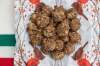
Trinidadian specialty, black cake, is today's cookie of the day

Advertisement
Read this article for free:
or
Already have an account? Log in here »
To continue reading, please subscribe:
Digital Subscription
One year of digital access for only $1.44 a week*
- Enjoy unlimited reading on winnipegfreepress.com
- Read the E-Edition, our digital replica newspaper
- Access News Break, our award-winning app
- Play interactive puzzles
*Billed as $5.77 plus GST every four weeks. After 52 weeks, price increases to the regular rate of $19.95 plus GST every four weeks. Offer available to new and qualified returning subscribers only. Cancel any time.
To continue reading, please subscribe:
Add Free Press access to your Brandon Sun subscription for only an additional
$1 for the first 4 weeks*
- Enjoy unlimited reading on winnipegfreepress.com
- Read the E-Edition, our digital replica newspaper
- Access News Break, our award-winning app
- Play interactive puzzles
*Your next Brandon Sun subscription payment will increase by $1.00 and you will be charged $17.95 plus GST for four weeks. After four weeks, your payment will increase to $24.95 plus GST every four weeks.
Read unlimited articles for free today:
or
Already have an account? Log in here »
Hey there, time traveller!
This article was published 12/12/2020 (2149 days ago), so information in it may no longer be current.
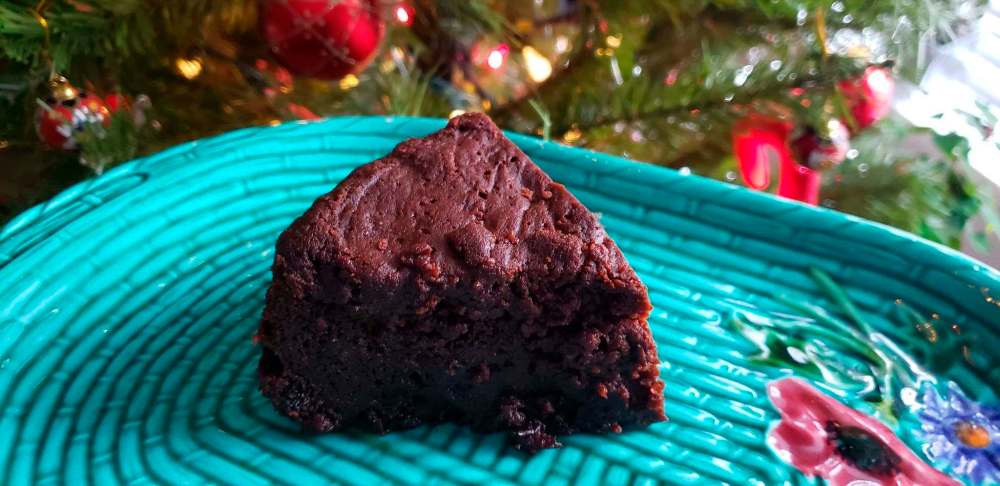
Today’s Christmas cookie isn’t a cookie at all, but actually a cake.
But this cake — some call it a rum cake and others call it a black cake — is as much a part of Christmas tradition in the Caribbean as a church service, gatherings with family and gifts under the tree.
That is certainly the case with Ave Dinzey’s family. She comes from Trinidad, and she provides with today’s recipe for the Free Press’s 12 Days of Christmas Cookies — Trini Black Cake.
“In Trinidad we were a British colony. The Brits who owned all the plantations, they brought their own Christmas traditions to the islands,” says the owner of Purple Hibiscus pop-up restaurant and catering service. “They brought the plum pudding with them and brought Christmas cakes. This is our version of it because we use rum, we don’t (so much) use brandy. It’s not quite an English plum pudding and it’s not like a fruitcake that people are used to in North America.”
“You can’t have Christmas or December in the Caribbean without black cake.”
There is a bit of a hitch, though. Dinzey’s recipe takes time — a lot of time. The fruits she uses, such as sultanas, raisins, prunes, currants and cherries, are soaked for weeks, if not months, in rum in a giant glass jar to make sure the cake gets its intense flavour.
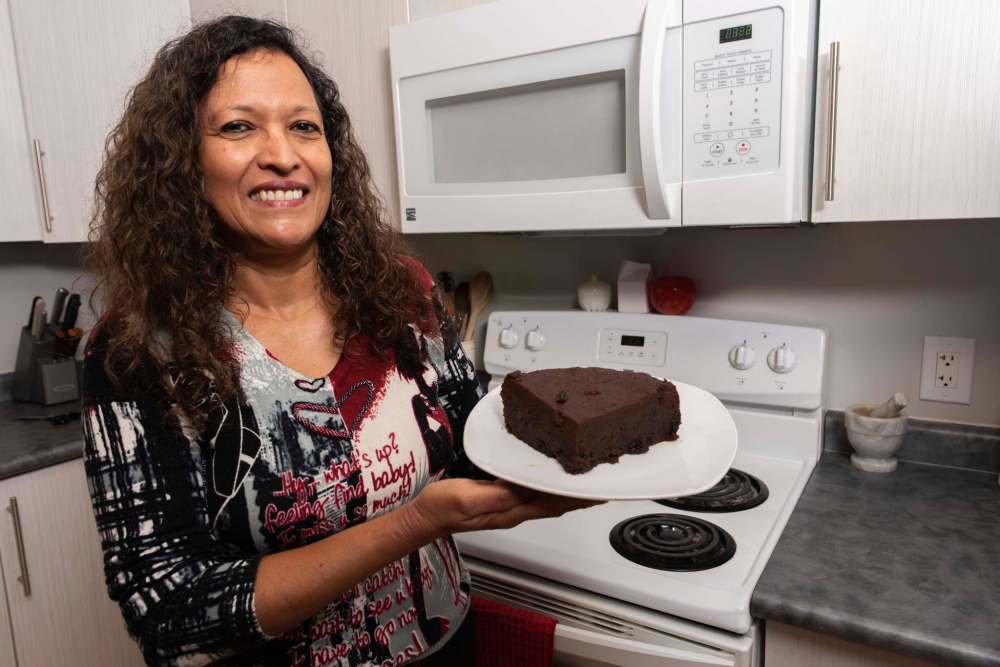
“I’ll do a batch (of fruit) and I’ll have it soaking for a year now in this rum concoction,” Dinzey says, adding she keeps a tight seal on the jar to prevent the rum from evaporating. “I don’t open it unless I need to add more fruit and if I add more fruit I add more rum.”
It sounds like a lot of rum, but she says not to worry, you’re not going to get tipsy from eating a slice of her black cake.
“When you bake it, of course all the alcohol evaporates. The flavour stays,” she says. “What I do is I add more rum when it’s baked, so it gets infused with even more rum.”
Many Caribbean islands have their own versions of black cake, but Dinzey says the use of burned sugar — she calls it liquid gold — is associated with recipes from Trinidad.
“In Jamaica, I haven’t seen anybody burning the sugar; I know in Trinidad that’s the thing you do,” she says. “We all have a sugar plantation history. Everyone has their own variation of the same recipe, but to me the final product is pretty similar. I enjoy their cake as much as mine.”
Dinzey immigrated to Canada as a youngster with her family in 1977. Her kids have become accustomed to Christmas in Winnipeg — where snow is a defining character — that a Christmas holiday to Trinidad was a bit of a shock for them, she says.
“After living in North America this long, you actually look forward to snow on Christmas Day. It’s really crazy,” she says. “We’ve taken the kids to Trinidad a few times for Christmas and they’ve been the most glum kids. I’m like, ‘What’s wrong with you guys.’ and they say, ‘There’s no snow!’ They couldn’t compute Christmas without snow.
“The longer I live here I kind of appreciate that myself.”
Trini Black Cake, a.k.a Caribbean Rum Cake
For the fruit mix
Ingredients
750 ml rum (3 cups)
250 ml (1 cup) cherry brandy
450 g (1 pound) each of: sultanas, raisins, seedless prunes, currants mixed peel and cherries.
Mix all together and let marinate for a minimum of 3 weeks.
For the cake
Browning (a burned-sugar mixture, available at most ethnic grocery stores)
8 large eggs
5 ml (1 tsp) vanilla extract
5 drops Angostura bitters
625 ml (2½ cups) all-purpose flour
10 ml (2 tsp) baking powder
1 ml (¼ tsp) ground cinnamon
2.5 ml (½ tsp) allspice.
450 g (1 lb) brown sugar.
450 g (1 lb) unsalted butter.
Add baking powder, ground cinnamon and all spice to flour.
Cream butter and sugar.
Mix in eggs, two at a time.
Add vanilla extract and bitters and mix.
Drain the marinating fruit and add three to four cups of fruit, or to your liking.
Add browning to get a nice dark colour.
Slowly fold in flour and spices; add in three parts.
Add to buttered and floured cake pan.
Bake at 150 c (300 F) for approximately two hours or until cooked.
As soon as you remove from the oven, brush the top with rum.
Let cool completely before removing from the pan, then keep in an airtight container. It’s best to wait three to four days before serving.
Enjoy!
alan.small@freepress.mb.ca
Twitter:@AlanDSmall
Alan Small has been a journalist at the Free Press for more than 22 years in a variety of roles, the latest being a reporter in the Arts and Life section.
Our newsroom depends on a growing audience of readers to power our journalism. If you are not a paid reader, please consider becoming a subscriber.
Our newsroom depends on its audience of readers to power our journalism. Thank you for your support.
Related Articles
Sweet treat journey wraps up at cookie café Indulging in classics just how holidays roll



Advertisement Advertise With Us
Advertisement Advertise With Us