Years of research laid groundwork for speedy COVID-19 shots

Advertisement

Advertise with us

How could scientists race out COVID-19 vaccines so fast without cutting corners? A head start helped -- over a decade of behind-the-scenes research that had new vaccine technology poised for a challenge just as the coronavirus erupted.

Read this article for free:


By clicking the button above, an account will be created and you will begin to receive some of our recommended newsletters. You may opt out of any newsletter by visiting your Email and Communication Preferences page or by clicking "unsubscribe" at the bottom of any email.

or

Already have an account? Log in here »

To continue reading, please subscribe:

Digital Subscription

One year of digital access for only $1.44 a week*

  • Enjoy unlimited reading on winnipegfreepress.com
  • Read the E-Edition, our digital replica newspaper
  • Access News Break, our award-winning app
  • Play interactive puzzles

*Billed as $5.77 plus GST every four weeks. After 52 weeks, price increases to the regular rate of $19.95 plus GST every four weeks. Offer available to new and qualified returning subscribers only. Cancel any time.

To continue reading, please subscribe:

Add Free Press access to your Brandon Sun subscription for only an additional

$1 for the first 4 weeks*

  • Enjoy unlimited reading on winnipegfreepress.com
  • Read the E-Edition, our digital replica newspaper
  • Access News Break, our award-winning app
  • Play interactive puzzles
Start now

*Your next Brandon Sun subscription payment will increase by $1.00 and you will be charged $17.95 plus GST for four weeks. After four weeks, your payment will increase to $24.95 plus GST every four weeks.

Hey there, time traveller!
This article was published 07/12/2020 (2153 days ago), so information in it may no longer be current.

How could scientists race out COVID-19 vaccines so fast without cutting corners? A head start helped — over a decade of behind-the-scenes research that had new vaccine technology poised for a challenge just as the coronavirus erupted.

“The speed is a reflection of years of work that went before,” Dr. Anthony Fauci, the top U.S. infectious disease expert, told The Associated Press. “That’s what the public has to understand.”

Creating vaccines and having results from rigorous studies less than a year after the world discovered a never-before-seen disease is incredible, cutting years off normal development. But the two U.S. frontrunners are made in a way that promises speedier development may become the norm — especially if they prove to work long-term as well as early testing suggests.
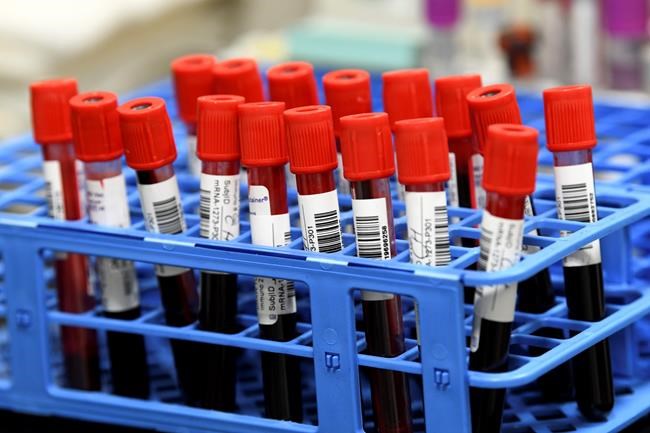
FILE - In this Wednesday, Sept. 2, 2020 file photo, blood samples from volunteers participating in the National Institutes of Health-funded Moderna COVID-19 vaccine third phase clinical trail wait to be processed in a lab? at the University of Miami Miller School of Medicine in Miami. Creating vaccines and properly testing them less than a year after the world discovered a never-before-seen disease is incredible. But the two U.S. frontrunners are made in a way that promises speedier development may become the norm -- especially if they prove to work long-term as well as they have in early testing. (AP Photo/Taimy Alvarez)

“Abject giddiness,” is how Dr. C. Buddy Creech, a Vanderbilt University vaccine expert, described scientists’ reactions when separate studies showed the two candidates were about 95% effective.

“I think we enter into a golden age of vaccinology by having these types of new technologies,” Creech said at a briefing of the Infectious Diseases Society of America.

Both shots — one made by Pfizer and BioNTech, the other by Moderna and the National Institutes of Health — are so-called messenger RNA, or mRNA, vaccines, a brand-new technology. U.S. regulators are set to decide this month whether to allow emergency use, paving the way for rationed shots that will start with health workers and nursing home residents.

Billions in company and government funding certainly sped up vaccine development — and the unfortunately huge number of infections meant scientists didn’t have to wait long to learn the shots appeared to be working.

But long before COVID-19 was on the radar, the groundwork was laid in large part by two different streams of research, one at the NIH and the other at the University of Pennsylvania — and because scientists had learned a bit about other coronaviruses from prior SARS and MERS outbreaks.

“When the pandemic started, we were on a strong footing both in terms of the science” and experience handling mRNA, said Dr. Tal Zaks, chief medical officer of Massachusetts-based Moderna.

Traditionally, making vaccines required growing viruses or pieces of viruses — often in giant vats of cells or, like most flu shots, in chicken eggs — and then purifying them before next steps in brewing shots.

The mRNA approach is radically different. It starts with a snippet of genetic code that carries instructions for making proteins. Pick the right virus protein to target, and the body turns into a mini vaccine factory.

“Instead of growing up a virus in a 50,000-litre drum and inactivating it, we could deliver RNA and our bodies make the protein, which starts the immune response,” said Penn’s Dr. Drew Weissman.

Fifteen years ago, Weissman’s lab was trying to harness mRNA to make a variety of drugs and vaccines. But researchers found simply injecting the genetic code into animals caused harmful inflammation.

Weissman and a Penn colleague now at BioNTech, Katalin Kariko, figured out a tiny modification to a building block of lab-grown RNA that let it slip undetected past inflammation-triggering sentinels.

“They could essentially make a stealth RNA,” said Pfizer chief scientific officer Dr. Philip Dormitzer.

Other researchers added a fat coating, called lipid nanoparticles, that helped stealth RNA easily get inside cells and start production of the target protein.

Meanwhile at the NIH, Dr. Barney Graham’s team figured out the right target — how to use the aptly named “spike” protein that coats the coronavirus to properly prime the immune system.

The right design is critical. It turns out the surface proteins that let a variety of viruses latch onto human cells are shape-shifters — rearranging their form before and after they’ve fused into place. Brew a vaccine using the wrong shape and it won’t block infection.

“You could put the same molecule in one way and the same molecule in another way and get an entirely different response,” Fauci explained.

That was a discovery in 2013, when Graham, deputy director of NIH’s Vaccine Research Center, and colleague Jason McLellan were investigating a decades-old failed vaccine against RSV, a childhood respiratory illness.

They homed in on the right structure for an RSV protein and learned genetic tweaks that stabilized the protein in the correct shape for vaccine development. They went on to apply that lesson to other viruses, including researching a vaccine for MERS, a COVID-19 cousin, although it hadn’t gotten far when the pandemic began.

“That’s what put us in a position to do this rapidly,” Graham told the AP in February before the NIH’s vaccine was first tested in people. “Once you have that atomic-level detail, you can engineer the protein to be stable.”

Likewise, Germany’s BioNTech in 2018 had partnered with New York-based Pfizer to develop a more modern mRNA-based flu vaccine, giving both companies some early knowledge about how to handle the technology.

“This was all brewing. This didn’t come out of nowhere,” said Pfizer’s Dormitzer.

Last January, shortly after the new coronavirus was reported in China, BioNTech CEO Ugur Sahin switched gears and used the same method to create a COVID-19 vaccine.

Moderna also was using mRNA to develop vaccines against other germs including the mosquito-borne Zika virus — research showing promise but that wasn’t moving rapidly since the Zika outbreak had fizzled.

Then at the NIH, Graham woke up on Saturday Jan. 11 to see Chinese scientists had shared the genetic map of the new coronavirus. His team got to work on the right-shaped spike protein. Days later, they sent Moderna that recipe — and the vaccine race was on.

___

The Associated Press Health and Science Department receives support from the Howard Hughes Medical Institute’s Department of Science Education. The AP is solely responsible for all content.

Report Error Submit a Tip

More Stories

Multi-year budget to force councillors, bureaucrats to focus on the big picture

Aldo Santin 12 minute read Preview

Multi-year budget to force councillors, bureaucrats to focus on the big picture

Aldo Santin 12 minute read Tuesday, Feb. 26, 2019

City hall is putting the final touches on the 2019 preliminary budget -- but the real tough job will start after that.

The city is committed to developing a four-year budget beginning with 2020, and having it in place by the end of this year.

It's a process that is filled with uncertainties, trying to balance four successive annual budgets at the same time, using assumptions on revenues and expenses that can change without notice: a provincial government that has frozen funding to city hall at 2016 levels and is reluctant to disclose annual funding commitments or share in unexpected revenues; erratic fuel prices; a possible change in government in Ottawa, which could bring new spending priorities. And in the middle of that four-year span, another civic election where new members of council may have other priorities than those laid out by the current crop of office holders.

Municipal governments across Manitoba are required to approve their annual operating and capital budgets by the end of March each year. But the criticism of decision-making at city hall has been that all the decisions are made on a year-to-year basis, keeping voters happy with an eye on the next election.

Read
Tuesday, Feb. 26, 2019

Three’s company for new netminder Daws

Mike McIntyre 6 minute read Preview

Three’s company for new netminder Daws

Mike McIntyre 6 minute read 5:09 PM CDT

TAMPA — Nico Daws is still trying to catch his breath.

An unexpected piece of the Connor Hellebuyck blockbuster. A chaotic crash course in his latest hockey home. Joining a fragile club mired in a prolonged losing streak. And now, hitting the road for four tough tests, including one where he will find himself as the last line of defence.

It’s been quite the ride for the newest Winnipeg Jets netminder, who took some time Thursday morning to reflect on the experience.

“A whirlwind of a week. I haven’t even really had time to sit down and digest it,” said Daws.

Read
5:09 PM CDT

Hellebuyck’s numbers down, but problems go beyond crease

Andrew Berkshire 6 minute read Preview

Hellebuyck’s numbers down, but problems go beyond crease

Andrew Berkshire 6 minute read Friday, Dec. 7, 2018

After hitting a bit of a skid in the last couple weeks of November when they lost four of six games, the Jets have turned it around to win four straight heading into Friday’s matchup against the St. Louis Blues, averaging over four goals per game in the process.

They’ve needed that goal support because, outside of Tuesday’s win over the Islanders, they have allowed three or more against in seven of their last nine games. As it is any time a team allows a lot of goals over a short stretch, many are looking straight at Connor Hellebuyck and expecting him to shut the door, going forward.

Goaltending isn’t that simple, and as I mentioned in mid-November, there were signs this season that Hellebuyck’s performance so far this season was as good and in some ways superior to last season, despite the drop in save percentage.

Things change as time goes on though, and because Hellebuyck’s save percentage since then is an unimpressive 87.8 per cent, it’s probably worthwhile to look at his overall numbers to see what’s going on.

Read
Friday, Dec. 7, 2018

Brian Bowman wins mayoral battle

Aldo Santin and Mary Agnes Welch 6 minute read Preview

Brian Bowman wins mayoral battle

Aldo Santin and Mary Agnes Welch 6 minute read Thursday, Oct. 23, 2014

In the end, it wasn’t even close.

A mayoral race that was supposed to be a head-to-head battle between privacy lawyer Brian Bowman and former NDP MP and MLA Judy Wasylycia-Leis turned into a rout on election night. Wasylycia-Leis, the experienced politician, had held what looked like an unassailable lead for months, but Bowman, the outsider who promised Winnipeggers a better, prosperous future, chipped doggedly away at it.

“I’m excited to tell you that positive change is coming to city hall,” Bowman told roaring supporters at the Inn At The Forks after making his way into the small ballroom accompanied by his wife and two young sons.

He said he hadn’t expecting such a landslide victory, but had believed that the campaign was building momentum.

Read
Thursday, Oct. 23, 2014

Director Schrader returns to silver screen with complex view of religion and belief

Alison Gillmor 4 minute read Preview

Director Schrader returns to silver screen with complex view of religion and belief

Alison Gillmor 4 minute read Thursday, Jun. 14, 2018

Bleak, wintry and rigorously controlled — until it’s not — this Book of Job-like drama from American filmmaker Paul Schrader looks at the challenges of faith.

The 71-year-old Schrader, known for scripting four Martin Scorsese films (including Taxi Driver and Raging Bull) and for directing his own (including American Gigolo, Affliction and Auto Focus), grew up in a strict Calvinist home — he famously did not see a film until he was 17 — and has always been drawn to stories of agonizing and uncertain redemption.

As the Rev. Toller (Ethan Hawke) wrestles with what it means to lead a righteous life in our badly broken world, his spiritual fate remains in doubt. It is certain, however, that First Reformed marks a cinematic rebirth for Schrader after recent disasters like The Canyons and Dog Eat Dog. Serious, complex and moving, this is not a perfect film, but even its flaws are powerful.

Toller is a solitary man who has come to the ministry late in life, after a family tragedy and a failed marriage. First Reformed, a historic church in upstate New York that was once a stop on the Underground Railroad, has since been reduced to an austerely beautiful tourist shop, more of a museum than a place of worship.

Read
Thursday, Jun. 14, 2018

Pair preps for weekend test in Kelowna

Laurie Nealin 5 minute read Preview

Pair preps for weekend test in Kelowna

Laurie Nealin 5 minute read 6:40 PM CDT

KELOWNA, B.C. — Their first spin around the ice at Skate Canada International on Thursday was a mix of business and pleasure for Winnipeg pair skaters Ava Kemp and Yohnatan Elizarov.

Job one for the practice session was to get accustomed to the size and feel of the ice surface at Propsera Place while test-driving the lifts, throws and jumps they’ll perform Friday in their senior ISU Grand Prix competition debut.

“The big thing is the patterns (skating into elements) because these boards are very narrow but very long — it’s NHL size — so when you’re setting up elements you need to make sure you’re using the full length or else you’re going to run into the boards,” Elizarov explained in a post-skate chat with media.

“The second thing is the ice which is sometimes really soft or really hard. This ice is really soft.”

Read
6:40 PM CDT