Opposition leaders say Liberals’ vaccine rollout is undermining public trust
Advertisement
Read this article for free:
or
Already have an account? Log in here »
To continue reading, please subscribe:
Digital Subscription
One year of digital access for only $1.44 a week*
- Enjoy unlimited reading on winnipegfreepress.com
- Read the E-Edition, our digital replica newspaper
- Access News Break, our award-winning app
- Play interactive puzzles
*Billed as $5.77 plus GST every four weeks. After 52 weeks, price increases to the regular rate of $19.95 plus GST every four weeks. Offer available to new and qualified returning subscribers only. Cancel any time.
To continue reading, please subscribe:
Add Free Press access to your Brandon Sun subscription for only an additional
$1 for the first 4 weeks*
- Enjoy unlimited reading on winnipegfreepress.com
- Read the E-Edition, our digital replica newspaper
- Access News Break, our award-winning app
- Play interactive puzzles
*Your next Brandon Sun subscription payment will increase by $1.00 and you will be charged $17.95 plus GST for four weeks. After four weeks, your payment will increase to $24.95 plus GST every four weeks.
Read unlimited articles for free today:
or
Already have an account? Log in here »
Hey there, time traveller!
This article was published 07/12/2020 (2157 days ago), so information in it may no longer be current.
OTTAWA – Opposition political leaders blasted the Liberal government for its piecemeal approach to a plan to get COVID-19 vaccines to Canadians, saying it risks people’s confidence in the science and their ability to have hope for their own futures.
Conservative Leader Erin O’Toole blamed people’s fear of the safety of the vaccine — embodied in a petition sponsored by one of his own MPs — on the Liberals’ approach, while Green party Leader Annamie Paul said it ought to be public health leaders, not politicians, providing what details exist.
NDP Leader Jagmeet Singh acknowledged provincial premiers also share some of the blame, given their control over health care, but the federal Liberal government has a responsibility to provide an overarching plan.
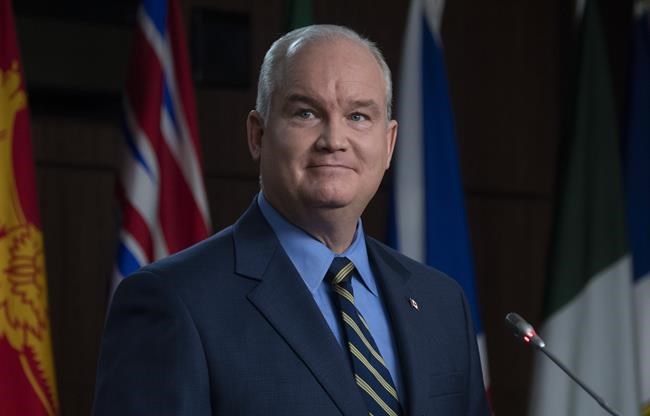
“The lack of planning has made it so Canadians are not as confident as they otherwise would be,” Singh said.
Prime Minister Justin Trudeau stunned his rivals Monday by announcing as many as 249,000 doses of Pfizer’s COVID-19 vaccine, which has not yet been approved by Health Canada, will be in the country by the end of December.
It’s possible that some Canadians will start being vaccinated as early as next week, although there is still limited information available on where the first shipments will go and who will be first to get vaccinated.
The news came after Trudeau had been warning in recent weeks that Canadians could expect to see people in other countries be vaccinated first, and it was unclear how quickly vaccines would arrive in Canada.
A lack of detail has inflamed political debate on the subject, and pressure had been mounting on the Liberals to provide as much information as governments in other countries, like Australia, which have published detailed rollout strategies.
The Conservatives have a motion before Parliament, due to be voted upon later Monday, demanding details be presented in a robust way to Parliament.
That the Liberals haven’t been transparent throughout is why some have no confidence in Health Canada, nor Canada’s top public health officials, O’Toole said.
“There is some vaccine hesitancy out in the public at large. That’s why we need to show: Here’s the plan. Here’s the testing, here’s the clinical data. Here’s its safe and effective use. Here’s how we’re going to keep it at -70 (C). And here’s the likely time frame you will receive it,” O’Toole said.
“We should be telling Canadians that. Why the government’s being so secretive, it’s actually adding to a lack of confidence in the process.”
O’Toole has been under pressure to demonstrate his own faith in health guidance, after a petition was sponsored by Conservative MP Derek Sloan, which, among other things says the approval processes are being rushed and standard protocols are being skipped, meaning the vaccine amounts to “human experimentation.”
MPs are not required to agree with the contents of petitions they sponsor, though they are not under formal obligation to table the ones they receive in Parliament. Sloan has said he has not read the entire petition.
“I don’t agree with the petition that was introduced,” O’Toole said Monday.
O’Toole said he appreciates, believes in and supports the work done by public health officials and civil servants through the pandemic.
“The poor decisions and the slow responses is the politicians and I will hold them to account,” he said.
The Green party’s Paul said Monday the government needs to do everything it can to take politics out of the equation when it comes to vaccine procurement and distribution.
She suggested the Liberals should have waited for Health Canada to formally approve a vaccine before making details public Monday around the first batch of doses to provide confidence in the process.
Either way, public health officials should be making these announcements, not politicians, she said.
“Whenever we have these sorts of announcements being done made by political actors, there’s always the risk of the perception of its being politicized,” she said.

Chief public health officer Dr. Theresa Tam and others have stressed the relatively fast timeline by which the vaccines are being created and approved is not connected to the bypassing of any protocols, but rather a historic global effort to provide funding and support to vaccine development that in the case of other medications can take years.
The Liberals reiterated that message Monday in announcing the latest developments in vaccine procurement.
“The most important thing to remember is these vaccines don’t get approved unless they are safe for Canadians,” Trudeau said.
“Health Canada has one of the most rigorous approval processes in the world.”
This report by The Canadian Press was first published Dec. 7, 2020.
Related Articles
First vaccine doses coming as Ontario hits record



Advertisement Advertise With Us
Advertisement Advertise With Us