Alarm bells ring over COVID-19 and long-term care; Ontario sees slowing virus growth

Advertisement

Advertise with us

Politicians, advocates and public health officials were ringing the alarm Thursday over COVID-19's impact on long-term care homes as new modelling out of Ontario projected the virus will spread at a more gentle rate than feared.

Read this article for free:


By clicking the button above, an account will be created and you will begin to receive some of our recommended newsletters. You may opt out of any newsletter by visiting your Email and Communication Preferences page or by clicking "unsubscribe" at the bottom of any email.

or

Already have an account? Log in here »

To continue reading, please subscribe:

Digital Subscription

One year of digital access for only $1.44 a week*

  • Enjoy unlimited reading on winnipegfreepress.com
  • Read the E-Edition, our digital replica newspaper
  • Access News Break, our award-winning app
  • Play interactive puzzles

*Billed as $5.77 plus GST every four weeks. After 52 weeks, price increases to the regular rate of $19.95 plus GST every four weeks. Offer available to new and qualified returning subscribers only. Cancel any time.

To continue reading, please subscribe:

Add Free Press access to your Brandon Sun subscription for only an additional

$1 for the first 4 weeks*

  • Enjoy unlimited reading on winnipegfreepress.com
  • Read the E-Edition, our digital replica newspaper
  • Access News Break, our award-winning app
  • Play interactive puzzles
Start now

*Your next Brandon Sun subscription payment will increase by $1.00 and you will be charged $17.95 plus GST for four weeks. After four weeks, your payment will increase to $24.95 plus GST every four weeks.

Hey there, time traveller!
This article was published 29/10/2020 (2194 days ago), so information in it may no longer be current.

Politicians, advocates and public health officials were ringing the alarm Thursday over COVID-19’s impact on long-term care homes as new modelling out of Ontario projected the virus will spread at a more gentle rate than feared.

Green party Leader Annamie Paul urged a national inquiry on long-term care in Canada and said the first thing Ottawa should do is add long-term care to the Canada Health Act.

Paul, who has said she couldn’t visit her father before he died from a non-COVID infection in a care home in May, said the pandemic has proven how broken and inadequate the system is.
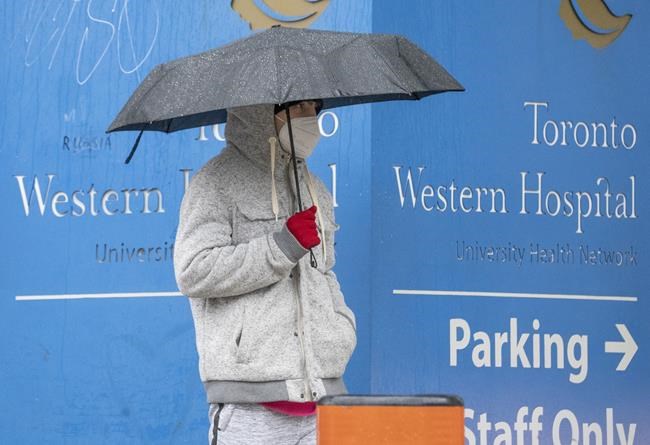
A man walks to the lineup for COVID-19 Assessments at Toronto Western Hospital in Toronto on Tuesday October 27, 2020. THE CANADIAN PRESS/Frank Gunn

“If we have arrived at a situation where we need to call in the Canadian Armed Forces and the Red Cross, which is a humanitarian organization that is normally deployed in war zones and in developing countries, if we have to deploy those two bodies in order to save lives in our long-term care facilities across Canada, then there is a serious problem.”

Donna Duncan, CEO of the Ontario Long Term Care Association, said she wrote to Prime Minister Justin Trudeau in early June to ask for federal cash to help with capital improvements and human resources before the second wave of COVID-19 hit.

She said she received a form letter from a Health Canada aide last week that pointed out long-term care is a provincial responsibility.

“You can’t stand up there and say this matters and then say it’s somebody else’s responsibility,” Duncan said.

More than 100 residences are reporting outbreaks, including 79 in Ontario, 14 in Alberta, 21 in British Columbia and 19 in Manitoba.

Authorities in Quebec said Thursday there were five long-term care homes where more than 25 per cent of residents had active cases of COVID-19 — down from eight the day before.

They said there were six private seniors residences where more than one-quarter of residents had active infections, a situation they described as critical.

Quebec reported 1,030 new cases and 25 more deaths in Thursday’s update.

In Manitoba, there were 26 active and 61 resolved cases of COVID-19 among residents in Winnipeg’s Parkview Place Long Term Care Home, said its for-profit operator Revera. Nineteen had died.

There were also 14 active and 15 resolved cases among staff at the home, which has 221 residents.

Manitoba reported 193 new COVID-19 cases, a record daily high, in its update.

Also Thursday, new projections in Ontario suggested the province appears to be moving away from a worst-case scenario in COVID-19 growth.

Dr. Adalsteinn Brown, co-chair of Ontario’s COVID-19 science advisory table, said advisers estimate a “steady state level” of between 800 and 1,200 new cases a day for “awhile.”

“Most indicators are showing a slowing growth in COVID-19 cases. The trajectory appears to be moving away from the worst case, but cases are continuing to climb,” Brown told a news conference.

“And so this is not that we’ve crested and are now coming back down the other side of the epidemic curve. We are just getting to a slower period of growth within that curve.”

Projections released late last month showed the province recording 1,000 new daily cases by mid-October. Ontario passed that threshold once last weekend but the numbers have since dropped.

Ontario reported 10 COVID-19 deaths and 934 new infections on Thursday.

Meanwhile, 46 infections were linked to a wedding in a Toronto suburb earlier this month. York Region Public Health said more than 100 people attended the wedding at an event centre in Vaughan over two days — Oct. 14, and Oct. 18. The region’s deputy medical officer of health said charges are possible.

The majority of the cases — 33 as of Thursday — were in Peel Region, west of Toronto. Others were in York Region and Toronto, as well as farther-flung areas such as Waterloo and Simcoe-Muskoka.

Alberta reported 477 new COVID-19 cases in its Thursday update after breaking through the 500-mark on the weekend. The province also had five new deaths.

— With files from Mia Rabson in Ottawa, Kelly Geraldine Malone in Winnipeg and Steve Lambert in Winnipeg

This report by The Canadian Press was first published October 29, 2020.

Report Error Submit a Tip

More Stories

Has the political wind changed?

Gwynne Dyer 5 minute read Yesterday at 2:01 AM CDT

It has been quite a week. First we had “Lula” – Luiz Inácio da Silva (as nobody but his mother ever called him) – defying everybody’s expectations. After winding up two million votes behind his challenger, Flávio Bolsonaro, in the first round of the Brazilian presidential election, he made a “miraculous” comeback in the second.

It was like a man going into a revolving door behind you and coming out in front. At the end of the first round, Lula was two million votes behind; at the end of the second round on Oct. 25 he was four million votes ahead. So how did he win a fourth term without cheating?

That’s what Bolsonaro claims he did, having fled to the United States; Trump, Flávio’s mentor, hints at the same. But Lula’s victory was not miraculous. He only learned to read when he was 10, and at 80 he still refused to have a mobile phone. His team finally made him get one and use it.

He wouldn’t do social media videos, so they created a WhatsApp channel called Lula’s Army, and made him appear on it at least daily. The channel went from zero to 10.8 million viewers in two weeks, and Lula won.

Imperialist crusades: 21st-century style

John R. Wiens 5 minute read Preview

Imperialist crusades: 21st-century style

John R. Wiens 5 minute read Wednesday, Jul. 8, 2026

In the 11th century and lasting into the 13th, the papacy launched a series of at least eight military campaigns we now refer to as the Crusades, or Holy Wars. They were an imperialistic call to arms for Christians to retake Jerusalem, which was at the time under Muslim rule.

Spiritual rewards for participation were implied, and other incentives offered, to dull the extra taxation demanded to fund the campaigns. Over time, the “crusades” morphed to become massacres of not only Muslims but also Jews and Christian dissidents — in other words, any enemies of the papacy. If today’s news sounds like déjà vu all over again, it probably should.

The stories keep repeating themselves in many forms. We now know that two 20th century world wars, global in scope, were caused by imperialistic ambitions, changes in the balance of international powers and corresponding arms races. The first was attributed to the assassination of the heir to the Austro-Hungarian throne by a Bosnian Serb, a kind of “regime change” initiative. The second resulted from rising tensions between Allied and Axis powers, triggered by the rise of European fascism and Japanese militarism. The human toll of both was unimaginable.

In the First World War, 15 to 22 million people, including soldiers and civilians, were killed and another 23 million were wounded. These numbers do not account for those otherwise affected — victims of chemical warfare whose compromised health shortened their lives; of the subsequent Spanish flu epidemic amplified by the displacement of peoples; others who died from other diseases caused by war conditions; and those who were malnourished or starved. Nor do they account for the ongoing trauma and resentments passed on intergenerationally to this day.

Read
Wednesday, Jul. 8, 2026

Letters, Oct. 31

6 minute read Yesterday at 2:01 AM CDT

Civic election a missed opportunity

The outcome of the latest municipal election in Winnipeg is nothing short of baffling. The decline of what was once a proud, beautiful prairie hub is impossible to ignore.

Winnipeg is rapidly sliding into a state of structural and social dilapidation, yet voters have inexplicably chosen to hand incumbent Mayor Scott Gillingham a second term. The decision smells of complacency, and sadly, it represents a massive missed opportunity for real urban renewal.

Walking through downtown Winnipeg today is an exercise in heartbreak. A city centre that should be a bustling economic and cultural core has instead transformed into an absolute eyesore. Encampments and tents are permitted to dot the heart of the city. Streets that used to thrive are now dominated by the tragic, visible reality of severe addiction, with individuals wandering and staggering through public spaces without adequate intervention or care.

Today’s horoscope

Georgia Nicols 4 minute read Preview

Today’s horoscope

Georgia Nicols 4 minute read 2:00 AM EST

MOON ALERT: There are no restrictions to shopping or important decisions today. The moon is in Leo.

ARIES (March 21-April 19)

Avoid disputes about shared property, inheritances, taxes, debt and insurance issues. This might also include shared expenses. Just coast. Parents should be vigilant about their kids. Social plans might suddenly change. It’s a good day to make art.

TAURUS (April 20-May 20)

Read
2:00 AM EST

Say What?! Sports guys travel to new destination

Steve Lyons and Paul Wiecek 16 minute read Preview

Say What?! Sports guys travel to new destination

Steve Lyons and Paul Wiecek 16 minute read Thursday, Jan. 30, 2020

Say What?! is an email conversation between sports editor Steve Lyons and sports columnist Paul Wiecek. Look for us regularly but intermittently on the Free Press website.


Steve Lyons: Heya. How you doing? How’s 2020 treating you so far?

Few things to get us started:

Read
Thursday, Jan. 30, 2020

Ottawa announces $500 million for North End sewage plant upgrade

Joyanne Pursaga 4 minute read Preview

Ottawa announces $500 million for North End sewage plant upgrade

Joyanne Pursaga 4 minute read Friday, Oct. 30, 2026

The federal government will provide $500 million to help complete the major upgrade to Winnipeg’s North End sewage treatment plant.

Winnipeg South MP Terry Duguid confirmed the total funding at a news conference at the plant Friday, calling the work critical to Winnipeg’s future.

“The stakes could not be higher. Without expanded wastewater treatment, Winnipeg would run out of capacity to build new homes and accommodate new industries within six years,” said Duguid.

The commitment offers the final funding needed to cover the $1.57-billion third and final phase of the upgrade. The city and province will also pay $500 million each for the work.

Read
Friday, Oct. 30, 2026