Opposition parties demand passenger refunds as condition of any airline bailouts
Advertisement
Read this article for free:
or
Already have an account? Log in here »
To continue reading, please subscribe:
Digital Subscription
One year of digital access for only $1.44 a week*
- Enjoy unlimited reading on winnipegfreepress.com
- Read the E-Edition, our digital replica newspaper
- Access News Break, our award-winning app
- Play interactive puzzles
*Billed as $5.77 plus GST every four weeks. After 52 weeks, price increases to the regular rate of $19.95 plus GST every four weeks. Offer available to new and qualified returning subscribers only. Cancel any time.
To continue reading, please subscribe:
Add Free Press access to your Brandon Sun subscription for only an additional
$1 for the first 4 weeks*
- Enjoy unlimited reading on winnipegfreepress.com
- Read the E-Edition, our digital replica newspaper
- Access News Break, our award-winning app
- Play interactive puzzles
*Your next Brandon Sun subscription payment will increase by $1.00 and you will be charged $17.95 plus GST for four weeks. After four weeks, your payment will increase to $24.95 plus GST every four weeks.
Read unlimited articles for free today:
or
Already have an account? Log in here »
Hey there, time traveller!
This article was published 19/10/2020 (2202 days ago), so information in it may no longer be current.
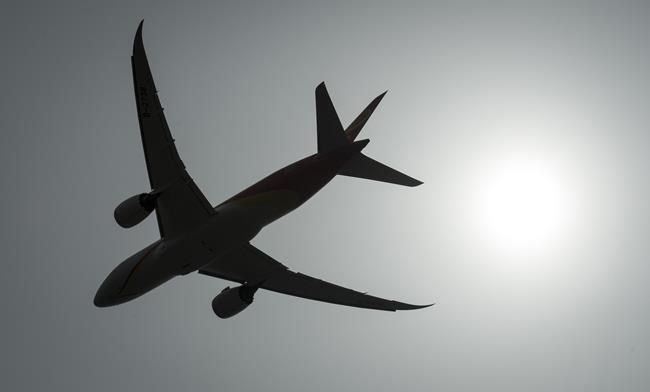
The Liberal government should ensure airline passengers receive refunds for flights cancelled due to the COVID-19 pandemic, opposition parties demanded Monday.
The demand follows seven months of trickling revenues for carriers devastated by the collapse in global travel, with passenger numbers in Canada down 90 per cent year over year in July and little improvement since.
Intergovernmental Affairs Minister Dominic LeBlanc left the door open to a bailout, including the purchase of airline shares by Ottawa, in an interview with CTV’s Question Period on Sunday.
LeBlanc said Canadians expect stringent conditions on any federal airline funding, such as addressing the issue of travel vouchers.
The Conservatives and NDP highlighted reimbursement as a key condition of a potential bailout.
“If sector support is provided, it absolutely must be tied to refunds for passengers,” Conservative transport critic Stephanie Kusie said in an email, calling the need for aid “beyond urgent.”
NDP transport critic Niki Ashton said thousands of customers have been “ripped off” after paying for a service that was never rendered and receiving travel vouchers instead of reimbursement, leaving many out of pocket during a recession.
“It’s not about helping CEOs, it’s about protecting Canadian jobs and making sure passengers get their money back,” Ashton said during question period in the House of Commons.
She called for a rescue package that shields both jobs and consumers, prompting an acknowledgment from Transport Minister Marc Garneau that there have been “great difficulties” facing airlines and airports.
“We are working on solutions that will ensure that Canadians are able to have safe, reliable and efficient travel when we pull out of this pandemic,” Garneau said.
Regional airlines are also demanding immediate action from Ottawa to prop up the beleaguered sector, but reject the idea of a federal stake in carriers — one of several prospects being floated.
John McKenna, president of the Air Transport Association of Canada, says the government has not responded to requests for cash over the past six months, leaving Canada as the only G7 country to hold off on pledging major financial aid for an industry devastated by the COVID-19 pandemic.
“God, no, we don’t need a stake in airlines … The cost controls would be incredible,” said McKenna, whose trade organization represents some 30 regional airlines.
“We need liquidity, no-interest loans, maybe forgivable loans … because fixing is a lot easier than replacing.”
The United States and some European countries have demanded airlines provide reimbursement while offering them billions in financial aid, with other strings attached that include 20 per cent government ownership in the case of Lufthansa and emissions-reduction commitments from Air France-KLM.
John Gradek, who heads McGill University’s Global Aviation Leadership program, says a federal stake does not necessarily trigger a shift in management behaviour or market practices.
“When the French and German governments invested, they received up to 20 per cent ownership, with board seats, and that was acceptable to airline management. And they remain fierce commercial competitors,” Gradek said.
“Having a government provide a say through board representation would keep the airline from making decisions against the public interest, a notion that seems to be abhorrent to some Canadian airline managers.”
If market trends continue, some airlines may have little leverage in aid talks with the government.
Last week, WestJet Airlines announced it will suspend operations to four cities in Atlantic Canada and slash service to others in the region. Air Canada halted service on 30 regional routes starting in July, mainly affecting travellers to and from the Maritimes, Quebec and Saskatchewan.
The two carriers have laid off or furloughed more than 30,000 employees since March. Air Canada continues to bleed about $16 million per day, though it has also secured $6 billion in liquidity and held on to more than $2.4 billion in advance ticket sales — unrefunded fares — as of July 31.
On Monday, Bloc Québécois transport critic Xavier Barsalou-Duval was poised to table a petition with 32,789 signatures calling on the government to require carriers to allow customer refunds for cancelled flights.
Last week, Prime Minister Justin Trudeau pledged $41 million in emergency funding for northern airlines to ensure services for remote communities.
In 2009, Ottawa contributed $13.7 billion to the bailouts of Chrysler Group and General Motors as part of its response to the global financial crisis, and ultimately left taxpayers $3.5 billion short of breaking even on their investment after the government sold off the last of its shares in the auto giants in 2015.

The Canadian Union of Public Employees has said a federal stake in airlines should be a condition of any assistance from Ottawa, on top of significant carve-outs to protect the 15,000 flight attendants it represents.
Airlines hope Ottawa will co-ordinate changing current travel restrictions, which include two-week quarantines for new arrivals in Canada and the Atlantic “bubble” mandating two weeks of self-isolation for anyone entering the region.
McKenna says rapid testing could take the place of such barriers.
“The thing they really need to do is to make sure that these quarantines are abolished. We have control measures, temperature checks,” the trade group president said.
This report by The Canadian Press was first published Oct. 19, 2020.
Related Articles
Airlines lure customers with 'bait and switch'
Advertisement Advertise With Us
Advertisement Advertise With Us