Canada-China COVID-19 vaccine trials abandoned amid political tensions

Advertisement

Advertise with us

HALIFAX - A COVID-19 vaccine-development partnership between Canada and a Chinese firm has been abandoned, ending clinical trials that were to be conducted by a Dalhousie University research lab.

Read this article for free:


By clicking the button above, an account will be created and you will begin to receive some of our recommended newsletters. You may opt out of any newsletter by visiting your Email and Communication Preferences page or by clicking "unsubscribe" at the bottom of any email.

or

Already have an account? Log in here »

To continue reading, please subscribe:

Digital Subscription

One year of digital access for only $1.44 a week*

  • Enjoy unlimited reading on winnipegfreepress.com
  • Read the E-Edition, our digital replica newspaper
  • Access News Break, our award-winning app
  • Play interactive puzzles

*Billed as $5.77 plus GST every four weeks. After 52 weeks, price increases to the regular rate of $19.95 plus GST every four weeks. Offer available to new and qualified returning subscribers only. Cancel any time.

To continue reading, please subscribe:

Add Free Press access to your Brandon Sun subscription for only an additional

$1 for the first 4 weeks*

  • Enjoy unlimited reading on winnipegfreepress.com
  • Read the E-Edition, our digital replica newspaper
  • Access News Break, our award-winning app
  • Play interactive puzzles
Start now

*Your next Brandon Sun subscription payment will increase by $1.00 and you will be charged $17.95 plus GST for four weeks. After four weeks, your payment will increase to $24.95 plus GST every four weeks.

Hey there, time traveller!
This article was published 27/08/2020 (2257 days ago), so information in it may no longer be current.

HALIFAX – A COVID-19 vaccine-development partnership between Canada and a Chinese firm has been abandoned, ending clinical trials that were to be conducted by a Dalhousie University research lab.

The National Research Council of Canada said Thursday the CanSino Biologics vaccine intended for phase one clinical trials has not been approved by Chinese customs for shipment to Canada.

“Due to the delay in the shipment of the vaccine doses to Canada it is evident this specific opportunity is over and the NRC is focusing its team and facilities on other partners and COVID-19 priorities,” the agency said in a statement.

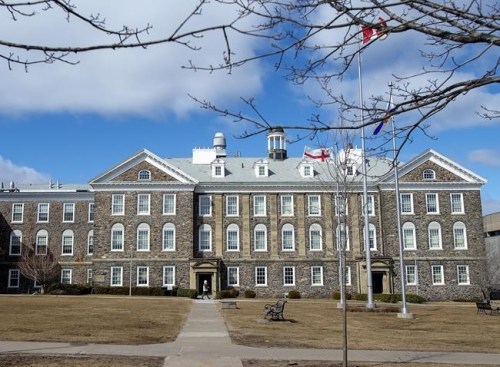
A man walks across the Dalhousie University campus in Halifax on March 16, 2020. A COVID-19 vaccine-development partnership between China's CanSino Biologics and Dalhousie University in Nova Scotia has been abandoned. The National Research Council of Canada said today in a statement the CanSino vaccine intended for phase one clinical trials have not been approved by Chinese customs for shipment to Canada. Because of that delay the NRC says the opportunity to conduct the trials is over. THE CANADIAN PRESS/Andrew Vaughan

Canada’s Foreign Affairs Minister Francois-Philippe Champagne downplayed suggestions the vaccine partnership failed because of ongoing political tensions between the two countries.

“I don’t necessarily think so,” Champagne told reporters Thursday. “I can only speak for the Canadian side. I would not necessarily link whether that particular opportunity is linked to anything else.”

Relations have been sour since the Chinese detained Canadians Michael Kovrig and Michael Spavor in apparent retaliation for the RCMP’s arrest of Chinese high-tech executive Meng Wanzhou on an American extradition warrant in December 2018.

Despite the tensions, Champagne said “we have issues in terms of global health where we can work together.”

The Canadian Centre for Vaccinology at Dalhousie University was supposed to conduct the trials through a partnership with the NRC and CanSino Biologics. Dalhousie’s lab had been ready to start clinical trials as early as June, the NRC said, after Health Canada approved CanSino’s proposal.

The Halifax lab was one of several in Canada and in the U.S. whose work in 2014 led to an Ebola vaccine that was used in West Africa.

Dr. Scott Halperin, the director of the Canadian Centre for Vaccinology, said it was disappointing the CanSino project won’t be going ahead.

“The CanSino vaccine is one of the most furthest along of any of the candidate vaccines so it would have been nice to do that study,” Halperin said. “It’s not the only vaccine that we are working with … but we certainly don’t like to lose access to any one of them because we need multiple vaccines.”

Halperin said all of the protocols had been written and approved and had his lab received the vaccine its study would have been “well along by now.”

“We thought the shipment would be coming any day, as did the company,” he said. “There was no bad faith on the company — they were trying everything but they could not get (Chinese) government approval to ship it. The request for shipment hasn’t been denied it just hasn’t been approved.”

Halperin said the Halifax lab would be working on other COVID-19 studies and is in discussions with at least six different manufacturers. Once approvals are granted he said at least two of the studies could begin as early as next month.

“Things are moving along. We weren’t sitting and waiting for CanSino and doing nothing else.”

This report by The Canadian Press was first published Aug. 27, 2020.

Report Error Submit a Tip

More Stories

Letters, Oct. 31

6 minute read Yesterday at 2:01 AM CDT

Civic election a missed opportunity

The outcome of the latest municipal election in Winnipeg is nothing short of baffling. The decline of what was once a proud, beautiful prairie hub is impossible to ignore.

Winnipeg is rapidly sliding into a state of structural and social dilapidation, yet voters have inexplicably chosen to hand incumbent Mayor Scott Gillingham a second term. The decision smells of complacency, and sadly, it represents a massive missed opportunity for real urban renewal.

Walking through downtown Winnipeg today is an exercise in heartbreak. A city centre that should be a bustling economic and cultural core has instead transformed into an absolute eyesore. Encampments and tents are permitted to dot the heart of the city. Streets that used to thrive are now dominated by the tragic, visible reality of severe addiction, with individuals wandering and staggering through public spaces without adequate intervention or care.

Canada-China COVID vaccine trials abandoned

Keith Doucette, The Canadian Press 4 minute read Preview

Canada-China COVID vaccine trials abandoned

Keith Doucette, The Canadian Press 4 minute read Thursday, Aug. 27, 2020

HALIFAX - A COVID-19 vaccine-development partnership between Canada and a Chinese firm has been abandoned, ending clinical trials that were to be conducted by a Dalhousie University research lab.

The National Research Council of Canada said Thursday the CanSino Biologics vaccine intended for phase one clinical trials has not been approved by Chinese customs for shipment to Canada.

"Due to the delay in the shipment of the vaccine doses to Canada it is evident this specific opportunity is over and the NRC is focusing its team and facilities on other partners and COVID-19 priorities," the agency said in a statement.

Canada's Foreign Affairs Minister Francois-Philippe Champagne downplayed suggestions the vaccine partnership failed because of ongoing political tensions between the two countries.

Read
Thursday, Aug. 27, 2020

B.C. declares state of emergency over wildfires

Amy Smart, The Canadian Press 5 minute read Preview

B.C. declares state of emergency over wildfires

Amy Smart, The Canadian Press 5 minute read Wednesday, Jul. 21, 2021

VANCOUVER - British Columbia's public safety minister has declared a provincial state of emergency over the growing wildfire threat to prepare for potential mass evacuations and help secure accommodation that might be needed by evacuees.

Mike Farnworth said he made the decision based on information from officials that weather conditions will lead to more severe fire behaviour and the potential for more evacuations.

"In a briefing last night, I received word that we'll be facing a few days of very difficult weather in the Interior," Farnworth said in a statement.

The state of emergency goes into effect on Wednesday and gives government agencies, the fire commissioner and the RCMP the authority to take whatever action they deem is necessary to fight the wildfires and protect people and communities.

Read
Wednesday, Jul. 21, 2021

Province’s first female dentist took skill, insight wherever needed

David Sanderson    25 minute read Preview

Province’s first female dentist took skill, insight wherever needed

David Sanderson    25 minute read Saturday, Apr. 3, 2021

Some stories take longer to get around to than others.

In the fall of 2011 I hooked up with Fiona Odlum at an Academy Road Starbucks for a lighthearted feature about people who report on traffic for a living. Odlum, currently a contributor at CBC Saskatchewan, was working for 680 CJOB at the time, clueing rush-hour commuters in on stalls, lane closures and fender-benders they’d be wise to avoid.

Odlum turned the tables at one point by asking a few questions of her own including, “So, what’s your main beat?”

I don’t really have one, I told her, but if pressed, I would probably go with human-interest pieces.

Read
Saturday, Apr. 3, 2021

Imperialist crusades: 21st-century style

John R. Wiens 5 minute read Preview

Imperialist crusades: 21st-century style

John R. Wiens 5 minute read Wednesday, Jul. 8, 2026

In the 11th century and lasting into the 13th, the papacy launched a series of at least eight military campaigns we now refer to as the Crusades, or Holy Wars. They were an imperialistic call to arms for Christians to retake Jerusalem, which was at the time under Muslim rule.

Spiritual rewards for participation were implied, and other incentives offered, to dull the extra taxation demanded to fund the campaigns. Over time, the “crusades” morphed to become massacres of not only Muslims but also Jews and Christian dissidents — in other words, any enemies of the papacy. If today’s news sounds like déjà vu all over again, it probably should.

The stories keep repeating themselves in many forms. We now know that two 20th century world wars, global in scope, were caused by imperialistic ambitions, changes in the balance of international powers and corresponding arms races. The first was attributed to the assassination of the heir to the Austro-Hungarian throne by a Bosnian Serb, a kind of “regime change” initiative. The second resulted from rising tensions between Allied and Axis powers, triggered by the rise of European fascism and Japanese militarism. The human toll of both was unimaginable.

In the First World War, 15 to 22 million people, including soldiers and civilians, were killed and another 23 million were wounded. These numbers do not account for those otherwise affected — victims of chemical warfare whose compromised health shortened their lives; of the subsequent Spanish flu epidemic amplified by the displacement of peoples; others who died from other diseases caused by war conditions; and those who were malnourished or starved. Nor do they account for the ongoing trauma and resentments passed on intergenerationally to this day.

Read
Wednesday, Jul. 8, 2026

Taxi and ride-hailing services receive 58 complaints since March

Jessica Botelho-Urbanski 5 minute read Preview

Taxi and ride-hailing services receive 58 complaints since March

Jessica Botelho-Urbanski 5 minute read Friday, Aug. 17, 2018

The City of Winnipeg has fielded 58 formal complaints about vehicle-for-hire operations since taking over industry oversight from the province in March.

According to freedom of information request results, the city mostly received complaints about taxi operations, and the two largest companies – Duffy’s Taxi and Unicity Taxi – were the main culprits.

From March 1, 2018 to July 13, 2018, the Winnipeg Parking Authority received 20 complaints about Duffy’s, mostly to do with driver road habits (five complaints), driver conduct (three), service refusal (three) or poor service (three), among other issues.

During the same period, Unicity had 19 complaints, five of them related to poor service and three about driver conduct, plus other misdeeds.

Read
Friday, Aug. 17, 2018