Time for pointing fingers will come later, Trudeau says as Trump calls out WHO
Advertisement
Read this article for free:
or
Already have an account? Log in here »
To continue reading, please subscribe:
Digital Subscription
One year of digital access for only $1.44 a week*
- Enjoy unlimited reading on winnipegfreepress.com
- Read the E-Edition, our digital replica newspaper
- Access News Break, our award-winning app
- Play interactive puzzles
*Billed as $5.77 plus GST every four weeks. After 52 weeks, price increases to the regular rate of $19.95 plus GST every four weeks. Offer available to new and qualified returning subscribers only. Cancel any time.
To continue reading, please subscribe:
Add Free Press access to your Brandon Sun subscription for only an additional
$1 for the first 4 weeks*
- Enjoy unlimited reading on winnipegfreepress.com
- Read the E-Edition, our digital replica newspaper
- Access News Break, our award-winning app
- Play interactive puzzles
*Your next Brandon Sun subscription payment will increase by $1.00 and you will be charged $17.95 plus GST for four weeks. After four weeks, your payment will increase to $24.95 plus GST every four weeks.
Read unlimited articles for free today:
or
Already have an account? Log in here »
Hey there, time traveller!
This article was published 15/04/2020 (2414 days ago), so information in it may no longer be current.
WASHINGTON – Now is not the time to point fingers or assign blame for COVID-19, Canada’s federal government said Wednesday after Donald Trump, his re-election hopes hijacked by a deadly global pandemic, turned his populist cannons on the World Health Organization.
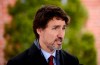
Prime Minister Justin Trudeau refused to be drawn into the Trump administration’s latest political offensive, insisting that his Liberal government would concentrate for the time being on helping Canadians avoid getting sick.
“That is our focus right now — what can we do now, what do we need to do in the coming weeks, how do we lean on experts in international institutions and in partner countries around the world for making recommendations alongside our domestic experts on what we need to do now,” Trudeau said.
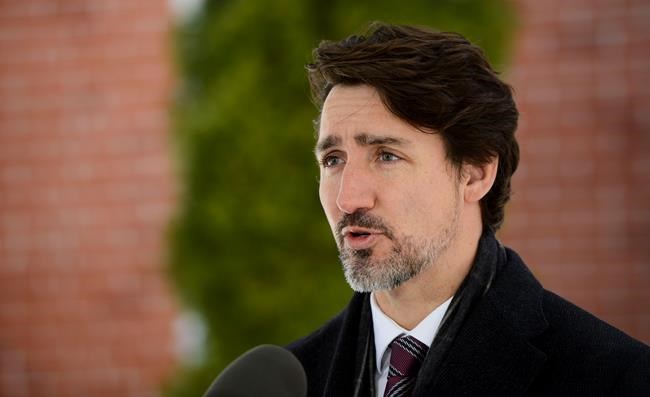
“There will be plenty of time as we move forward to reflect on challenges that were faced in the past. We need to learn and move forward as quickly as we can.”
In the United States, where the outbreak of the virus has killed more than 26,000 people, sickened more than 600,000 and plunged the economy into suspended animation, Trump is accusing the UN agency of botching its initial response to the outbreak in China and covering up the extent of the emerging threat.
He has ordered a halt to funding — the U.S. is the WHO’s single largest financial benefactor, providing hundreds of millions of dollars each year — pending the results of a review to examine why “credible reports” that conflicted with official accounts from the Chinese government weren’t properly investigated, and why early evidence of human-to-human transmission of the novel coronavirus in China was ignored.
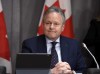
But the president’s not alone in calling out the agency: Conservative Leader Andrew Scheer wants Trudeau to explain why Canada has been so dependent on an organization so closely aligned with China.
“We’ve got serious concerns about the accuracy of the information coming out of the WHO,” Scheer said. “It’s incumbent upon this government to explain why they have based so many of their decisions on the WHO.”
The Associated Press reported Wednesday that six days passed between when Chinese officials knew about the real dangers of the virus and when the public was warned, time that likely allowed the outbreak to blossom into a full-blown global public health disaster.
The WHO failed outright in calling out China’s lack of transparency, the president said — although he neglected to acknowledge his own public statements in January thanking President Xi Jinping and praising the country’s efforts in fighting the virus.
On paper, the move is classic Trump: attacking a multilateral institution with a mixed track record, deep ties to the rules-based international order and an outsized financial dependence on American dollars. He has in the past also targeted the World Trade Organization and likes to take credit for shaming fellow NATO members into spending millions more on the military alliance.
Countries around the world greeted the timing of the decision, if not the decision itself, with condemnation. So too did Microsoft founder Bill Gates, now a global health philanthropist whose foundation rivals the U.S. as one of the agency’s largest contributors.
“The world needs WHO now more than ever,” Gates wrote on Twitter.
Trudeau said Trump has not asked Canada to adjust its contributions to the WHO — $17.5 million for 2020, paid in full, along with an additional $15 million since Feb. 11 specifically for the agency’s response to COVID-19, a government spokesman said. By comparison, the U.S. pays more than $500 million a year in annual assessments.
It’s money well-spent on a “very valuable tool” under normal circumstances, said Health Minister Patty Hajdu — but especially during a serious viral outbreak.
“Canada values the work of the World Health Organization, and we continue to commit to contribute towards the work of the organization,” said Hajdu, citing its ability to bring countries, scientists and researchers together to find both short- and long-term solutions.
“Any response to COVID-19, and in fact really any global outbreak, is one where countries have the capacity to work together, to pool their research and to really share their efforts to manage these outbreaks — that will happen again and again and again, by the way.”
Tedros Adhanom Ghebreyesus, the WHO’s director-general, last week urged the world to resist the temptation to politicize the pandemic, a message that clearly went unheeded in Washington.
“When we are divided, the virus exploits the cracks between us,” Tedros said Wednesday, expressing “regret” at Trump’s decision.

“No doubt, areas for improvement will be identified and there will be lessons for all of us to learn. But for now, our focus — my focus — is on stopping this virus and saving lives.”
Tedros also thanked those countries that have expressed support for the organization and promised to maintain their financial commitments. “Solidarity,” he said, “is the rule of the game in defeating COVID-19.”
This report by The Canadian Press was first published April 15, 2020.
— With files from Jim Bronskill and Teresa Wright in Ottawa
— Follow James McCarten on Twitter @CdnPressStyle
Advertisement Advertise With Us
Advertisement Advertise With Us