Pandemic has shunted aside an array of Liberal initiatives, at least for now

Advertisement

Advertise with us

OTTAWA - As a new year dawned, the government's throne-speech commitments, unfurled just weeks earlier, were grabbing headlines and galvanizing the attention of federal policy-makers.

Read this article for free:


By clicking the button above, an account will be created and you will begin to receive some of our recommended newsletters. You may opt out of any newsletter by visiting your Email and Communication Preferences page or by clicking "unsubscribe" at the bottom of any email.

or

Already have an account? Log in here »

To continue reading, please subscribe:

Digital Subscription

One year of digital access for only $1.44 a week*

  • Enjoy unlimited reading on winnipegfreepress.com
  • Read the E-Edition, our digital replica newspaper
  • Access News Break, our award-winning app
  • Play interactive puzzles

*Billed as $5.77 plus GST every four weeks. After 52 weeks, price increases to the regular rate of $19.95 plus GST every four weeks. Offer available to new and qualified returning subscribers only. Cancel any time.

To continue reading, please subscribe:

Add Free Press access to your Brandon Sun subscription for only an additional

$1 for the first 4 weeks*

  • Enjoy unlimited reading on winnipegfreepress.com
  • Read the E-Edition, our digital replica newspaper
  • Access News Break, our award-winning app
  • Play interactive puzzles
Start now

*Your next Brandon Sun subscription payment will increase by $1.00 and you will be charged $17.95 plus GST for four weeks. After four weeks, your payment will increase to $24.95 plus GST every four weeks.

Hey there, time traveller!
This article was published 04/04/2020 (2400 days ago), so information in it may no longer be current.

OTTAWA – As a new year dawned, the government’s throne-speech commitments, unfurled just weeks earlier, were grabbing headlines and galvanizing the attention of federal policy-makers.

Then came the most serious public health crisis in recent memory.

The Trudeau government’s planned gun-control measures, assisted-dying legislation and efforts to advance reconciliation with Indigenous Peoples are taking a back seat, at least for now, to the all-consuming fight to help people weather COVID-19.
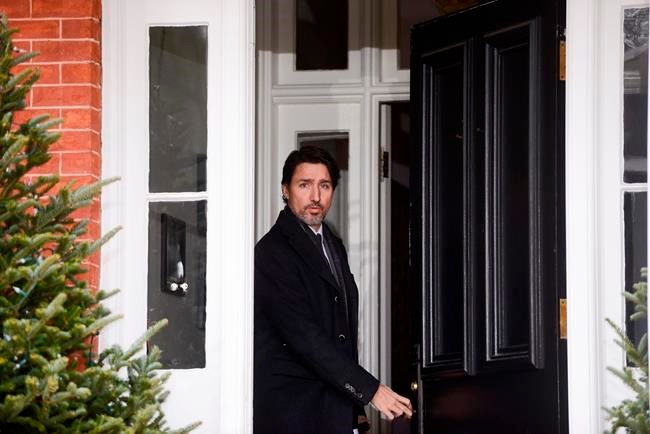
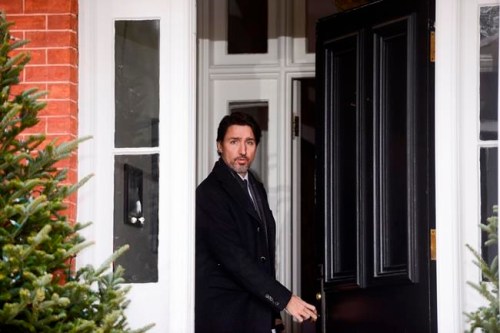
Prime Minister Justin Trudeau addresses Canadians on the COVID-19 pandemic from Rideau Cottage in Ottawa on Friday, April 3, 2020. THE CANADIAN PRESS/Sean Kilpatrick

Even the federal budget, a fixture of the late-winter parliamentary agenda, has been delayed indefinitely as the virus monopolizes time and resources.

The minority mandate the Liberals received in the fall election is a starting point, not the final word, said the re-elected Liberal government’s December throne speech, read by the governor general.

“The government is open to new ideas from all parliamentarians, stakeholders, public servants and Canadians. Ideas like universal dental care are worth exploring, and I encourage Parliament to look into this.”

It seems any fresh ideas will now have to find space in an already jammed queue.

The Liberals campaigned on a commitment to outlaw military-style assault rifles, including the popular AR-15, saying guns designed to inflict mass human casualties have no place in Canada. They said owners of legally purchased firearms that fall under the ban would be offered fair-market prices through a buyback program.

The government also plans to empower provinces and cities to take steps to manage the storage and use of handguns within their individual jurisdictions, given that they have different needs and concerns.

PolySeSouvient, a leading voice for stricter controls, urged Public Safety Minister Bill Blair in November to take prompt steps, and the group now sees it as an opportunity lost.

“It’s a real shame that minister Blair did not act decisively and swiftly when he had the chance,” said Heidi Rathjen, co-ordinator of PolySeSouvient, which includes students and graduates of Montreal’s Ecole Polytechnique, where 14 women were gunned down in 1989.

It is one thing to allow online sales of regular hunting firearms and ammunition during the COVID-19 crisis, she said. “It is quite another to allow continued sale of military-style assault weapons in such a volatile context.”

Citing several online social media posts, Rathjen said the group worries a “typically American individualistic survivor mentality” is creeping into Canada.

“Assault weapons and panic-prone individuals in the midst of a pandemic are a very dangerous mix,” she said. “Indeed, you do not want to introduce guns designed for mass killing in a context of generalized high anxiety, with fears of economic meltdown and potential food shortages.”

Although the government is seized with addressing the pandemic, it remains resolute in its commitment to strengthening firearms control in Canada, said Mary-Liz Power, a spokeswoman for Blair.

“Gun-control measures remain a crucial priority in this mandate,” she said. “We will be announcing details of our government’s plan to reduce gun violence in due time, which will come as each step is ready to be implemented.”

Bill C-7 would amend Canada’s law on medical assistance in dying, in response to a Quebec Superior Court ruling last September that struck down a provision restricting the procedure to those whose natural death is “reasonably foreseeable.”

The court initially gave the government until March 11 to change the law but last month granted an extension to July 11.

The bill was introduced in late February and was still in second-reading debate in the House of Commons when Parliament adjourned for the COVID-19 crisis.

There would appear to be little chance of it being approved by the new July deadline but Justice Minister David Lametti’s spokeswoman said no decision had yet been made about seeking another extension.

The Liberals promised to build on steps toward improving the lives of First Nations, Metis and Inuit in Canada by continuing to implement recommendations of the Truth and Reconciliation Commission as well as the inquiry into missing and murdered Indigenous women and girls.

The government also pledged legislation to implement the United Nations Declaration on the Rights of Indigenous Peoples in the first year of its new mandate.

Other initiatives include ensuring safe drinking water in First Nations communities and improving access to culturally relevant health care and mental health services.

Indigenous Services Minister Marc Miller said efforts are proceeding on the many recommendations of the missing-and-murdered inquiry.

“The COVID pandemic has really hit a number of ministries quite hard but that doesn’t prevent them from continuing their work in a number of super-important areas, of which this is one.”

Perry Bellegarde, national chief of the Assembly of First Nations, easily rhymes off the long list of Liberal promises to Indigenous Peoples.

“There are so many things that were in the throne speech that we pushed for that we still have to follow up on going forward,” Bellegarde said.

“But we know our energy and attention is on COVID-19 and this health-care threat to all of Canada, including First Nations people. We have to focus on that.”

This report by The Canadian Press was first published April 4, 2020.

—With files from Joan Bryden and Teresa Wright

—Follow @JimBronskill on Twitter

Report Error Submit a Tip

More Stories

Transit driver killed in knife attack on U of M campus

8 minute read Preview

Transit driver killed in knife attack on U of M campus

8 minute read Tuesday, Feb. 14, 2017

A Winnipeg Transit driver was killed early this morning after he was stabbed by the only passenger on his bus at the University of Manitoba campus.

Irvine Jubal Fraser, 58, was rushed to hospital in critical condition but later died, police said.

The attack occurred at about 2 a.m. in the area of Dafoe Road West and Gillson Street.

Witnesses pointed officers led by the canine unit in the direction of the Red River, where a 22-year-old suspect trying to cross to the St. Vital side was arrested and taken into custody.

Read
Tuesday, Feb. 14, 2017

Multi-year budget to force councillors, bureaucrats to focus on the big picture

Aldo Santin 12 minute read Preview

Multi-year budget to force councillors, bureaucrats to focus on the big picture

Aldo Santin 12 minute read Tuesday, Feb. 26, 2019

City hall is putting the final touches on the 2019 preliminary budget -- but the real tough job will start after that.

The city is committed to developing a four-year budget beginning with 2020, and having it in place by the end of this year.

It's a process that is filled with uncertainties, trying to balance four successive annual budgets at the same time, using assumptions on revenues and expenses that can change without notice: a provincial government that has frozen funding to city hall at 2016 levels and is reluctant to disclose annual funding commitments or share in unexpected revenues; erratic fuel prices; a possible change in government in Ottawa, which could bring new spending priorities. And in the middle of that four-year span, another civic election where new members of council may have other priorities than those laid out by the current crop of office holders.

Municipal governments across Manitoba are required to approve their annual operating and capital budgets by the end of March each year. But the criticism of decision-making at city hall has been that all the decisions are made on a year-to-year basis, keeping voters happy with an eye on the next election.

Read
Tuesday, Feb. 26, 2019

Director Schrader returns to silver screen with complex view of religion and belief

Alison Gillmor 4 minute read Preview

Director Schrader returns to silver screen with complex view of religion and belief

Alison Gillmor 4 minute read Thursday, Jun. 14, 2018

Bleak, wintry and rigorously controlled — until it’s not — this Book of Job-like drama from American filmmaker Paul Schrader looks at the challenges of faith.

The 71-year-old Schrader, known for scripting four Martin Scorsese films (including Taxi Driver and Raging Bull) and for directing his own (including American Gigolo, Affliction and Auto Focus), grew up in a strict Calvinist home — he famously did not see a film until he was 17 — and has always been drawn to stories of agonizing and uncertain redemption.

As the Rev. Toller (Ethan Hawke) wrestles with what it means to lead a righteous life in our badly broken world, his spiritual fate remains in doubt. It is certain, however, that First Reformed marks a cinematic rebirth for Schrader after recent disasters like The Canyons and Dog Eat Dog. Serious, complex and moving, this is not a perfect film, but even its flaws are powerful.

Toller is a solitary man who has come to the ministry late in life, after a family tragedy and a failed marriage. First Reformed, a historic church in upstate New York that was once a stop on the Underground Railroad, has since been reduced to an austerely beautiful tourist shop, more of a museum than a place of worship.

Read
Thursday, Jun. 14, 2018

MMF teams with Babcock for aviation takeoff

Gabrielle Piché 3 minute read Preview

MMF teams with Babcock for aviation takeoff

Gabrielle Piché 3 minute read 9:36 PM CDT

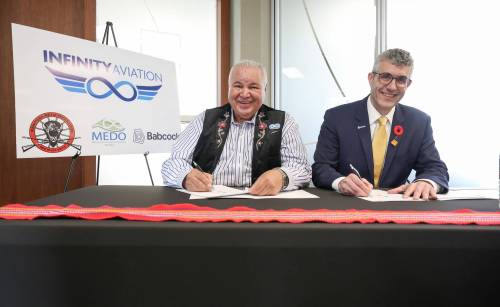
Métis leadership’s hopes are flying high: the Manitoba Métis Federation aims to be the province’s next aerial firefighting contractor.

On Thursday, the MMF unveiled a business it’s launched with Babcock Canada, a mammoth aviation and engineering company.

The pair signed a memorandum of understanding and committed to work together long-term.

“What better connection would you want?” Chartrand said. “It’s (the) perfect partnership.”

Read
9:36 PM CDT

Meteorologist behind Rob’s Obs is moving weather station to Ontario

Ben Waldman 7 minute read Preview

Meteorologist behind Rob’s Obs is moving weather station to Ontario

Ben Waldman 7 minute read Monday, Jun. 13, 2022

In a Winnipeg winter, there are always at least two certainties: it will be cold, and it will snow. A third certainty: the people will talk endlessly about how frigid the temperature is, and argue about how much snow is cloaking their driveways. Is it colder than it ever has been? Is there more snow today than the same time last year?

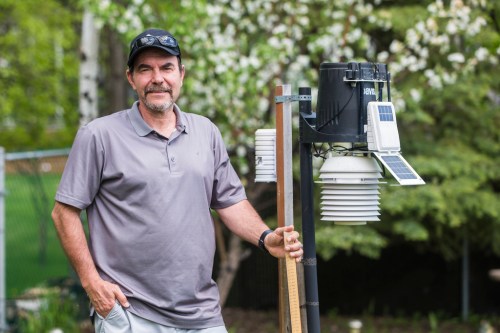
Rob Paola likely knows the answers to those questions.

Paola possesses no super powers. He is but a man with a metre stick and 40 years of professional meteorological experience, in the midst of a lifelong love affair with Mother Nature, a most turbulent mistress who rarely, if ever, reciprocates.

Each year when snow begins to fall, Paola heads outside his Charleswood home to figure out how much. He sticks his ruler in the ground, grabs his clipboard, and clicks his pen. In neat script, he records the temperature, what time precipitation began, how deep the powder is stacked. Then, he shares his data and insights online with thousands of followers who want a clear answer to the eternal questions: Why is this happening? When will it stop? How much snow has fallen in the city of Winnipeg?

Read
Monday, Jun. 13, 2022

Virus shunts aside key Liberal initiatives

Jim Bronskill, The Canadian Press 5 minute read Preview

Virus shunts aside key Liberal initiatives

Jim Bronskill, The Canadian Press 5 minute read Saturday, Apr. 4, 2020

OTTAWA - As a new year dawned, the government's throne-speech commitments, unfurled just weeks earlier, were grabbing headlines and galvanizing the attention of federal policy-makers.

Then came the most serious public health crisis in recent memory.

The Trudeau government's planned gun-control measures, assisted-dying legislation and efforts to advance reconciliation with Indigenous Peoples are taking a back seat, at least for now, to the all-consuming fight to help people weather COVID-19.

Even the federal budget, a fixture of the late-winter parliamentary agenda, has been delayed indefinitely as the virus monopolizes time and resources.

Read
Saturday, Apr. 4, 2020