Trudeau says refusing to self-isolate after travelling is ‘dangerous’

Advertisement

Advertise with us

OTTAWA - Canadians who ignored the government's request to isolate at home after coming back from a trip abroad endangered the lives of others, Prime Minister Justin Trudeau said Thursday.

Read this article for free:


or

Already have an account? Log in here »

To continue reading, please subscribe:

Subscribe and receive a limited-edition Free Press branded hat or tote.

Digital Subscription

One year of digital access for only $205*

  • Enjoy unlimited reading on winnipegfreepress.com
  • Read the E-Edition, our digital replica newspaper
  • Access News Break, our award-winning app
  • Play interactive puzzles

*First annual payment billed as $205.00 + GST for one year. This annual subscription will automatically renew at $233.00 + GST every 52 weeks (10% off the regular annual price of $259.35). Offer available to new and qualified returning subscribers only. Cancel any time.

To continue reading, please subscribe:

Add Free Press access to your Brandon Sun subscription for only an additional

$1 for the first 4 weeks*

  • Enjoy unlimited reading on winnipegfreepress.com
  • Read the E-Edition, our digital replica newspaper
  • Access News Break, our award-winning app
  • Play interactive puzzles
Start now

*Your next Brandon Sun subscription payment will increase by $1.00 and you will be charged $17.95 plus GST for four weeks. After four weeks, your payment will increase to $24.95 plus GST every four weeks.

Hey there, time traveller!
This article was published 26/03/2020 (2363 days ago), so information in it may no longer be current.

OTTAWA – Canadians who ignored the government’s request to isolate at home after coming back from a trip abroad endangered the lives of others, Prime Minister Justin Trudeau said Thursday.

Trudeau, in his daily briefing to Canadians, said while many Canadians heeded the request, there were too many people who played fast and loose with the rules, and because of them, the government had no choice but to turn what had been a request into an order.

“If you’ve just returned from abroad, you have to go home and stay home for 14 days,” Trudeau said. “But some people have not been taking this seriously. They’re stopping by the grocery store on their way home from the airport. They’re getting together with friends after being away for March break. This kind of conduct is not just disappointing, it’s dangerous.”
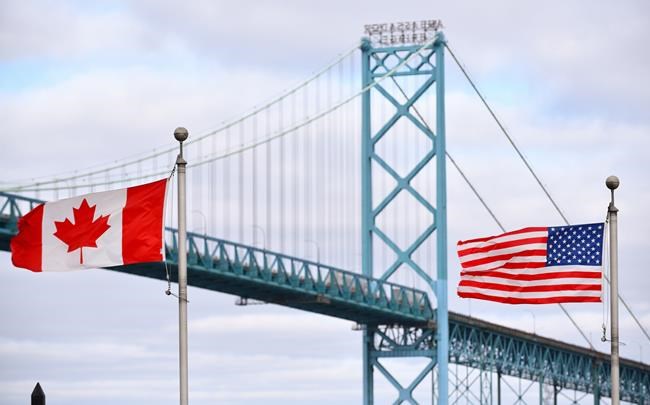
Canadian and American flags fly near the Ambassador Bridge at the Canada/USA border crossing in Windsor, Ont. on Saturday, March 21, 2020. THE CANADIAN PRESS/Rob Gurdebeke

Outbreaks of the novel coronavirus are much more widespread in other parts of the world, including the United States, Europe and parts of Asia. This raises the risk that people returning to Canada from a trip were exposed to the virus and more likely to spread the illness to others after arriving home.

Newfoundland and Labrador is proof of how one person can have a significant impact on the caseload. That province reported 44 people with COVID-19 were linked to a single individual who attended a visitation at a funeral home after returning from a foreign trip. That man returned before Newfoundland issued its own order to enforce quarantine for people arriving in the province but had been asked to self-isolate voluntarily.

Cabinet passed an order Tuesday to use the powers under the Quarantine Act to require people arriving in Canada by land, air or sea, to self-isolate for 14 days. Defying the order could result in fines of up to $1 million or three years in prison.

Enforcing the order is a work in progress and will be updated or changed if circumstances require it, said Dr. Theresa Tam, Canada’s chief public health officer. It will start with random checks for people allowed to quarantine at home, including phone calls from federal and local public health officials. Police can and will be called on to help if someone is found to be violating the quarantine order, said Tam.

“That hopefully will not happen very frequently,” she said.

“That is what we are looking for. But under the Quarantine Act we can engage, potentially, peace officers if needed but again, this is more, this is a deterrent, if you like, a serious reminder of how absolutely important it is to undergo self-isolation.”

Canada Border Services Agency agents will be the first line of enforcement, screening arrivals for symptoms of COVID-19 and issuing orders to all of them depending on their health status.

Travellers must report any signs of a cough or fever to the border guards, and people with symptoms will be treated slightly differently than people without, said Tam.

A traveller with COVID-19 symptoms who needs medical care will be immediately taken to hospital and quarantined there, while those with mild symptoms will be allowed to go home if they can get there directly in their own car with no further public contact. Those who can’t do that or who live with vulnerable people, such as seniors or people with compromised immune systems, will be taken to federal quarantine sites.

All travellers who have no symptoms will be ordered to go home immediately and stay there for 14 days. That includes air travellers who must take a connecting flight. They will be told to monitor for symptoms and given a face mask to use if symptoms appear.

Once at home, the rules are relatively simple. Stay there. Do not go get groceries, don’t fill up the car with gas, don’t run to the pharmacy or the drive-through. If you need food or medicine, ask a friend to deliver it to your doorstep. Dr. Howard Njoo, Canada’s deputy chief public health officer, said Thursday if you have a backyard you can go outside, but do not go outside where any member of the public is.

The quarantine order will be lifted 14 days after the date of arrival back in Canada.

Canada has been gradually raising its isolation requests since the COVID-19 outbreak began in China’s Hubei province in January, starting with arrivals from Hubei in early February, extending it to Iran and Italy in early March, and then to every arrival on March 15. Until now it was a request. Now it is an order.

This report by The Canadian Press was first published March 26, 2020.

Report Error Submit a Tip

More Stories

Sinclair named Canada’s columnist of the year

5 minute read Preview

Sinclair named Canada’s columnist of the year

5 minute read Saturday, May. 4, 2019

Winnipeg Free Press Indigenous writer Niigaan Sinclair has been named Canada’s best columnist, winning a distinguished National Newspaper Award, which was presented at a gala in Toronto Friday evening.

Sinclair, who is Anishinaabe, joined the Free Press as a regular columnist in June 2018. Sinclair, who is on sabbatical from his job as an associate professor at the University of Manitoba, writes about Indigenous issues.

In accepting the award, Sinclair said it was his childhood dream to write for the Free Press. He said Winnipeg is the centre of reconciliation in Canada, calling it “the most imperfect city, but the most perfect.”

“I’m honoured to receive the National Newspaper Award for column writing, the same award Richard Wagamese received in 1990. It’s a testament to the incredible support and belief the Free Press has in me, and also how critically important the conversations and issues in Winnipeg are for the national stage.”

Read
Saturday, May. 4, 2019

Mayoral candidate denounced for online comments

Morgan Modjeski 3 minute read Preview

Mayoral candidate denounced for online comments

Morgan Modjeski 3 minute read Updated: Yesterday at 2:34 PM CDT

A Winnipeg mayoral candidate is facing criticism after he posted derogatory comments about immigrants and used the word “gay” as an insult online.

Sydney Adams said the response she got from Zac Uminski, who is seeking the city’s top office alongside 12 other individuals, left her baffled. She recently criticized Uminski over his use of artificial intelligence to produce campaign material, to which he replied he can’t afford to hire people to make art or “do whatever gay s—- you think is better than AI.”

“What was going through my head was that this is just unacceptable,” she said.

Adams said Uminski also posted other disparaging remarks about newcomers.

Read
Updated: Yesterday at 2:34 PM CDT

Canada overlooks scores of workers

Krista Carr and Jonathan Lai 4 minute read Wednesday, Jul. 22, 2026

Canada has a labour shortage and a labour surplus at the same time. Canada’s labour force shortages are no longer a temporary challenge. Across the country, “help wanted” signs are everywhere.

A report this spring by RBC Economics said the situation will be exacerbated by retirements and changes in immigration policy.

Employers across the country say they can’t find enough workers. There is a solution, however, that continues to be overlooked. Roughly three-quarters of working-age Canadians with an intellectual disability or autism remain unemployed or underemployed despite being ready, willing and able to work. These two realities should not exist side by side.

For decades, many employers have overlooked this talented and motivated group of workers, often due to misconceptions about workplace accommodations or assumptions about productivity. The result is a labour market that is leaving approximately 500,000 capable individuals on the sidelines while businesses simultaneously report difficulty finding reliable employees.

Don’t deny kids a bedtime bond with Gran

Maureen Scurfield 5 minute read 2:00 AM CDT

DEAR MISS LONELYHEARTS: My mother is coming to visit and our little kids want her to sleep in their bedroom, where there’s a double bed and a single. My husband thinks this idea is ridiculous and says grandma needs her sleep, but I disagree.

I remember sleeping with my grandma — who’s now with the angels — and she told us grandkids (two girls) some wonderful bedtime stories she made up herself. She even put our names into them, making us the stars of the stories.

The best part was getting into our pyjamas with our grandmother, who showed us the magic cord from the little thing that ran from her near-deaf ear down to the secret battery pocket hidden in the bra of her slip. It made her hear us better in the daytime. We thought, “Wow!”

Not surprisingly my own mother has inherited her mom’s fantastic storytelling talent and who knows what else she has to teach the kids when she’s alone with them? I want them to be close.

COVID-19 tracking apps raise concerns: watchdogs

Nick Wells, The Canadian Press 6 minute read Preview

COVID-19 tracking apps raise concerns: watchdogs

Nick Wells, The Canadian Press 6 minute read Saturday, May. 2, 2020

VANCOUVER - Privacy watchdogs are voicing concerns over proposals across the country to implement smartphone apps to help track COVID-19.

New Brunswick, Manitoba, Newfoundland and Labrador, and Saskatchewan are among the provinces looking at or planning on creating smartphone apps that would track a user's whereabouts.

Alberta is the first province to launch an app.

Known as contact tracing, the apps track those who the user comes in to contact with, commonly by monitoring a device's Bluetooth signal.

Read
Saturday, May. 2, 2020

Letters, Sept. 14

7 minute read 2:00 AM CDT

Transit troubles and passes

Re: Growing pains? Maybe, but it’s worth it, Think Tank, Sept. 10.

Worth it for who? Our transit system has been undergoing growing pains for the past year, ever since city staff completely messed up the system with their redesign.

The net result of those changes is reduced ridership, leading to a projected deficit of $18 million in revenues this year (not including the capital costs of those changes). Add that to the annual $126-million subsidy to operate Winnipeg Transit and that’s $144 million being paid annually by Winnipeg taxpayers.