Our window to flatten the COVID-19 curve is narrow, says Dr. Theresa Tam
Advertisement
Read this article for free:
or
Already have an account? Log in here »
To continue reading, please subscribe:
Digital Subscription
One year of digital access for only $1.44 a week*
- Enjoy unlimited reading on winnipegfreepress.com
- Read the E-Edition, our digital replica newspaper
- Access News Break, our award-winning app
- Play interactive puzzles
*Billed as $5.77 plus GST every four weeks. After 52 weeks, price increases to the regular rate of $19.95 plus GST every four weeks. Offer available to new and qualified returning subscribers only. Cancel any time.
To continue reading, please subscribe:
Add Free Press access to your Brandon Sun subscription for only an additional
$1 for the first 4 weeks*
- Enjoy unlimited reading on winnipegfreepress.com
- Read the E-Edition, our digital replica newspaper
- Access News Break, our award-winning app
- Play interactive puzzles
*Your next Brandon Sun subscription payment will increase by $1.00 and you will be charged $17.95 plus GST for four weeks. After four weeks, your payment will increase to $24.95 plus GST every four weeks.
Read unlimited articles for free today:
or
Already have an account? Log in here »
Hey there, time traveller!
This article was published 15/03/2020 (2422 days ago), so information in it may no longer be current.
Canada’s top public health officer raised the risk level associated with the growing COVID-19 pandemic on Sunday as one province warned it had evidence the virus was circulating locally.
Alberta reported 17 new cases of the novel coronavirus Sunday and announced that two of its 56 patients were sickened by an “unknown source.”
The news came hours after the country’s chief public health officer stopped describing the situation as low-risk.
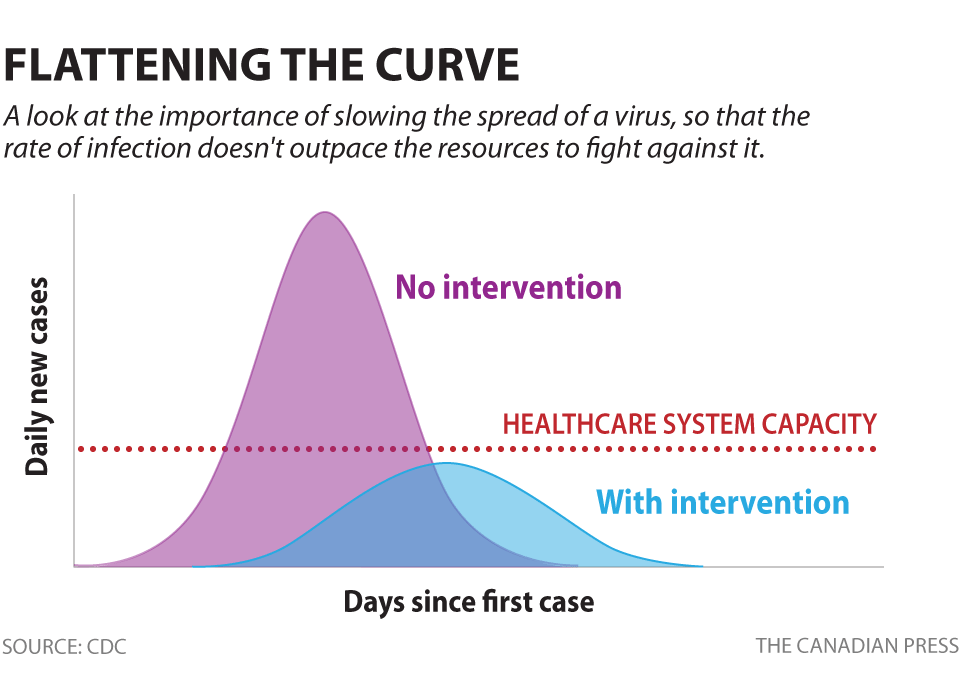
“Our window to flatten the curve of the epidemic is narrow,” Dr. Theresa Tam said at a news conference. “We all need to act now. COVID-19 is a serious public health threat.”
Tam’s new assessment did not immediately trigger fresh advice to prevent the spread of the pandemic. Tam repeated previous government messages about avoiding large public gatherings, practising social distancing and avoiding travel outside of Canada.
She did clarify, however, that Canadians returning from trips abroad should immediately go into self-isolation for 14 days rather than simply self-monitoring.
Meanwhile, Alberta ramped up its efforts to curb the virus’s spread as the province’s chief medical officer of health said that the two people who caught COVID-19 from people who hadn’t left the province changed the landscape.
“Until now, all cases in Alberta had been travel-related or close contact with a returning traveller,” Dr. Deena Hinshaw said. “These two cases mean that there are other cases in the community that we haven not identified, increasing the likelihood that Albertans may be exposed within their communities.”
The province cancelled classes for students in kindergarten through Grade 12, shuttered licensed daycares and asked religious institutions to stop holding large gatherings.
Health authorities in Quebec reported 11 new cases, prompting Premier Francois Legault to call for the closure of public places in the province such as bars, gyms, libraries and movie theatres.
Legault did not include stores or restaurants in his message, but urged eateries to operate at 50 per cent capacity in order to promote social distancing.
“We have to limit outings,” he said at a briefing. “We should go out only to work, buy bread, go to the pharmacy, get health care, take a walk or go help people age 70 and up.”
The more stringent assessments of the evolving situation received a strong endorsement from the head a prominent group of hospitals in Toronto.
Dr. Kevin Smith, CEO of the University Health Network, said bold action at every level is necessary to stem the tide of the virus.
He said he too believes the risk is significant and would like to see more businesses and public spaces shut down to limit the potential for community spread.
“In every public health challenge in the history of mankind, … it’s what we didn’t do we regretted,” he said. “If the worst that happens is someone says after this, ‘oh, they overreacted’,’ I’ll consider that a success.”
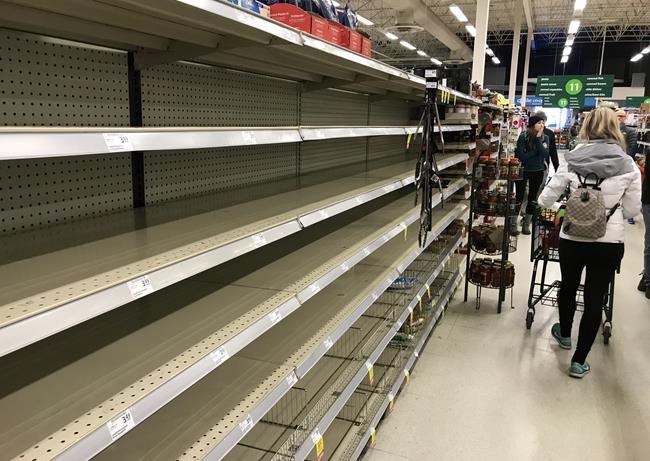
Fears associated with the COVID-19 pandemic have triggered a rush on drug and grocery stores across the country as people flocked to buy basics en masse.
While the Retail Council of Canada said the current high demand for food, toilet paper and other staples is understandable as the number of positive cases continues to climb, it urged Canadians not to succumb to panic.
Marc Fortin, president of the council’s Quebec chapter, said supply chains continue to function as normal and goods will continue to flow even if major trading partners close their borders in a bid to curb the spread of the virus.
“Groceries and pharmacies are considered essential services, so they will remain open,” he said. “We have plenty of food, plenty of goods.”
Fortin said about 70 per cent of commonly purchased items are produced domestically, ensuring their continued availability in Canadian stores. He acknowledged the situation is more precarious for fresh produce and other items being imported at this time of year, but said retailers have suppliers in a variety of countries and have contingency plans in place.
Prime Minister Justin Trudeau also urged retail restraint on Sunday during a television interview with CTV’s Question Period conducted outside his home, where he is currently in self-isolation along with his family.
He said Canada’s supply chains to date have not been affected by the tightening border restrictions around the world, merchandise is still coming across the border and there’s no need to start hoarding supplies.
“Yes, stock up a little bit so you don’t have to go to the store every two or three days like we usually do, but make sure that you’re not taking more than you need,” he said. “Your neighbours, or vulnerable people, will need to access supplies as well.”
U.S. President Donald Trump made similar comments on Sunday, saying he has spoken with leading grocery store executives and that the food supply chain remains healthy.
Trudeau said a measured approach will be important in all aspects of life as Canadians navigate the outbreak, which has so far infected more than 340 people in the country and caused one death.
The number of cases continued to climb on Sunday, with Ontario reporting 42 new cases, bringing the total to 145.
The province announced Sunday it planned to table a bill to offer protections for workers affected by the outbreak and wave the requirement for doctors’ notes, but offered no timelines. The province’s Superior Court said it would stop operating on Tuesday for all but the most urgent of matters, as Ontario also shuttered casinos and urged hospitals to start postponing elective surgeries.
The Manitoba government reported three more cases in that province, bringing the total to seven.
And authorities in Nova Scotia said COVID-19 had officially reached that province after three people tested positive for the virus. Premier Stephen McNeil responded by announcing schools and day-care centres would be closed for two weeks following March break, which is set to begin Monday.

Most people diagnosed with COVID-19 experience mild or moderate symptoms, such as fever and cough, and the vast majority of those who contract the virus recover.
However, for some, including Canadians aged 65 and over, those with compromised immune systems and those with pre-existing conditions, the illness can be much more severe. Among the Canadians diagnosed with the illness so far, fewer than 15 per cent have required hospitalization.
The growing number of cases has prompted widespread closures of schools and universities, mass cancellation of large-scale events, multimillion-dollar economic stimulus packages from governments, and the suspension of the Parliament until April 20
This report by The Canadian Press was first published March 15, 2020.
— With files from Stephanie Levitz in Ottawa, Morgan Lowrie in Montreal, Keith Doucette in Halifax and Hina Alam in Vancouver.
Related Articles
Canada closes borders to most foreigners
Advertisement Advertise With Us
Advertisement Advertise With Us