WEATHER ALERT

Big city, big worry: Pressure mounting to close NYC schools

Advertisement

Advertise with us

NEW YORK - Calls to close the nation's biggest public school system grew Friday in a subdued New York City, where the coronavirus has already turned the lights out on Broadway and shuttered big gathering spots from art museums to Carnegie Hall.

Read this article for free:


By clicking the button above, an account will be created and you will begin to receive some of our recommended newsletters. You may opt out of any newsletter by visiting your Email and Communication Preferences page or by clicking "unsubscribe" at the bottom of any email.

or

Already have an account? Log in here »

To continue reading, please subscribe:

Digital Subscription

One year of digital access for only $1.44 a week*

  • Enjoy unlimited reading on winnipegfreepress.com
  • Read the E-Edition, our digital replica newspaper
  • Access News Break, our award-winning app
  • Play interactive puzzles

*Billed as $5.77 plus GST every four weeks. After 52 weeks, price increases to the regular rate of $19.95 plus GST every four weeks. Offer available to new and qualified returning subscribers only. Cancel any time.

To continue reading, please subscribe:

Add Free Press access to your Brandon Sun subscription for only an additional

$1 for the first 4 weeks*

  • Enjoy unlimited reading on winnipegfreepress.com
  • Read the E-Edition, our digital replica newspaper
  • Access News Break, our award-winning app
  • Play interactive puzzles
Start now

*Your next Brandon Sun subscription payment will increase by $1.00 and you will be charged $17.95 plus GST for four weeks. After four weeks, your payment will increase to $24.95 plus GST every four weeks.

Hey there, time traveller!
This article was published 13/03/2020 (2424 days ago), so information in it may no longer be current.

NEW YORK – Calls to close the nation’s biggest public school system grew Friday in a subdued New York City, where the coronavirus has already turned the lights out on Broadway and shuttered big gathering spots from art museums to Carnegie Hall.

As a growing number of U.S. communities and entire states closed schools, the New York City teachers union and an increasing roster of local politicians said it was time for the nation’s largest city to do the same.

“Teaching and learning can not take place under these circumstances for the safety and well being of the teachers and students,” City Council Speaker Corey Johnson said in a statement Friday.

Tourists Gabby Vela and her husband, of San Antonio, bring a pizza back to their hotel Thursday, March 12, 2020, in New York's Times Square area near Broadway. The couple said they purchased the masks at Home Depot. The two were on spring break in the city, where New York Gov. Andrew Cuomo has banned gatherings of more than 500 people amid concerns over the coronavirus. (AP Photo/Kathy Willens)

But Mayor Bill de Blasio has worried that closing public schools that educate over 1.1 million students could force health care workers, first responders and other needed employees to stay home to care for their children. He is also concerned that hundreds of thousands of poor students could go hungry without their free or reduced-price school meals.

As officials deliberated, restaurants, subway cars and sidewalks were noticeably emptier as people telecommuted to work and avoided public places. Store shelves were wiped clean of basic necessities, such as toilet paper and tissues, and products like hand sanitizer and wipes.

“People are scared to come outside,” said Justin Rahim, a tour guide at Manhattan’s Central Park. He said several of his pedicab drivers — reliant on tourists for their living — quit Thursday to drive for Uber’s food delivery service. “It’s crazy. How am I going to survive this?”

The virus, as of Friday afternoon, had been confirmed in more than 420 people in New York state, including over 150 in the city, and had caused one death in the metropolitan area, in nearby New Jersey. About 50 New York patients are hospitalized.

The number of illnesses may be higher because of a shortage of test kits. The state on Friday opened a drive-through testing centre in New Rochelle, and Gov. Andrew Cuomo said New York had gotten federal permission to work with 28 laboratories to amp up testing. He said he hoped the statewide capacity could hit 6,000 tests a day next week — compared to about 3,200 tests done, in total, to date.

Tourists, including one using a scarf to protect her face against coronavirus in spite of relatively mild winter temperatures, walk through Times Square, Thursday, March 12, 2020, in New York. New York's Gov. Cuomo banned gatherings of more than 500 people in the city, forcing Broadway theaters and many city attractions to close. (AP Photo/Kathy Willens)

For most people, the new coronavirus causes only mild or moderate symptoms, such as fever and cough. For some, especially older adults and people with existing health problems, it can cause more severe illness, including pneumonia. The vast majority of people recover.

Cuomo announced Thursday that gatherings with more than 500 people would temporarily be banned in the state as of 5 p.m. Friday, though evening shows on Broadway were called off a day sooner.

“This could be a six-, seven-, eight-, nine-month affair. … This is not going to be over in a couple of weeks,” Cuomo said at a news conference Friday, later revealing that one of his three daughters had been in a precautionary quarantine after coming into contact with someone who had travelled to a coronavirus hotspot. Her precautionary seclusion has now ended, he said.

Many gatherings in smaller event spaces would have to cut capacity in half. The restrictions, imposed by an emergency order, don’t apply to schools, hospitals, nursing homes, shopping malls and mass transit, and there were exceptions for other types of businesses, like casino floors. Courts across the state curtailed operations, delaying civil trials that haven’t started, halting selection of new juries and encouraging proceedings to be done by video.

People are also still free to go to work, and de Blasio counselled against giving up.

A sign announcing the suspension of all Broadway shows is posted on a door at the Minskoff Theatre, where
A sign announcing the suspension of all Broadway shows is posted on a door at the Minskoff Theatre, where "The Lion King" had been playing, Thursday, March 12, 2020, in New York. Gov. Andrew Cuomo banned gatherings of more than 500 people. (AP Photo/Kathy Willens)

“The city has to keep going,” de Blasio said Friday on Fox 5 TV. “We need people to have their livelihoods. We need folks to show up at work. We need our public servants to be where we need them to be to take care of folks — hospitals, schools, first responders.”

Yet it was clear the slowdown would be painful for a city that relies on the economic engines of tourism, entertainment and Wall Street.

Restaurants and nightspots are reporting drop-offs of 20%-80% over the past week, particularly around touristy Times Square, said Andrew Rigie, executive director of the NYC Hospitality Alliance.

The coronavirus dominated conversation, even in parks where joggers were intent on maintaining some normalcy.

Danielle Xuereb, 38, of Manhattan, had been preparing to run a half-marathon but learned it was cancelled. She said she’s been working from home and expected to continue to lay low for a week or two, maybe skipping her normal yoga classes.

A pedestrian wearing a face mask stops in Times Square, Thursday, March 12, 2020, in New York. New York City Mayor Bill de Blasio said Thursday he will announce new restrictions on gatherings to halt the spread of the new coronavirus in the coming days. For most people, the new coronavirus causes only mild or moderate symptoms. For some it can cause more severe illness. (AP Photo/John Minchillo)

“I guess my main concern,” Xuereb said, “is how long this will all last.”

___

Associated Press writers Marina Villeneuve in Albany, New York, and Karen Matthews, Deepti Hajela and Jim Mustian in New York contributed to this report.

___

The Associated Press receives support for health and science coverage from the Howard Hughes Medical Institute’s Department of Science Education. The AP is solely responsible for all content. Follow AP coverage of the virus outbreak at https://apnews.com/VirusOutbreak and https://apnews.com/UnderstandingtheOutbreak

A commuter wears a face mask while riding the a nearly empty subway car into Brooklyn, Thursday, March 12, 2020, in New York. New York City Mayor Bill de Blasio said Thursday he will announce new restrictions on gatherings to halt the spread of the new coronavirus in the coming days, but he hopes to avoid closing all public events such as Broadway shows. For most people, the new coronavirus causes only mild or moderate symptoms. For some it can cause more severe illness. (AP Photo/John Minchillo)
Pedestrian uses her phone while wearing a face mask in Herald Square, Thursday, March 12, 2020, in New York. New York City Mayor Bill de Blasio said Thursday he will announce new restrictions on gatherings to halt the spread of the new coronavirus in the coming days, but he hopes to avoid closing all public events such as Broadway shows. For most people, the new coronavirus causes only mild or moderate symptoms. For some it can cause more severe illness. (AP Photo/John Minchillo)
Report Error Submit a Tip

More Stories

Imperialist crusades: 21st-century style

John R. Wiens 5 minute read Preview

Imperialist crusades: 21st-century style

John R. Wiens 5 minute read Wednesday, Jul. 8, 2026

In the 11th century and lasting into the 13th, the papacy launched a series of at least eight military campaigns we now refer to as the Crusades, or Holy Wars. They were an imperialistic call to arms for Christians to retake Jerusalem, which was at the time under Muslim rule.

Spiritual rewards for participation were implied, and other incentives offered, to dull the extra taxation demanded to fund the campaigns. Over time, the “crusades” morphed to become massacres of not only Muslims but also Jews and Christian dissidents — in other words, any enemies of the papacy. If today’s news sounds like déjà vu all over again, it probably should.

The stories keep repeating themselves in many forms. We now know that two 20th century world wars, global in scope, were caused by imperialistic ambitions, changes in the balance of international powers and corresponding arms races. The first was attributed to the assassination of the heir to the Austro-Hungarian throne by a Bosnian Serb, a kind of “regime change” initiative. The second resulted from rising tensions between Allied and Axis powers, triggered by the rise of European fascism and Japanese militarism. The human toll of both was unimaginable.

In the First World War, 15 to 22 million people, including soldiers and civilians, were killed and another 23 million were wounded. These numbers do not account for those otherwise affected — victims of chemical warfare whose compromised health shortened their lives; of the subsequent Spanish flu epidemic amplified by the displacement of peoples; others who died from other diseases caused by war conditions; and those who were malnourished or starved. Nor do they account for the ongoing trauma and resentments passed on intergenerationally to this day.

Read
Wednesday, Jul. 8, 2026

SNC planned U.S. move if no deal: documents

Jordan Press and Christopher Reynolds, The Canadian Press 5 minute read Preview

SNC planned U.S. move if no deal: documents

Jordan Press and Christopher Reynolds, The Canadian Press 5 minute read Thursday, Mar. 28, 2019

OTTAWA - SNC-Lavalin warned federal prosecutors last fall about a possible plan to split the company in two, move its offices to the United States and eliminate its Canadian workforce if it didn't get a deal to avoid criminal prosecution, newly obtained documents show.

The documents, part of a PowerPoint presentation obtained by The Canadian Press, describe something called "Plan B" — what Montreal-based SNC might have to do if it can't convince the government to grant a so-called remediation agreement to avoid criminal proceedings in a fraud and corruption case related to projects in Libya.

Under that plan, SNC would move its Montreal headquarters and corporate offices in Ontario and Quebec to the U.S. within a year, cutting its workforce to just 3,500 from 8,717, before eventually winding up its Canadian operations.

“The government of Canada needs to weigh the public interest impact of the prosecution of SNC-Lavalin," the presentation reads.

Read
Thursday, Mar. 28, 2019

The long and winding road

Editorial 4 minute read Preview

The long and winding road

Editorial 4 minute read Yesterday at 2:01 AM CDT

As theatre goes, it sent a strong message.

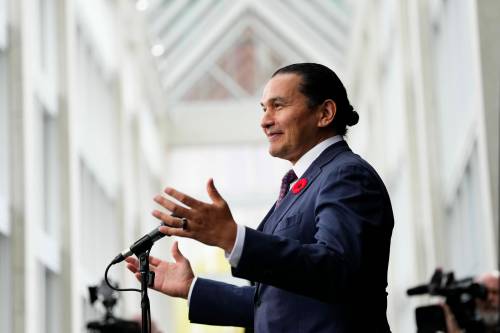
Manitoba Premier Wab Kinew, standing in front of microphones and television cameras, holding up his Indigenous status card and saying that he didn’t feel Canada should have “a race-based form of identification in this country, but that is a reality,” adding that it was time to abolish the Indian Act.

“I think it’s time to abolish the Indian Act, get rid of the Indian Act, move past the Indian Act, and it needs to be done with First Nations people and First Nations governments, of course. I think it’s long overdue that we have a relationship with Indigenous Peoples in Canada that reflects who we are as Canadians today,” he said.

The Indian Act — the name alone suggests how out-dated and out of place the law has become. Originally dating from 1876, the law was put in place to “amend and consolidate the laws respecting Indians” and gave the Minister of the Interior the responsibility to “control and management of the reserves, lands, moneys and property of Indians in Canada.”

Read
Yesterday at 2:01 AM CDT

A little toponder, a lot to celebrate

Erna Buffie 5 minute read Yesterday at 2:01 AM CDT

Well, another civic election season has come and gone, and I have to say it was a doozy. The most surprising event was the steady climb in support for young mayoral candidate Noah Redden, who started out with just four per cent public support in September but had reached a solid 14 per cent support in October.

On election day, Redden nearly came in second, less than one percentage point behind Kevin Klein, an experienced politician.

Indeed, the 27-year-old’s accomplishment was nothing short of astonishing. Particularly given that his shoestring campaign was given very little coverage — largely, according to one pundit, because he didn’t send out any press releases.

This when Redden’s unwritten press releases were there for everyone to see on Instagram, as he popped up in locations across the city, posting videos about what he hoped to achieve as mayor.

Haunted houses aren’t the only places to find jump scares

Jen Zoratti 3 minute read Preview

Haunted houses aren’t the only places to find jump scares

Jen Zoratti 3 minute read Yesterday at 2:01 AM CDT

C’est l’Halloween, to quote the 1981 elementary school French class banger by Matt Maxwell, but you know what’s already plenty scary? Life.

We all have our personal haunted houses, so to speak, hence the popularity of the “a haunted house but it’s just…” meme that pops up every October. Sample: “a haunted house but it’s just a bunch of men telling you you’d be prettier if you smiled.”

In the spirit of the season, I thought I’d offer up a few jump scares of my own.

A haunted house but it’s just Gate E25

Read
Yesterday at 2:01 AM CDT

Third fire hits troubled Manitoba Housing apartment block

Malak Abas 4 minute read Preview

Third fire hits troubled Manitoba Housing apartment block

Malak Abas 4 minute read 3:19 PM EST

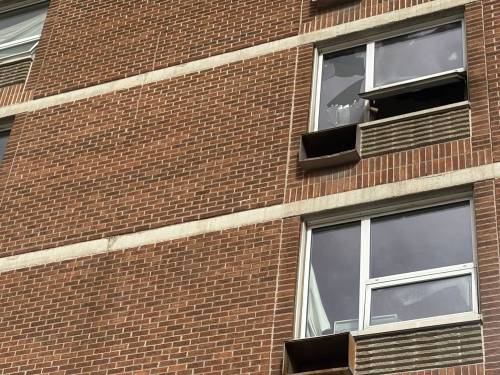
Residents of a North End Manitoba Housing apartment block with a long history of trouble say they’re shaken after the building was hit with its third fire in eight months Friday night.

An apartment complex at 145 Powers St. was evacuated by firefighters after a fire broke out at around 7:45 p.m.

When longtime resident Sharon Markwell heard the fire alarm go off, she chalked it up to a false alarm — kids will get into the building and pull the fire alarm around once or twice a month, she said — until smoke began billowing into the hallway of her fifth-floor apartment.

“Once I realized that I could smell smoke very, very strongly, and the smoke was seeping into my room, into my apartment, I said to myself, ‘This is no false alarm. This is the real thing,’” Markwell, 64, told the Free Press Sunday.

Read
3:19 PM EST