Global Inuit organization concerned about potential spread of COVID-19 in North

Advertisement

Advertise with us

OTTAWA - If the novel coronavirus spreads to the North, Inuit communities in Canada and elsewhere in the Arctic are at a much higher risk of exposure because of a chronic lack of basic infrastructure and resources, according to the Inuit Circumpolar Council.

Read this article for free:


By clicking the button above, an account will be created and you will begin to receive some of our recommended newsletters. You may opt out of any newsletter by visiting your Email and Communication Preferences page or by clicking "unsubscribe" at the bottom of any email.

or

Already have an account? Log in here »

To continue reading, please subscribe:

Digital Subscription

One year of digital access for only $1.44 a week*

  • Enjoy unlimited reading on winnipegfreepress.com
  • Read the E-Edition, our digital replica newspaper
  • Access News Break, our award-winning app
  • Play interactive puzzles

*Billed as $5.77 plus GST every four weeks. After 52 weeks, price increases to the regular rate of $19.95 plus GST every four weeks. Offer available to new and qualified returning subscribers only. Cancel any time.

To continue reading, please subscribe:

Add Free Press access to your Brandon Sun subscription for only an additional

$1 for the first 4 weeks*

  • Enjoy unlimited reading on winnipegfreepress.com
  • Read the E-Edition, our digital replica newspaper
  • Access News Break, our award-winning app
  • Play interactive puzzles
Start now

*Your next Brandon Sun subscription payment will increase by $1.00 and you will be charged $17.95 plus GST for four weeks. After four weeks, your payment will increase to $24.95 plus GST every four weeks.

Hey there, time traveller!
This article was published 06/03/2020 (2430 days ago), so information in it may no longer be current.

OTTAWA – If the novel coronavirus spreads to the North, Inuit communities in Canada and elsewhere in the Arctic are at a much higher risk of exposure because of a chronic lack of basic infrastructure and resources, according to the Inuit Circumpolar Council.

The council, which represents about 180,000 Inuit living in Canada, Alaska, Greenland and Russia, said they must be considered in government responses to the coronavirus because of the potential compounding threat to basic health and well-being in those communities.

Many communities lack sewers and running water, putting people at greater risk of getting sick from COVID-19, the respiratory disease linked to the virus, the council said this week, noting there is already a high prevalence of tuberculosis and other respiratory infections in those communities.

A stop sign in English, French and Inuit is seen in Iqaluit, Nunavut on April 25, 2015. The Inuit Circumpolar Council says if the novel coronavirus spreads to the north its communities in Canada, Alaska and Greenland are at a much higher risk of exposure because of a chronic lack of basic infrastructure and resources. The group says the Inuit must be considered in the government's national and regions response and preparedness plans for coronavirus and the potential compounding threat to basic health and well-being in those communities. THE CANADIAN PRESS/Paul Chiasson

“Despite being the original inhabitants of some of the most affluent countries in the world, gaps in basic infrastructure continue to contribute to severe health risks,” the council said in a news release.

The council has also called on governments to close those infrastructure gaps to protect against future health threats.

Prime Minister Justin Trudeau held a meeting with the Inuit-Crown partnership committee Friday, where he acknowledged gaps in Canada’s Inuit communities range “from housing to health care.”

He did not specifically address COVID-19 in his public remarks, but said that he and his cabinet ministers were there to listen to Inuit leaders’ concerns.

Natan Obed, the president of Inuit Tapiriit Kanatami and co-chair of the committee, also did not mention the virus in his comments. But he said eliminating the infrastructure deficit is on the suggested work plan for the committee, and he was pleased to see it in the Liberal campaign platform too.

NDP leader Jagmeet Singh wrote a letter to Trudeau Friday, urging him to make sure Indigenous and Inuit communities are not disproportionately affected if Canada ends up dealing with a widespread outbreak of the virus.

Singh cautioned the government not to repeat mistakes made during the H1N1 outbreak in 2009. A research review by the National Collaborating Centres for Public Health found a fairly strong association between severe manifestations of the H1N1 influenza and the isolation of Indigenous communities after that outbreak.

“To date, we have seen little evidence to indicate that the federal government learned from these mistakes,” Singh wrote in the letter.

He called on the government to appoint Indigenous Services Minister Marc Miller as a permanent member of the new COVID-19 cabinet committee, struck earlier this week to provide an whole-of-government approach to combating the virus.

There are eight cabinet ministers on the committee, which Miller listed as one of seven alternates.

Indigenous Services Canada is also working with the Public Health Agency of Canada, other relevant departments, and its provincial and territorial counterparts to protect the health and safety of First Nations, Metis and Inuit and support them in responding to public health threats, including COVID-19, according to a statement from the office of Deputy Prime Minister Chrystia Freeland.

The department is also represented on the other response committees in place to respond to the coronavirus threat.

This report by The Canadian Press was first published March 6, 2020.

— With files from Teresa Wright in Ottawa

Report Error Submit a Tip

More Stories

The new normal in Canadian politics

David McLaughlin 5 minute read Preview

The new normal in Canadian politics

David McLaughlin 5 minute read 2:01 AM CDT

“Nothing happening, all at once.”

Welcome to the new normal of Canadian politics, where normality is the new normal. Routine and stable are in; disruptive and excessive are out. Exhibits A and B are the Alberta referendum and the British Columbia election. Voters opted for stability over volatility.

The opposite of being normal is being different from the norm. In politics that means different from where we’ve been and what we’ve come to expect. Two competing trends have dominated our politics for the past decade and a half — progressivism and populism. Think Justin Trudeau and liberal, progressive identity politics in Canada, and Donald Trump and conservative, populist MAGA politics in America. We are now experiencing a swing away from both those trends.

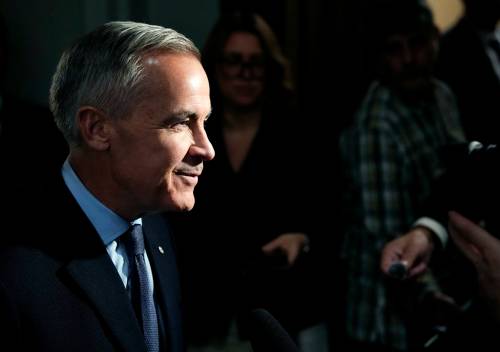
Representing this “new normal” are Prime Minister Mark Carney, for one, and newly elected British Columbia premier, Lorne Doerksen, for another. Both are considered normal because they talk and act like adults in a childish political world. Their political flair is to not have any political flair. They stand out for not standing out.

Read
2:01 AM CDT

Affordable southwest Winnipeg attached two-storey home designed with families in mind

Todd Lewys 5 minute read Preview

Affordable southwest Winnipeg attached two-storey home designed with families in mind

Todd Lewys 5 minute read 2:01 AM CDT

Those in the market for a new entry-level home tend to have one main thought in mind. That thought, in most cases, centres on how much value a dwelling delivers — in both price and livability.

Spencer Curtis, owner of Hilton Homes, says he and his design team are acutely aware of how meticulously prospective buyers scrutinize entry-level new house options, which in most cases are attached two-storey models.

“That’s why we keep tweaking plans to make those homes better,” Curtis says. “This model, the Wilkens, is by far our most popular plan. We put a lot of thought into its design, and are always working at making it as functional and family-friendly as possible.”

Right from the get-go, the Wilkens distinguishes itself from other attached two-storey homes with its square footage.

Read
2:01 AM CDT

A profile of one of Winnipeg’s worst-kept secret singer/songwriters

Ben Waldman 16 minute read Preview

A profile of one of Winnipeg’s worst-kept secret singer/songwriters

Ben Waldman 16 minute read Thursday, Dec. 8, 2022

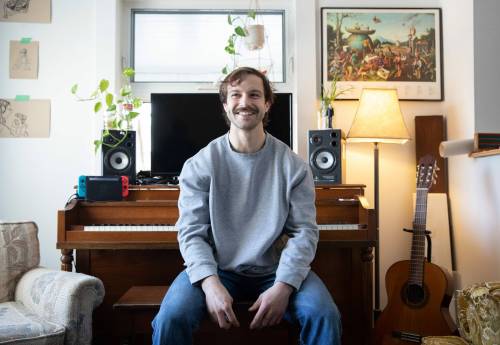
Roman Clarke lives in the last house on his street, with the silently shimmering Seine River as his next-door neighbour. Seated at the picnic table in his backyard are knee-high piles of snow. In the window sill by the front door rests a can of Labatt Blue, the leftover sips frozen by the mid-November chill.

Read
Thursday, Dec. 8, 2022

Letters, Oct. 31

6 minute read 2:01 AM CDT

Civic election a missed opportunity

The outcome of the latest municipal election in Winnipeg is nothing short of baffling. The decline of what was once a proud, beautiful prairie hub is impossible to ignore.

Winnipeg is rapidly sliding into a state of structural and social dilapidation, yet voters have inexplicably chosen to hand incumbent Mayor Scott Gillingham a second term. The decision smells of complacency, and sadly, it represents a massive missed opportunity for real urban renewal.

Walking through downtown Winnipeg today is an exercise in heartbreak. A city centre that should be a bustling economic and cultural core has instead transformed into an absolute eyesore. Encampments and tents are permitted to dot the heart of the city. Streets that used to thrive are now dominated by the tragic, visible reality of severe addiction, with individuals wandering and staggering through public spaces without adequate intervention or care.

Nine more deaths, 107 new COVID-19 cases in Manitoba

Katie May 6 minute read Preview

Nine more deaths, 107 new COVID-19 cases in Manitoba

Katie May 6 minute read Monday, Dec. 28, 2020

Manitoba is restarting its COVID-19 vaccination efforts, following a five-day break — and amidst questions about the delay.

The planned pause over Christmas was in the name of efficiency, a provincial government spokesman says, offering no other explanation on the reasoning behind the decision not to vaccinate anyone Dec. 24-28.

On Monday, the province announced nine more pandemic deaths and 107 new cases of the novel coronavirus.

As part of Manitoba's vaccination plan, the most recent immunization clinic happened Dec. 23; the next was set to start Dec. 29.

Read
Monday, Dec. 28, 2020

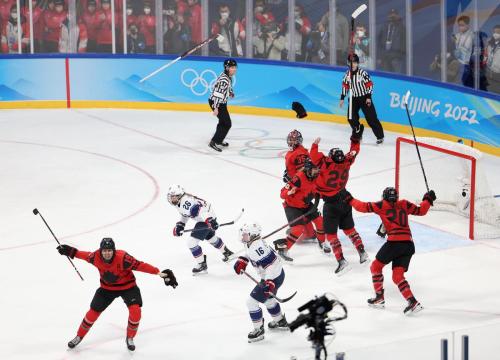
Olympics Overnight: Canada reclaims gold in women’s hockey, Thompson wins silver in ski cross, and Kamila Valieva struggles in women’s free skate

Richie Assaly - Toronto Star, Toronto Star 8 minute read Preview

Olympics Overnight: Canada reclaims gold in women’s hockey, Thompson wins silver in ski cross, and Kamila Valieva struggles in women’s free skate

Richie Assaly - Toronto Star, Toronto Star 8 minute read Thursday, Feb. 17, 2022

Here’s what you missed overnight at Day 13 of the 2022 Beijing Olympics.

Read
Thursday, Feb. 17, 2022