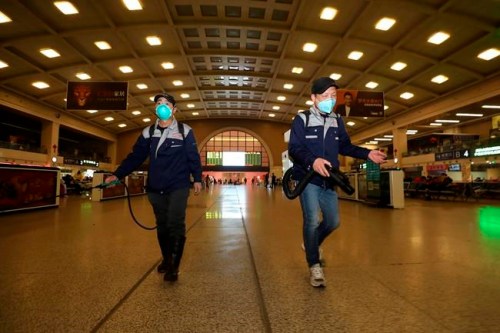
How to protect yourself and others from infection as COVID-19 cases increase
Advertisement
Read this article for free:
or
Already have an account? Log in here »
To continue reading, please subscribe:

Digital Subscription
One year of digital access for only $205*
- Enjoy unlimited reading on winnipegfreepress.com
- Read the E-Edition, our digital replica newspaper
- Access News Break, our award-winning app
- Play interactive puzzles
*First annual payment billed as $205.00 + GST for one year. This annual subscription will automatically renew at $233.00 + GST every 52 weeks (10% off the regular annual price of $259.35). Offer available to new and qualified returning subscribers only. Cancel any time.
To continue reading, please subscribe:
Add Free Press access to your Brandon Sun subscription for only an additional
$1 for the first 4 weeks*
- Enjoy unlimited reading on winnipegfreepress.com
- Read the E-Edition, our digital replica newspaper
- Access News Break, our award-winning app
- Play interactive puzzles
*Your next Brandon Sun subscription payment will increase by $1.00 and you will be charged $17.95 plus GST for four weeks. After four weeks, your payment will increase to $24.95 plus GST every four weeks.
Read unlimited articles for free today:
or
Already have an account? Log in here »
Hey there, time traveller!
This article was published 04/03/2020 (2407 days ago), so information in it may no longer be current.
The global outbreak of a new coronavirus has put many Canadians on alert even as top experts continue to stress that the risk of COVID-19 here remains low.
The Public Health Agency of Canada says the health system is ready to shift from containment to slowing the spread of infection if need be, but that individuals must also be prepared for “all possible scenarios.”
For those unsure how best to guard against infection, questions abound: To travel or not to travel? Paper towels or hand dryer? Mask or no mask?

Here’s a look at some tips, common misconceptions and best practices for staying healthy.
WHO IS MOST AT RISK?
Those believed to be at greater risk of complications from COVID-19 include anyone with a lung impairment or respiratory issues such as smokers, those predisposed to pneumonia or anyone with a pulmonary disorder, says infection control epidemiologist Colin Furness, who teaches knowledge management at the University of Toronto.
Risk also increases with age, with the case fatality rate notably higher among 80-year-olds, adds Dr. Michael Curry, clinical associate professor with the emergency medicine department at the University of British Columbia.
Does that mean the elderly should limit contact with others, especially those who may come in contact with large groups of people?
That’s up to you, says Curry, nonetheless advising a more practical approach would be to limit contact only with people exhibiting symptoms.
“There may be some benefit to keeping the older, more vulnerable people away from people like toddlers that tend to be regarded as good vectors of transmitting respiratory viruses, to keep them in a separate room with a lot of separate ventilation, and cleaning common surfaces,” he says.
“But the practicality of telling an 18-month-old they can’t go play with grandma does make it really challenging on the ground. Asymptomatic transmission might be worrisome, but taken to its extreme dramatically curtails the activities of life.”
I KNOW I SHOULD WASH MY HANDS LONGER BUT WHAT’S BETTER: PAPER TOWELS OR A HAND DRYER?
Paper towels or towels actually remove a lot of dirt when washing, especially if you haven’t washed all that well to begin with, says Furness.
Given how common it is for people to miss spots or spend less than the recommended 20 seconds under the faucet, Furness says opting for the towel is a good idea.
“If you’re not going to commit to washing your hands really thoroughly with soap, then you should absolutely use a paper towel and not a hand dryer,” he says.
“In other words, if you’re in a bathroom with just a hand dryer my advice is to make a decision right then and there that you’re going to wash your hands really thoroughly.”
SOAP AND WATER IS PREFERRED TO SANITIZER BUT IS IT POSSIBLE TO WASH TOO MUCH?
It depends on how well your skin tolerates repeated washing, says Furness.
Strictly following suggestions to wash before and after eating, after touching public surfaces such as bus or subway poles, and after using tissues or inadvertently touching your nose or mouth means you could be washing dozens of times a day.
“No one should be doing that to their hands. We don’t even ask health-care workers to do that. Instead we install hand sanitizer all over the place,” says Furness, whose work has included consulting work and a 2014 study for Gojo, the company that makes Purell.
While hand-washing is the best way to clean your hands, it strips oils and dries your hands, which could make your skin crack and susceptible to germs.
“With hand-washing you also need a moisturizing strategy.”
IS TOUCHING MY FACE REALLY THAT BAD?
Yes, says Curry, noting that’s the most likely way to catch COVID-19.
You are unlikely to get COVID-19 by just breathing, he says, noting this virus appears to be spread by droplets emitted by sneezes and coughs, which actually don’t linger in the air for long.
It’s more likely that an infected person coughs or sneezes on their hands or touches contaminated tissue and then touches a shared surface, thereby spreading germs. Or they sneeze or cough directly onto a surface that you touch.
“And then you actually inoculate yourself — usually by touching your face,” says Curry.
While many people think they don’t touch their face much, Curry says a study that put cameras on people revealed they touched their face about 15 to 20 times per hour.
SHOULD I WEAR A MASK?
There isn’t much consistent evidence that wearing masks would protect healthy Canadians from infection, says Curry, suggesting they’re more likely to increase the risk of infection because many wearers don’t properly fit their mask and often touch their face more frequently to adjust the mask.
But masks should be worn by sick people to prevent the spread of infection and health care workers who are at higher risk because they come in close contact with patients who may have airborne infections, he says.
Still, Furness suggests it could be helpful if you find yourself in the midst of an outbreak where infection is spread in the community.
Curry works in the emergency department at Delta Hospital, in Delta, B.C., south of Vancouver and says he’s not convinced most Canadians need them.
“I was on a plane for six hours’ worth of plane flights on Sunday. I was not wearing a mask,” he says of a recent journey from Montreal to Toronto and Toronto to Vancouver.
“But do I wear a mask at work? Definitely.”
CAN I TRAVEL?
Accept that you will be at increased risk if you travel, says Furness. That means having a Plan B in the event that you may not be able to leave the country you visit or re-enter Canada right away.
“There could be a two-week lockdown, there could be a quarantine, flights could get cancelled,” he says.
Make sure you have enough money, a place to stay or that your kids have a caregiver if needed.
In addition to hand sanitizer, he also suggests bringing N95 masks and being sure to practice fitting them properly in case you suddenly find yourself in an area of community spread. Also bring disinfectant wipes for hard surfaces on the airplane near your seat and possibly the hotel room.
“If you’re in an area where you have any reason to believe there’s community spread, then I think that is good advice.”
SHOULD I STOCK UP ON HOUSEHOLD ITEMS NOW?
Federal Health Minister Patty Hajdu suggested last week that people gather enough supplies to sustain them through a two-week quarantine if needed, just as people should prepare for any unexpected emergency such as a snowstorm or power outage.

That was soon followed by social media posts depicting mass-purchases of toilet paper, disinfectant wipes and groceries — and Hajdu trying to clarify her remarks by saying they were meant to be practical.
Ontario Health Minister Christine Elliott says people should be cautious, but that stockpiling is not necessary, while Curry says the type of dramatic quarantines we’ve seen in China are unlikely to occur here.
He says even two-weeks’ worth of food would be “overkill.”
Curry says maintaining several days’ worth of supplies is just good practice generally, but says grocery and meal delivery services would still allow people to maintain supplies in an emergency.
This report by The Canadian Press was first published March 3, 2020.
Related Articles
Trust us, you're dirty; wash your hands
Advertisement Advertise With Us
Advertisement Advertise With Us