Weinstein juror: #MeToo movement was not a factor in trial

Advertisement

Advertise with us

NEW YORK - The jury that convicted Harvey Weinstein of rape and sex assault did not consider the trial's implications for the #MeToo movement, one of the jurors said in an interview aired Friday.

Read this article for free:


By clicking the button above, an account will be created and you will begin to receive some of our recommended newsletters. You may opt out of any newsletter by visiting your Email and Communication Preferences page or by clicking "unsubscribe" at the bottom of any email.

or

Already have an account? Log in here »

To continue reading, please subscribe:

Digital Subscription

One year of digital access for only $1.44 a week*

  • Enjoy unlimited reading on winnipegfreepress.com
  • Read the E-Edition, our digital replica newspaper
  • Access News Break, our award-winning app
  • Play interactive puzzles

*Billed as $5.77 plus GST every four weeks. After 52 weeks, price increases to the regular rate of $19.95 plus GST every four weeks. Offer available to new and qualified returning subscribers only. Cancel any time.

To continue reading, please subscribe:

Add Free Press access to your Brandon Sun subscription for only an additional

$1 for the first 4 weeks*

  • Enjoy unlimited reading on winnipegfreepress.com
  • Read the E-Edition, our digital replica newspaper
  • Access News Break, our award-winning app
  • Play interactive puzzles
Start now

*Your next Brandon Sun subscription payment will increase by $1.00 and you will be charged $17.95 plus GST for four weeks. After four weeks, your payment will increase to $24.95 plus GST every four weeks.

Hey there, time traveller!
This article was published 28/02/2020 (2438 days ago), so information in it may no longer be current.

NEW YORK – The jury that convicted Harvey Weinstein of rape and sex assault did not consider the trial’s implications for the #MeToo movement, one of the jurors said in an interview aired Friday.

“No, zero, absolutely zero,” juror Drew Malbin said on “CBS This Morning.” “Because it’s not the job and it’s not what we were asked to do.”

He added, “It would be an adulteration of the process to take outside factors and have that weigh on our decision-making process and eventual findings.”

Harvey Weinstein leaves a Manhattan courthouse followed by his his lead attorney Donna Rotunno in the first day of jury deliberations in his rape trial, Tuesday, Feb. 18, 2020, in New York. (AP Photo/Mary Altaffer)

Weinstein, 67, was found guilty Monday of raping an aspiring actress in a New York City hotel room in 2013 and sexually assaulting production assistant Mimi Haleyi at his apartment in 2006. He faces the possibility of years in prison when he is sentenced in March.

Malbin, who was identified in the CBS interview by his first name alone, said the jury took pains to make a decision based on the law and the evidence.

He said the actress’ testimony about the 2013 assault warranted a guilty verdict on the charge of third-degree rape, a lesser charge than the first-degree conviction sought by prosecutors.

“It wasn’t rape in the first degree,” Malbin said. “There was no physical compulsion with the threat of bodily harm or death. But there was no consent given, despite a lack of physical resistance, and a reasonable person should have known that there was no consent given in that instance.”

Weinstein has said that any sexual contact was consensual. His lawyers have promised to appeal the conviction.

At the outset of the trial, Judge James Burke cautioned jurors: “This trial is not a referendum on the #MeToo movement.”

Weinstein, the former Hollywood mogul, has an injured back and other health problems and has been in Bellevue Hospital’s wing for prisoners while awaiting transfer to New York City’s Rikers Island jail complex.

Asked by CBS’ Gayle King whether Weinstein should be in jail, Malbin said, “That’s not for me to say.”

“You know, I could say that a man of his age and of his current health, the general population at Rikers sounds like a pretty dangerous place,” Malbin said.

Also Friday, a newly unsealed court transcript showed that Weinstein’s lawyers wanted the jury foreman kicked off the case for smiling at prosecutor Joan Illuzzi-Orbon as he left the courtroom after a tense day of deliberations. Illuzzi didn’t respond to the juror.

Weinstein lawyer Damon Cheronis asked for Bernard Cody’s removal on Feb. 21, just after the jury sent a note indicating it was deadlocked on the two most serious charges but had reached a unanimous verdict on other ones.

“As we were leaving, Ms. Illuzzi was sitting in her chair. Juror one walked up and looked in her direction, smiled, and said have a great or good weekend,” Cheronis complained in a previously sealed discussion at the judge’s bench.

“I think that is problematic, to say the least,” the lawyer added.

Burke denied Cheronis’ request to remove Cody from the jury, saying: “Nothing wrong with juror one, who was simply smiling when he left the courtroom.”

The transcript of the exchange was provided to reporters who complained that court officers were wrong to shoo them from the courtroom while the discussion was being had.

After a weekend off, jurors took just two more hours of deliberations to reach a verdict on all charges. Afterward, Cody told reporters the process was “devastating.” He didn’t elaborate.

The Associated Press does not typically identify people who say they are victims of sex crimes unless they grant permission, as Haleyi did.

Report Error Submit a Tip

More Stories

Court ruling concludes Canadian Wheat Board saga

Laura Rance-Unger 4 minute read Preview

Court ruling concludes Canadian Wheat Board saga

Laura Rance-Unger 4 minute read 2:01 AM CDT

It remains to be seen whether the recent court ruling in a lawsuit filed after Canadian Wheat Board’s dissolution in 2012 puts the whole debate to rest, as some no doubt hope.

But either way, the dust has settled on the post-CWB world. The sun still rises and a new generation of farmers on the land only knows by name an institution that for generations influenced every aspect of Prairie grain farming.

The first Rural Revival column I wrote for this newspaper more than 30 years ago was about a thousand farmers from Western Canada demonstrating in support of the Wheat Board. It was in the aftermath of the Western Grain Marketing Panel report, one of several efforts that eventually included a plebiscite to help the federal government decide what to do about a vocal minority of farmers who wanted marketing “freedom.”

The polls at the time suggested about two-thirds of farmers were comfortable enough with the single-desk system for food wheat and barley to keep it around. It served as a counterbalance to canola, which they sold on the open market. They essentially had a dual market.

Read
2:01 AM CDT

Has the political wind changed?

Gwynne Dyer 5 minute read 2:01 AM CDT

It has been quite a week. First we had “Lula” – Luiz Inácio da Silva (as nobody but his mother ever called him) – defying everybody’s expectations. After winding up two million votes behind his challenger, Flávio Bolsonaro, in the first round of the Brazilian presidential election, he made a “miraculous” comeback in the second.

It was like a man going into a revolving door behind you and coming out in front. At the end of the first round, Lula was two million votes behind; at the end of the second round on Oct. 25 he was four million votes ahead. So how did he win a fourth term without cheating?

That’s what Bolsonaro claims he did, having fled to the United States; Trump, Flávio’s mentor, hints at the same. But Lula’s victory was not miraculous. He only learned to read when he was 10, and at 80 he still refused to have a mobile phone. His team finally made him get one and use it.

He wouldn’t do social media videos, so they created a WhatsApp channel called Lula’s Army, and made him appear on it at least daily. The channel went from zero to 10.8 million viewers in two weeks, and Lula won.

Doctor’s departure stressful for teen

Kevin Rollason 6 minute read Preview

Doctor’s departure stressful for teen

Kevin Rollason 6 minute read Sunday, Oct. 24, 2021

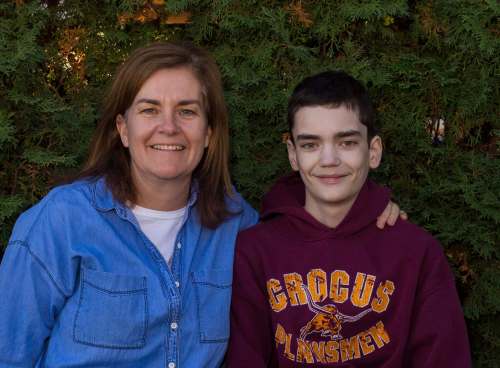
Morgan Walker is a typical teen — but only because a piece of his brain the size of a deck of cards was removed four years ago.

Walker, who had seizures multiple times a day before his surgery, fears other people might not be so lucky.

That’s because his surgeon, Dr. Demitre Serletis, is leaving the province and Health Sciences Centre. Serletis will start practising at the Cleveland Clinic in the new year.

“I was kind of shocked, but I understood why,” Walker said from his home in Brandon. “The government really hasn’t been respecting doctors.”

Read
Sunday, Oct. 24, 2021

Ottawa announces $500 million for North End sewage plant upgrade

Joyanne Pursaga 4 minute read Preview

Ottawa announces $500 million for North End sewage plant upgrade

Joyanne Pursaga 4 minute read Yesterday at 5:03 PM CDT

The federal government will provide $500 million to help complete the major upgrade to Winnipeg’s North End sewage treatment plant.

Winnipeg South MP Terry Duguid confirmed the total funding at a news conference at the plant Friday, calling the work critical to Winnipeg’s future.

“The stakes could not be higher. Without expanded wastewater treatment, Winnipeg would run out of capacity to build new homes and accommodate new industries within six years,” said Duguid.

The commitment offers the final funding needed to cover the $1.57-billion third and final phase of the upgrade. The city and province will also pay $500 million each for the work.

Read
Yesterday at 5:03 PM CDT

Province’s first female dentist took skill, insight wherever needed

David Sanderson    25 minute read Preview

Province’s first female dentist took skill, insight wherever needed

David Sanderson    25 minute read Saturday, Apr. 3, 2021

Some stories take longer to get around to than others.

In the fall of 2011 I hooked up with Fiona Odlum at an Academy Road Starbucks for a lighthearted feature about people who report on traffic for a living. Odlum, currently a contributor at CBC Saskatchewan, was working for 680 CJOB at the time, clueing rush-hour commuters in on stalls, lane closures and fender-benders they’d be wise to avoid.

Odlum turned the tables at one point by asking a few questions of her own including, “So, what’s your main beat?”

I don’t really have one, I told her, but if pressed, I would probably go with human-interest pieces.

Read
Saturday, Apr. 3, 2021

SNC planned U.S. move if no deal: documents

Jordan Press and Christopher Reynolds, The Canadian Press 5 minute read Preview

SNC planned U.S. move if no deal: documents

Jordan Press and Christopher Reynolds, The Canadian Press 5 minute read Thursday, Mar. 28, 2019

OTTAWA - SNC-Lavalin warned federal prosecutors last fall about a possible plan to split the company in two, move its offices to the United States and eliminate its Canadian workforce if it didn't get a deal to avoid criminal prosecution, newly obtained documents show.

The documents, part of a PowerPoint presentation obtained by The Canadian Press, describe something called "Plan B" — what Montreal-based SNC might have to do if it can't convince the government to grant a so-called remediation agreement to avoid criminal proceedings in a fraud and corruption case related to projects in Libya.

Under that plan, SNC would move its Montreal headquarters and corporate offices in Ontario and Quebec to the U.S. within a year, cutting its workforce to just 3,500 from 8,717, before eventually winding up its Canadian operations.

“The government of Canada needs to weigh the public interest impact of the prosecution of SNC-Lavalin," the presentation reads.

Read
Thursday, Mar. 28, 2019