Meeting back on with federal, B.C. governments: Wet’suwet’en hereditary chief

Advertisement

Advertise with us

A meeting between the Wet'suwet'en hereditary chiefs, the federal government and the British Columbia government is set to take place Thursday after it was abruptly cancelled Wednesday, one of the leaders of the First Nation said.

Read this article for free:


or

Already have an account? Log in here »

To continue reading, please subscribe:

Subscribe and receive a limited-edition Free Press branded hat or tote.

Digital Subscription

One year of digital access for only $205*

  • Enjoy unlimited reading on winnipegfreepress.com
  • Read the E-Edition, our digital replica newspaper
  • Access News Break, our award-winning app
  • Play interactive puzzles

*First annual payment billed as $205.00 + GST for one year. This annual subscription will automatically renew at $233.00 + GST every 52 weeks (10% off the regular annual price of $259.35). Offer available to new and qualified returning subscribers only. Cancel any time.

To continue reading, please subscribe:

Add Free Press access to your Brandon Sun subscription for only an additional

$1 for the first 4 weeks*

  • Enjoy unlimited reading on winnipegfreepress.com
  • Read the E-Edition, our digital replica newspaper
  • Access News Break, our award-winning app
  • Play interactive puzzles
Start now

*Your next Brandon Sun subscription payment will increase by $1.00 and you will be charged $17.95 plus GST for four weeks. After four weeks, your payment will increase to $24.95 plus GST every four weeks.

Hey there, time traveller!
This article was published 26/02/2020 (2400 days ago), so information in it may no longer be current.

A meeting between the Wet’suwet’en hereditary chiefs, the federal government and the British Columbia government is set to take place Thursday after it was abruptly cancelled Wednesday, one of the leaders of the First Nation said.

Chief Na’Moks, who also goes by John Ridsdale, said the meeting is scheduled in the afternoon and will continue Friday.

“It was abundantly clear to us that both levels of government had cancelled the discussions we had planned,” he said.
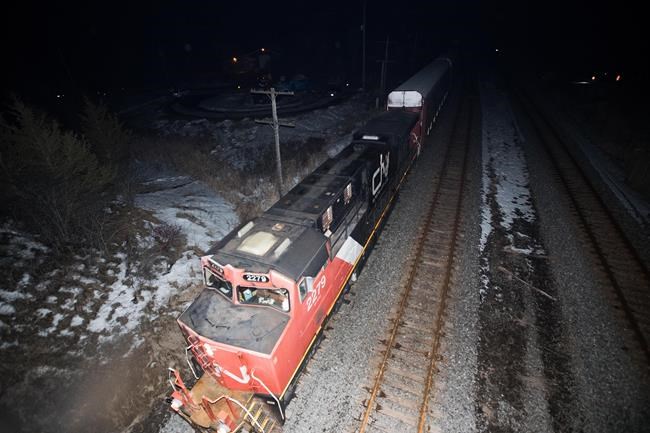
A CN train travels through Tyendinaga, near Belleville, Ont., on Monday Feb. 24, 2020, after police removed the blockade in support of Wet'suwet'en Nation hereditary chiefs attempting to halt construction of a natural gas pipeline on their traditional territories in northern B.C. THE CANADIAN PRESS/Lars Hagberg

By Wednesday evening, he said he and the other hereditary chiefs were told the cancellation was due to a “miscommunication.”

He said talks broke down after they refused to ask other First Nations and their supporters to remove rail blockades throughout the country.

“In our law, we can’t do that,” he said. “We can’t tell another sovereign nation what to do and we would not expect them to do that to us.”

A spokesman for the office of the B.C. premier said Wednesday that the report of a rescheduled meeting was “promising,” but the provincial government was not in a position to confirm it until Thursday morning.

Nationwide rail and road blockades have been popping up for weeks as a show of support for the hereditary chiefs of the Wet’suwet’en Nation, who oppose a natural gas pipeline project cutting across their traditional territory in northwestern British Columbia.

Also Wednesday, protesters behind rail blockades in Quebec and Ontario ramped up their actions as government officials accused them of compromising public safety.

In a video posted on the Real People’s Media website, demonstrators in Tyendinaga Mohawk Territory near Belleville, Ont., were shown standing on rail tracks as a CN Rail train approached, then jumping out of the way at the last second.

Ontario Provincial Police said a handful of protesters also lit fires near and on railway tracks at a secondary camp that remained in place after a raid on another, larger blockade earlier this week.

The latest disruptions were denounced by Prime Minister Justin Trudeau and Public Safety Minister Bill Blair, who called the protesters’ actions unsafe.

“It is extremely concerning to see people endangering their own lives and the lives of others by trying to interfere with the trains,” Trudeau said.

Meanwhile, Quebec Premier Francois Legault suggested provincial police had not moved in to dismantle a blockade on the Kahnawake Mohawk territory south of Montreal because those on the reserve are armed, potentially with assault rifles.

His comments, which came as protesters on the Mohawk territory south of Montreal reinforced a blockade that has been in place since Feb. 8, were rejected by the First Nation, which stressed the demonstration is a peaceful one.

Kenneth Deer, the secretary of the Mohawk Nation at Kahnawake, said the protesters are not armed and the suggestion that there are AK-47s at the site is “highly irresponsible and ludicrous.”

Earlier in the day, Deer spoke out against a possible intervention by outside police, saying any efforts to forcibly remove the site would be seen as an “act of provocation and aggression that will exacerbate an already volatile situation.”

“Ultimately, coercive state-sponsored force is the wrong way to make peace,” Deer said in a statement.

The Assembly of First Nations of Quebec and Labrador also took issue with Legault’s statements, urging him to be more careful in discussing the issue.

“Premier Legault is making very dangerous and offensive comments by suggesting the presence of weapons in Kahnawake,” AFNQL Chief Ghislain Picard said in a statement.

“He certainly did not consider the consequences of his words for community members who live with the memories of 30 years ago on a daily basis.”

The rail company obtained an injunction on Tuesday to end the blockade. Travel disruptions have continued in recent days after several high-profile blockades were dismantled by police in B.C. and Ontario earlier this week.

The agency responsible for a major commuter rail service covering much of southern Ontario said Wednesday it was not anticipating any of the delays and cancellations that brought trains to a standstill during the previous day’s rush hour.

Metrolinx, operator of the GO Transit network, suspended service Tuesday on multiple routes as a series of protests sprang up in and around Toronto.

City police said they arrested three people at the demonstrations. They said Wednesday morning that officers provided protesters with an injunction and began moving them from rail tracks.

The federal governments could not immediately be reached for comment.

This report by The Canadian Press was first published on Feb. 26, 2020

— With files from Liam Casey in Toronto, Dirk Meissner in Victoria, Amy Smart in Vancouver and Teresa Wright in Ottawa.

Report Error Submit a Tip

More Stories

Province announces free daycare for low-income families

Nicole Buffie 3 minute read Preview

Province announces free daycare for low-income families

Nicole Buffie 3 minute read Wednesday, Sep. 2, 2026

Eligible parents will have their child-care fees waived come Sept. 13.

The province announced Wednesday child care would be free for about 4,100 children from 3,000 families as part of a budget commitment to eliminate the $2-per-day fee for low-income families.

“This announcement that we’re making here today is going to be hugely, hugely impactful for the families that rely on this important, important service of child care,” Education and Early Childhood Learning Minister Tracy Schmidt said at a news conference at Panda Bear Day Care.

She said the program would save families between $520 and $2,600 per child per year.

Read
Wednesday, Sep. 2, 2026

From footnote to martyr: execution altered Scott’s place in history

Tom Brodbeck 5 minute read Preview

From footnote to martyr: execution altered Scott’s place in history

Tom Brodbeck 5 minute read Friday, Feb. 14, 2020

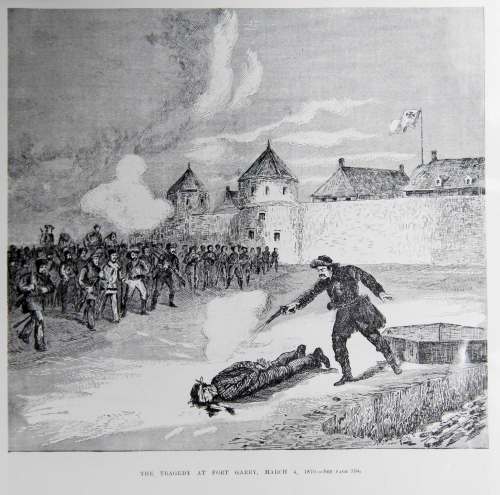
When Thomas Scott was marched outside the walls of Upper Fort Garry and executed by firing squad, it forever changed how history would treat Louis Riel and the Red River Resistance. The killing of Scott, whether a misguided error by Riel or an unavoidable step to prevent further bloodshed, would turn out to be one of the most pivotal events of the resistance.

Only a month after the Irish-born Canadian was condemned to death in March 1870, Riel opponents in Ontario used Scott’s execution to whip up anti-Métis sentiment in an effort to sabotage negotiations between Ottawa and the Red River Settlement. It nearly worked. Two of three Red River delegates sent to Ottawa to negotiate the terms of Manitoba’s entry into confederation were arrested on arrival (but later released) for Scott’s death. At the same time, Prime Minister John A. Macdonald was under increasing political pressure to send military troops to quell the resistance in Red River, rather than engage in peaceful negotiations.

Scott’s death didn’t just complicate matters for the Red River delegates. It undermined their efforts to bargain with Ottawa.

Scott was tried and convicted by a “military council” on March 3 for rebelling against the provisional government and attacking a Métis guard at Upper Fort Garry, where he and other political prisoners were held. The trial wasn’t conducted under normal court rules, even by 1870 Red River standards. Scott had no defence counsel and wasn’t present for much of the proceedings, which were conducted in French (a language he didn’t understand). Riel, one of the chief witnesses in the case, had to act as translator. The military council was not unanimous in its decision to sentence Scott to death. Some felt the penalty was too harsh.

Read
Friday, Feb. 14, 2020

Winnipeg artist’s solo exhibition invites viewers on a disorienting, rewarding journey

Jen Zoratti 5 minute read Preview

Winnipeg artist’s solo exhibition invites viewers on a disorienting, rewarding journey

Jen Zoratti 5 minute read 2:00 AM CDT

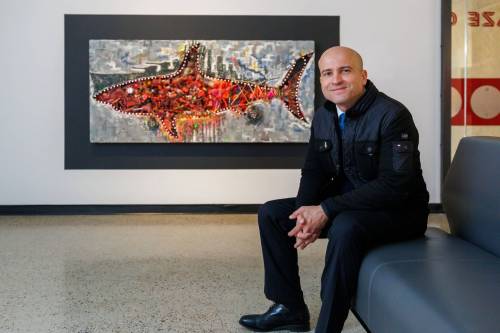
Ryan Smoluk’s Maze City, on now at WAG-Qaumajuq, is a full circle moment.

The Winnipeg visual artist took art classes as a kid at the Winnipeg Art Gallery, his work first exhibited there as part of Through the Eyes of a Child.

Since then, his art — informed by his perspectives and experiences as an artist with autism — has been exhibited internationally, and Smoluk has worked with the United Nations, the New York Stock Exchange, Apple, the Manitoba Government, Manitoba Opera Society, Winnipeg Symphony Orchestra and a host of others.

And now, his work is back on the walls of the WAG, this time in his first solo exhibition at the city’s largest gallery.

Read
2:00 AM CDT

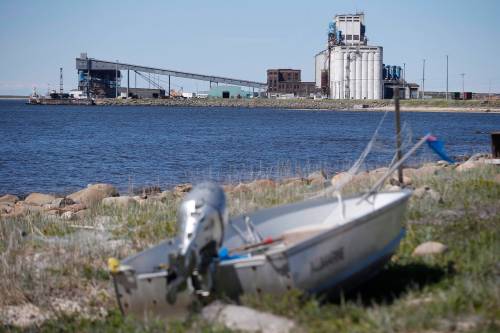
North and east to Hudson Bay: Port Nelson

Wally Daudrich 7 minute read Preview

North and east to Hudson Bay: Port Nelson

Wally Daudrich 7 minute read 2:00 AM CDT

Who in Canada doesn’t like the beaver? It’s a Canadian symbol that represents hard work and ingenuity and using the resources around you to build up what you need.

Western Canada was largely opened because of the value of a rodent.

From the 1600s on, it was the trading of beaver pelts for European goods that helped raise everyone’s standard of living. Two historic figures, Samuel Hearne and Matonabee, (who first met each other by accident west of Hudson Bay) epitomized this new era.

‘Sam’ came with the Hudson Bay Company to make profit for the investors, and ‘Mat,’ a chief of the Dene people, led young Sam across the west to introduce trade with his colleagues in the Athabaskan country. Mat became well known for his “portable trading posts” that he brought across the west.

Read
2:00 AM CDT

0 minute read

Railways, costs and benefits — the long view

Barry E. Prentice 5 minute read 2:00 AM CDT

A railway bypass route for Winnipeg has been endorsed by Premier Wab Kinew for further feasibility study. Naturally, critics have emerged that question the economics of a railway bypass.

Doubters want to be convinced that the benefits exceed the costs, and quite rightly.

So, how should we be thinking about costs and benefits?

It is always easier to estimate the costs of large infrastructure projects than it is to measure benefits. Rail contractors can provide cost estimates of the kilometres of rail bed construction and rails required, plus the additional switches, overpasses and a railway trestle that will be needed. Land acquisition is a major cost and time delay.