Speaking truth to power
Desmond Cole examines race in Canada
Advertisement
Read this article for free:
or
Already have an account? Log in here »
To continue reading, please subscribe:
Digital Subscription
One year of digital access for only $1.44 a week*
- Enjoy unlimited reading on winnipegfreepress.com
- Read the E-Edition, our digital replica newspaper
- Access News Break, our award-winning app
- Play interactive puzzles
*Billed as $5.77 plus GST every four weeks. After 52 weeks, price increases to the regular rate of $19.95 plus GST every four weeks. Offer available to new and qualified returning subscribers only. Cancel any time.
To continue reading, please subscribe:
Add Free Press access to your Brandon Sun subscription for only an additional
$1 for the first 4 weeks*
- Enjoy unlimited reading on winnipegfreepress.com
- Read the E-Edition, our digital replica newspaper
- Access News Break, our award-winning app
- Play interactive puzzles
*Your next Brandon Sun subscription payment will increase by $1.00 and you will be charged $17.95 plus GST for four weeks. After four weeks, your payment will increase to $24.95 plus GST every four weeks.
Read unlimited articles for free today:
or
Already have an account? Log in here »
Hey there, time traveller!
This article was published 15/02/2020 (2451 days ago), so information in it may no longer be current.
In 2015, Desmond Cole’s life changed significantly.
(imageTag)
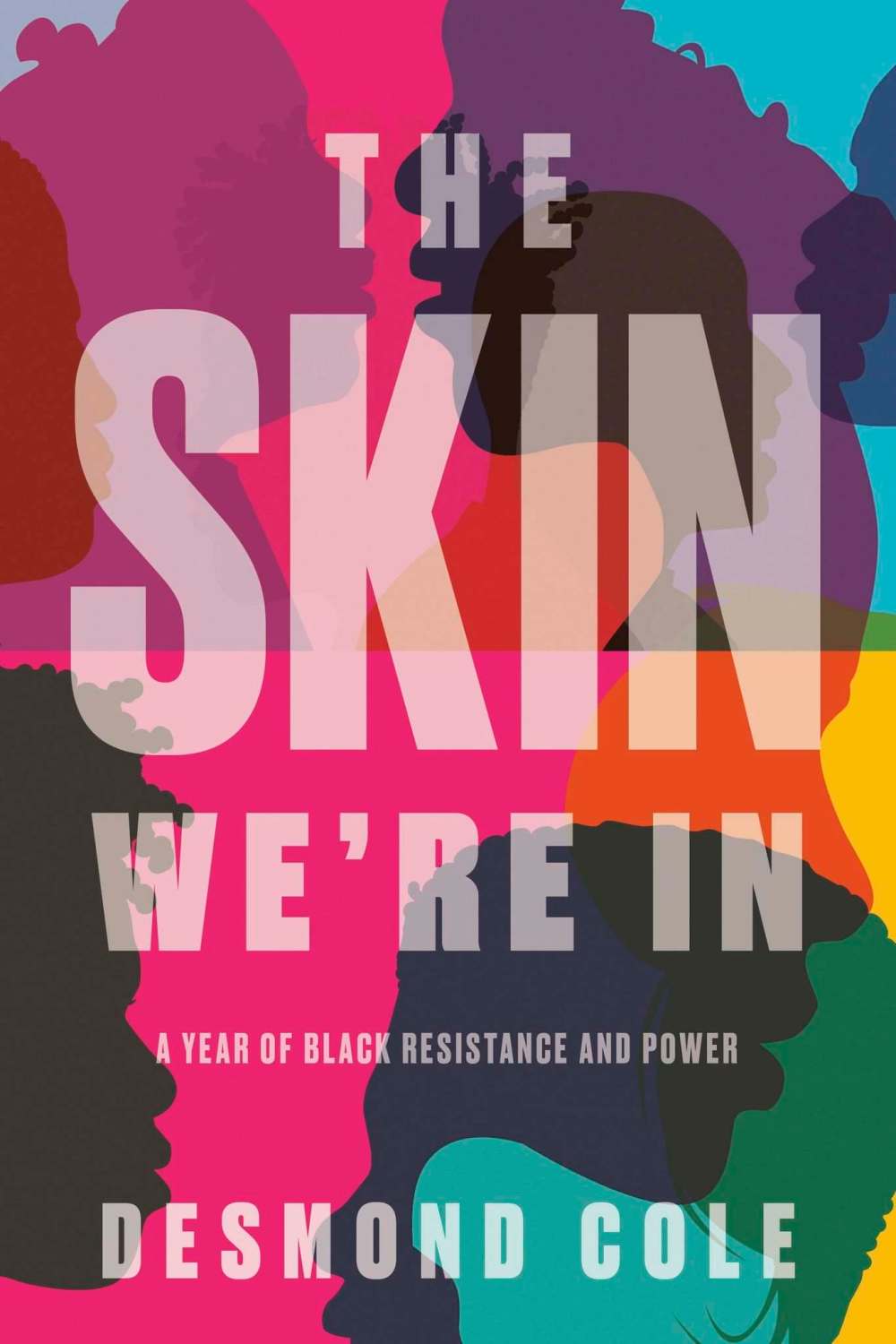
PreviewAn evening with Desmond Cole
Discussing and signing The Skin We’re In: A Year of Black Resistance and Power with Alexa Joy
● McNally Robinson Booksellers, Grant Park location (1120 Grant Ave.)
● Tuesday, Feb. 18, 7 p.m.
● Free
The 37-year-old Toronto-based journalist had penned The Skin I’m In for an issue of Toronto Life, detailing the numerous times he had been stopped and sometimes “carded” — asked to provide identification, despite having done nothing wrong — by police.
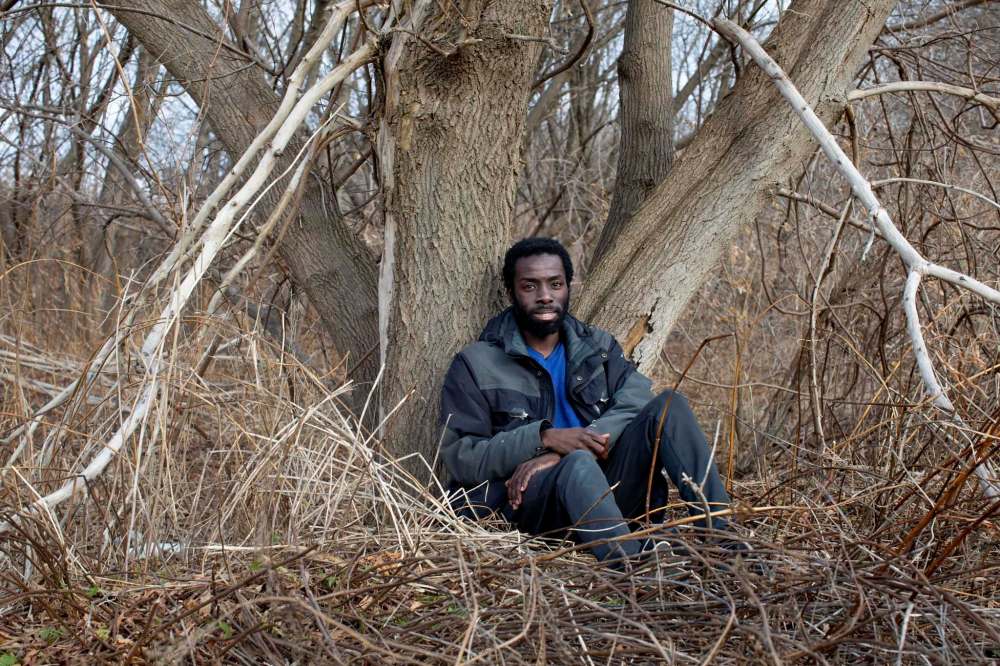
The piece garnered plenty of attention, and led to a book deal for Cole, who also hosted a radio show in Toronto until recently and has written for the Toronto Star and elsewhere.
The resulting book, The Skin We’re In: A Year of Black Resistance and Power, is a month-by-month account of race-related issues in Canada touching on topics such as encounters with police, education, immigration and refugee experiences and more — including touching on Indigenous issues as well.
Cole launches the book in Winnipeg on Tuesday, Feb. 18 at McNally Robinson Booksellers’ Grant Park location at 7 p.m., where he’lll discuss the book with Alexa Joy of Black Space Winnipeg.
Cole talked to the Free Press by phone on Feb. 12 from Montreal, while on his book tour promoting The Skin We’re In. The following interview has been edited for length and clarity.
Ben MacPhee-Sigurdson: I know this book came together following your 2015 Toronto Life piece The Skin I’m In, about your experience with being stopped repeatedly by police on the street, and chronicles the year 2017. Were you writing about the events of that year as they happened, or did you look back once the idea of doing a book came together?
Desmond Cole: It happened in the middle of 2017, actually. I had gone through half of the year — it’s one of those situations where I signed the book deal after that Toronto Life piece blew up in 2015. In the middle of 2017 I was having a conversation with several black authors, including Dionne Brand. I told her I was playing around with some ideas; I had an inkling at the time that I wanted to write something historical — that I should go back in time. She said “don’t do that — you’re living and being active and documenting things that are happening right now — do that with your book. Keep us in the present.” That was around July of 2017; I started really paying attention to the rest of the year, to what was happening and the things I was interested in documenting, writing about. Then I started going back to the first part of the year and looking at what I was writing, what I was tweeting about, thoughts and things I was interested in at that time. I planned to end the book with the December chapter, but January 2018 was such a powerful time for me with the apprehension of Abdoul Abdi by the Canadian Border Services Agency. My editor and I agreed that we should add a thirteenth chapter to this book.
Ben MacPhee-Sigurdson: It works to reinforce that the book could as easily be about 2018 or 2019 as it is about 2017.
Desmond Cole: People ask me now why I picked 2017, or whether there was something special about that year. The answer is no. I needed a container for all these ideas and stories I had, but if I were to keep this format, the book would never end — you could keep chronicling, keep documenting. And digging back into our past to compare how things that are happening now are related to things we’ve been through already.
Ben MacPhee-Sigurdson: We’re coming out of 2019, from a federal election where there was only minor change in the number of seats, despite the emergence of Justin Trudeau’s blackface photos. And now we’re into Black History Month where he’ll undoubtedly be making appearances at events…
Desmond Cole: And he’s in Africa right now. I’m sick to my stomach every time I see Justin Trudeau on television. He shouldn’t be our prime minister. The fact that he didn’t feel ashamed enough to resign really tells us something about power and white supremacy in this day and age. The fact that so many people in Canada expected us to immediately forgive Justin Trudeau — what is the value of black existence if no slight against us, even something that blatant, carries any consequences? It’s a metaphor for much bigger things.
Perhaps the hallmark of the modern Liberal party that Justin Trudeau leads is that we must tolerate them or face the wrath of the even-more-racist Conservatives. That’s about as good as Canada can do. In an equation like that there’s actually nothing Justin Trudeau can be held accountable for. The modern Liberal Party builds its reputation through negation. Their greatest appeal is that they are not the Conservatives. But of course all their policies are conservative. Justin Trudeau’s target now is 10,000 deportations per year, an increase of about 30 per cent from the Stephen Harper era. Now the Liberals couldn’t have campaigned successfully on things like increasing deportations when they were they were going up against Harper; that wouldn’t have been palatable to the Canadian public.
I think Justin Trudeau should have to wear the shame of not only his personal behaviour toward black people, but of his racist policies. I think we should make sure we talk about that being his legacy. When it comes to Justin Trudeau we should talk about the legacy of children across this country continually being apprehended —and that being more so black children than ever before. I also think Justin Trudeau’s refusal to equalize child welfare funding for First Nations kids on reserves is one of the most shameful pieces of his legacy. We can’t allow the world, and history, to forget how he has so disdainfully treated black and Indigenous people under the presumption that someone else could treat us worse.
Ben MacPhee-Sigurdson: When these photos started to emerge, he was on a campaign stop in Winnipeg and addressed the media — doing so in a city that’s been called Canada’s most racist city. Is it even possible to label a city as more or less racist?
Desmond Cole: I think we have to ask ourselves who benefits from these hierarchies and categorizations. As far as I can see, this is Canada’s great dodge. We’re not the United States, and so it doesn’t matter what we do because someone’s doing it worse than we are — in the same way the Liberals are not the Conservatives. These are these formulations — it’s identity through negation. It really leads to terrible policy and terrible expressions of values. There’s no ambition in Canada to be the best; the only ambition is to not be the worst. It’s like “look at the Americans, don’t look at ourselves. Look at the shiny object over there” — it’s a tactic of distraction.
We look at the U.S. and think how horrible things are there, when at the same time it’s just taking a different form in our own backyard.
But what response has Justin Trudeau had to the U.S. Muslim ban? What response has he had to the serial human-rights violations at the U.S.-Mexico border? He was asked about Trump putting children in cages, and he was so afraid to answer that he said “I don’t need to tell you what I think, because you already know.” It’s just so cowardly and disappointing.
I talk in the book about how the U.S. and Canada are collaborating on keeping African asylum seekers out of North America. So far from being these passive observers watching in horror what the United States is doing, Canada is quietly going to the administration and asking “what do you need? How can we work together to keep African migrants out of North America? How can we work together to surveil Muslim people along the Canada-U.S. border?” While we’re congratulating ourselves for not being Donald Trump, we’re greasing the wheels of every racist policy he enacts, and making sure we collaborate to subvert Muslim people, black people at the border and to turn our faces away from human rights abuse after human rights abuse.
Ben MacPhee-Sigurdson: In reading The Skin We’re In, it’s easy to think about how timely it seems. When you see the surging protests, blockades and other actions across the country related to the Coastal GasLink pipelines and the Wet’suwet’en First Nation in northern B.C. Is there hope and optimism to be taken from this?
Desmond Cole: I don’t like to frame things in terms of hope and optimism. You chronicle some real-life stories our country isn’t used to hearing; some of those stories surprise and upset people, and then immediately they’re like “where’s the hope?” That’s not my responsibility — these stories have been happening whether people have been paying attention to them or not.
People would do well to sit with feelings of discomfort while reading the book. Because if those feelings are new to you in terms of reflecting on your own country, then imagine what’s going on for people who are living this. Imagine what’s going on for people whose ancestors were fighting this hundreds of years ago — and they’re still doing the same thing. What I’ve been seeing with the pipeline demonstrations is very exciting, it’s invigorating. I see great opportunity. People are doing this work when no one’s watching with the cameras.
Ben MacPhee-Sigurdson: So there’s a sense that hope could imply complacency, when in reality what you’re advocating for in this book is the opposite.
Desmond Cole: Yes, and I’m advocating an entire shift in the way that we think and act. It’s not a one-time deal — there’s no sales gimmick here. We’re talking about revolutionary ideas. And the goal behind those ideals is so important — the goal of liberation.
I think liberation for me can take so many different forms. What would the world look like if black people were physically able to go wherever we wanted, whenever we wanted? That’s just one little thing that we could consider as being a sign of progress. We can’t walk though our own communities in 2020 without being worried that either the police are going to stop us of on our own accord, or that someone’s going to call the police on us.
We certainly can’t travel across borders safely. I really like the new chant by No One Is Illegal where they say “Freedom to move, freedom to stay, freedom to return to our homes someday. This is a basic goal we should keep thinking about and fighting for. It’s one answer to the basic question of what liberation looks like? That’s what I think it looks like.
Ben MacPhee-Sigurdson: As you’ve traveled across Canada in support of this book, has your perspective on issues of race shifted or evolved?
Desmond Cole: Not as such. I would say that when I was writing the book, I hoped and believed that there was a hunger to see these kinds of stories about black people and resistance featured in the mainstream in a no-nonsense, unapologetic way. I’m very excited, even after just a few days of this book being out, to see that people really do want that.
First of all, black people want it. And I think the reception I’m receiving from black readers of this books is beyond anything I could have hoped. And that’s the best part of this. I’m so happy that black people see themselves and their families and their thoughts and experiences to some extent reflected in this book. That makes me feel great.
But what I’m also seeing, which I wouldn’t have anticipated, is that among non-black people who are coming out to these events there are a lot of teachers. It really is a wonderful thing to see. I don’t expect school boards to go out and buy this book and give it to all their students — ditto colleges and universities. But I’m making relationships with individual bookstore son campuses, and I am making relationships with teachers. And it’s my hope that they work inside these institutions.
Ben MacPhee-Sigurdson: You’ve talked about what white people can and should be doing — advocating community engagement, involvement, something beyond hope and more like opportunity to get involved. How do you see that involvement manifesting itself for white readers — listening? Developing and understanding before moving into more “active” activism, for lack of a better term?
Desmond Cole: I would say the most important thing for people to consider, if they’re white, is: How can I betray white supremacy? That’s a really hard place for white people to get to. They have been silently taught to never betray “white privilege.” I’m really tired of hearing about white privilege — it’s not white privilege, it’s power. It’s not just the privilege to be able to have more money and go to better schools, it’s power. So asking white people to betray white power and white supremacy, which I know makes white people afraid, that’s the starting point.
If white people think they’re afraid to betray white supremacy, they have to consider how the rest of us feel. It’s a scary thing, and nobody knows that better than black and Indigenous people. What does betraying white supremacy look like? I think white people blockading rail lines in solidarity with indigenous people is a huge betrayal of white supremacy — that’s exactly why it’s in the news. These kinds of demonstrations happen all the time, but they don’t necessarily make the news. There’s a greater interest in the part of the white mainstream media when they see white people taking up these messages too.
And whether people articulate it this way or not, the interest is really in the betrayal: Why would you betray all these privileges that you have and go stand out in the snow to block a train? It doesn’t make sense to a lot of people. But it’s an opportunity to say “this is about solidarity with Indigenous people.”
After the The Skin I’m In piece for Toronto Life, I got asked by white people what they could do. I started telling them that they could intervene, and I’d see the looks of horror on their faces. “You mean I have to put myself out of comfort and at risk for you?” Yeah – what did you think we were talking about? But people think they can be so-called allies — another term I’m very tired of hearing —without actually doing anything.
What can you do? When a black person in your community is being interrogated on the street by the police, walking up to that individual and asking “are you okay? Do you need anything right now? Do you feel safe right now?” That is a huge betrayal to a white power system. For any white person who thinks to themselves that it might make them feel unsafe, the alternative is to leave us alone, in our lack of safety, and go along your way… which is what most people are happy to do every day.
I think white people have to understand what it means to betray systems of power that benefit them, and then they’ve got to do that all the time. My friend and her husband, who are both white, were at a nightclub. They got in, and then later were standing outside smoking. They saw the bouncer wouldn’t let in a black man because he said he wasn’t wearing the appropriate shoes for this club. My friend’s husband was wearing the same shoes as this guy.

The two approached the bouncer and asked why they wouldn’t let this guy in, told the bouncer “you’re being really racist right now.” She said the look on his face was as if she had called him a murderer. He was unsettled and shocked that another white person would tell him, in front of a black person, that he was being racist. And that probably ruined that guy’s whole week.
But the next time that bouncer wants to use his power against a black person, he’s going to be looking over his shoulder to see who’s noticing him. The quiet solidarity of whiteness relies on silence, complicity, turning the other way.
As soon as white people decide they’re not going to do that anymore it upsets the whole apple cart. White people really have to think about how revolutionary these small acts of betrayal to white supremacy can be.
books@freepress.mb.ca
Related Articles
In protest of politicians who dabble in policing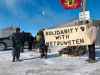
Advertisement Advertise With Us
Advertisement Advertise With Us