How a coronavirus epidemic in China could ripple through the global economy

Advertisement

Advertise with us

An international outbreak of respiratory illness sparked by a novel coronavirus has spread from its origins in central China to at least 11 countries, with more than 1,200 confirmed cases — including a presumed case in Canada — and over 40 deaths.

Read this article for free:


By clicking the button above, an account will be created and you will begin to receive some of our recommended newsletters. You may opt out of any newsletter by visiting your Email and Communication Preferences page or by clicking "unsubscribe" at the bottom of any email.

or

Already have an account? Log in here »

To continue reading, please subscribe:

Digital Subscription

One year of digital access for only $1.44 a week*

  • Enjoy unlimited reading on winnipegfreepress.com
  • Read the E-Edition, our digital replica newspaper
  • Access News Break, our award-winning app
  • Play interactive puzzles

*Billed as $5.77 plus GST every four weeks. After 52 weeks, price increases to the regular rate of $19.95 plus GST every four weeks. Offer available to new and qualified returning subscribers only. Cancel any time.

To continue reading, please subscribe:

Add Free Press access to your Brandon Sun subscription for only an additional

$1 for the first 4 weeks*

  • Enjoy unlimited reading on winnipegfreepress.com
  • Read the E-Edition, our digital replica newspaper
  • Access News Break, our award-winning app
  • Play interactive puzzles
Start now

*Your next Brandon Sun subscription payment will increase by $1.00 and you will be charged $17.95 plus GST for four weeks. After four weeks, your payment will increase to $24.95 plus GST every four weeks.

Hey there, time traveller!
This article was published 26/01/2020 (2469 days ago), so information in it may no longer be current.

An international outbreak of respiratory illness sparked by a novel coronavirus has spread from its origins in central China to at least 11 countries, with more than 1,200 confirmed cases — including a presumed case in Canada — and over 40 deaths.

Like previous outbreaks, including the SARS virus 17 years ago, the flu-like disease poses a risk to economies around the world as fear and confusion lead to abrupt changes in behaviour, decreased economic activity and a ripple effect across sectors that threatens everything from productivity to consumer prices.

The Severe Acute Respiratory Syndrome pandemic of 2003 cost the Chinese economy up to US$20 billion, according to the Asian Development Bank, as travel warnings and transit shutdowns discouraged consumption, foreign tourists stayed away and local residents stopped going out.

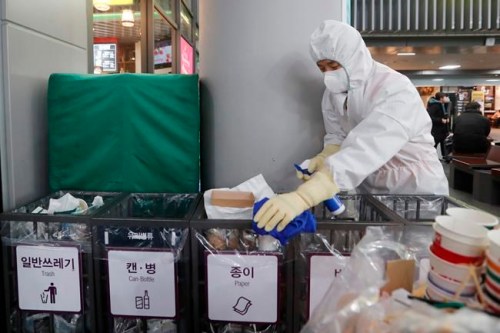
FILE - In this Jan. 24, 2020, file photo an employee works to prevent a new coronavirus at Suseo Station in Seoul, South Korea. On Friday, Jan. 24, 2020, The Associated Press reported on the false claim that the coronavirus outbreak spreading from China is nothing new and that patents were created around it years ago. The patents being shared online are not related to the new respiratory virus that has sickened hundreds of people in China and caused concern around the world. (AP Photo/Ahn Young-joon, File)

“The travel and tourism sectors were most obviously hit, although that ripples through the entire economy,” said Richard Smith, a professor of health economics at the University of Exeter Medical School.

“But many effects are short-lived during an outbreak as once the panic is over people go back to business as usual.”

Chinese authorities clamped down on mass transit during the SARS outbreak, hampering commutes, shopping runs and social outings. The national securities regulatory commission closed stock and futures markets in Shanghai and Shenzhen for two weeks to prevent viral transmission. And Beijing ordered movie theatres, internet cafes and other venues to shut down temporarily while hotels, conference centres, restaurants and galleries saw visitors almost disappear completely.

China’s response to the current crisis appears to be swifter, and the disease less virulent, but the country now boasts a far more extensive high-speed rail network than it did in 2003, and its economy is six times larger, upping the risk of transmission and the repercussions of an epidemic.

“China is the engine of the global economy, churning out goods,” said German health economist Fred Roeder.

Its critical role in international shipping may be thrown into disarray as authorities begin to hold back some ships from entering the port at Wuhan, a key hub on the Yangtze River.

“If they cannot leave it creates huge delays in the supply chain and value chain of businesses all across the world,” Roeder said. “It could actually hit the latest generation of smartphone if ports are shutting down.”

Manufacturing could also feel the crunch as supply chains stall, he said.

Roeder has felt firsthand the disruptive power of a pandemic. In the summer of 2003 the teenage Berliner was eagerly gearing up for a United Nations youth conference that would take him to Taipei, but the event was cancelled a few days beforehand due to SARS.

The epidemic also sparked layoffs and time away from work. At one point Singapore Airlines asked its 6,600 cabin crew to take unpaid leave. Children stayed home from school, prompting more parents to shirk their job duties and further reducing productivity, said AltaCorp Capital analyst Chris Murray.

“I was losing guys left, right and centre as people were quarantined,” recalled Murray, based in Toronto — the epicentre of the SARS pandemic outside of Asia. The disease infected 438 Canadians in total and caused 44 deaths in the Toronto area.

The economic damage culminated with World Health Organization’s one-week travel advisory for the city in April 2003, costing the Canadian economy an estimated $5.25 billion that year.

The outbreak of H1N1, or swine flu, in 2009 also sparked work “dislocations,” Murray said. “It went from, ‘Maybe it’ll be okay,’ to sheer panic.”

Freelancers and gig economy workers such as musicians or ride-hail drivers may feel the pinch more acutely, since they can’t rely on a steady wage when demand shrinks.

“It’s something that unfortunately has happened before in a similar way and it tends to affect areas like retail,” said Carolyn Wilkins, senior deputy governor of the Bank of Canada, said this week.

“People don’t go out, they don’t fly in planes, they don’t do as much tourism to the affected areas,” she said.

The fallout makes workers ranging from servers to wholesale bakers to non-unionized hotel staff more vulnerable. Meanwhile spending or investment plans by larger companies may have to be delayed, said Roeder.

It is not clear how lethal the new coronavirus is or even whether it is as dangerous as the ordinary flu, which kills about 3,500 people every year in Canada alone.

“Still, we should be extremely worried about the economic effects of this,” Roeder said, calling on Chinese authorities to work transparently with Western governments and disease control experts to mitigate the crisis.

“At the end of the day, it hits the entire economy. No one benefits from this.”

This report by The Canadian Press was first published Jan. 25, 2020.

Report Error Submit a Tip

More Stories

The economic threat of a global pandemic

Christopher Reynolds, The Canadian Press 5 minute read Preview

The economic threat of a global pandemic

Christopher Reynolds, The Canadian Press 5 minute read Sunday, Jan. 26, 2020

An international outbreak of respiratory illness sparked by a novel coronavirus has spread from its origins in central China to at least 11 countries, with more than 1,200 confirmed cases — including a presumed case in Canada — and over 40 deaths.

Like previous outbreaks, including the SARS virus 17 years ago, the flu-like disease poses a risk to economies around the world as fear and confusion lead to abrupt changes in behaviour, decreased economic activity and a ripple effect across sectors that threatens everything from productivity to consumer prices.

The Severe Acute Respiratory Syndrome pandemic of 2003 cost the Chinese economy up to US$20 billion, according to the Asian Development Bank, as travel warnings and transit shutdowns discouraged consumption, foreign tourists stayed away and local residents stopped going out.

“The travel and tourism sectors were most obviously hit, although that ripples through the entire economy,” said Richard Smith, a professor of health economics at the University of Exeter Medical School.

Read
Sunday, Jan. 26, 2020

Carrying a torch for tiki

Eva Wasney 5 minute read Preview

Carrying a torch for tiki

Eva Wasney 5 minute read Monday, Nov. 15, 2021

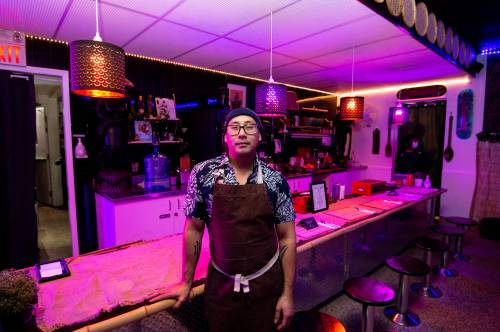
A paper tiki mask is the only indication that the door it’s affixed to leads somewhere other than a dive bar. Ring the doorbell and walk through the kitchen, however, and you’ll be transported to an island-themed lounge that’s equal parts kitschy and comfortable.

“This is just from people’s houses, like my mom’s,” says Allan Pineda, pointing to the wood carvings, water-buffalo horns and rattan furniture decorating the room. “A lot of the stuff you see in here, you’d see in a Filipino’s house back in the day — like second-wave immigrants in the ‘60s and ‘70s, they’d bring this stuff home (from the Philippines).”

Pineda is a local chef and part of the team behind the Bahay Kubo Tiki Bar, a pop-up Filipino drinking and dining experience hosted weekly at an undisclosed Winnipeg establishment.

The details are hush-hush because the temporary eatery is meant to operate like a speakeasy. The dinners are an offshoot of Baon Manila Nights, which Pineda started as a way to highlight Winnipeg’s Filipino culinary scene.

Read
Monday, Nov. 15, 2021

Submit a news tip

1 minute read Monday, Mar. 16, 2026

Submit a news tip

World Indigenous Business Forum comes home to Winnipeg for first time, ponders questions for future prosperity

Aaron Epp 5 minute read Preview

World Indigenous Business Forum comes home to Winnipeg for first time, ponders questions for future prosperity

Aaron Epp 5 minute read Tuesday, Oct. 27, 2026

When Nicola Shirley-Phillips imagines what the Indigenous economy in her country might look like 100 years from now, she doesn’t mention social media or artificial intelligence. Instead, she envisions a holistic way of life where people work alongside each other in a way that cares for the planet.

“I see community (and) I see us being more respectful of all the energies around us — our water energy, our climate (and) the soil,” she said. “In all of that, there are opportunities for us to create businesses and opportunities to provide our services.”

Shirley-Phillips, a serial entrepreneur, organic farmer and community economic development specialist from Jamaica, shared her vision Tuesday morning during a panel discussion focused on Indigenous women and prosperity.

The discussion was one of the first items on the schedule during the first full day of the World Indigenous Business Forum at the RBC Convention Centre in Winnipeg.

Read
Tuesday, Oct. 27, 2026

Meteorologist behind Rob’s Obs is moving weather station to Ontario

Ben Waldman 7 minute read Preview

Meteorologist behind Rob’s Obs is moving weather station to Ontario

Ben Waldman 7 minute read Monday, Jun. 13, 2022

In a Winnipeg winter, there are always at least two certainties: it will be cold, and it will snow. A third certainty: the people will talk endlessly about how frigid the temperature is, and argue about how much snow is cloaking their driveways. Is it colder than it ever has been? Is there more snow today than the same time last year?

Rob Paola likely knows the answers to those questions.

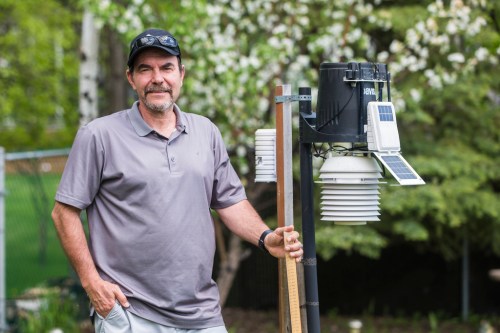
Paola possesses no super powers. He is but a man with a metre stick and 40 years of professional meteorological experience, in the midst of a lifelong love affair with Mother Nature, a most turbulent mistress who rarely, if ever, reciprocates.

Each year when snow begins to fall, Paola heads outside his Charleswood home to figure out how much. He sticks his ruler in the ground, grabs his clipboard, and clicks his pen. In neat script, he records the temperature, what time precipitation began, how deep the powder is stacked. Then, he shares his data and insights online with thousands of followers who want a clear answer to the eternal questions: Why is this happening? When will it stop? How much snow has fallen in the city of Winnipeg?

Read
Monday, Jun. 13, 2022

Indigenous-, newcomer-focused job fair puts opportunity in spotlight

Gabrielle Piché 3 minute read Tuesday, Oct. 27, 2026

Canadian Armed Forces pamphlets grazed the side of Serena Valiquette’s ribbon skirt, as the Grade 9 student clutched the handouts tight.

“When I get to age, I’ll probably apply,” said Serena, 14, joining pockets of students hopping from booth to booth — City of Winnipeg here, Manitoba Public Insurance there — at a job fair in Winnipeg on Tuesday.

The job seekers, present and future, were largely Indigenous and newcomers. It was the demographic organizer Clayton Sandy aimed to attract.

“We have the ability to open doors for young people,” Sandy said. “This is one of the ways we use.”