Royals can expect ‘deferential’ Canadian media coverage, says expert

Advertisement

Advertise with us

Jeffrey Dvorkin remembers returning home to the Annex in downtown Toronto to find his quiet neighbourhood transformed by a swarm of paparazzi, reporters, police and security. At the centre of the pandemonium was none other than Prince Harry, who at the time, was courting the "Suits" actress then known as Meghan Markle.

Read this article for free:


or

Already have an account? Log in here »

To continue reading, please subscribe:

Subscribe and receive a limited-edition Free Press branded hat or tote.

Digital Subscription

One year of digital access for only $205*

  • Enjoy unlimited reading on winnipegfreepress.com
  • Read the E-Edition, our digital replica newspaper
  • Access News Break, our award-winning app
  • Play interactive puzzles

*First annual payment billed as $205.00 + GST for one year. This annual subscription will automatically renew at $233.00 + GST every 52 weeks (10% off the regular annual price of $259.35). Offer available to new and qualified returning subscribers only. Cancel any time.

To continue reading, please subscribe:

Add Free Press access to your Brandon Sun subscription for only an additional

$1 for the first 4 weeks*

  • Enjoy unlimited reading on winnipegfreepress.com
  • Read the E-Edition, our digital replica newspaper
  • Access News Break, our award-winning app
  • Play interactive puzzles
Start now

*Your next Brandon Sun subscription payment will increase by $1.00 and you will be charged $17.95 plus GST for four weeks. After four weeks, your payment will increase to $24.95 plus GST every four weeks.

Hey there, time traveller!
This article was published 14/01/2020 (2454 days ago), so information in it may no longer be current.

Jeffrey Dvorkin remembers returning home to the Annex in downtown Toronto to find his quiet neighbourhood transformed by a swarm of paparazzi, reporters, police and security. At the centre of the pandemonium was none other than Prince Harry, who at the time, was courting the “Suits” actress then known as Meghan Markle.

Since then, the press has proved to be an unwelcome third wheel in the couple’s relationship. And after years of mounting tensions, the Duke and Duchess of Sussex have decided to shirk their senior royal duties, including their traditional media obligations.

As the Sussexes prepare for a part-time move across the pond, Dvorkin, the director of the journalism program at the University of Toronto’s Scarborough campus, suspects they’ll find Canada’s media environment much more hospitable than back home.
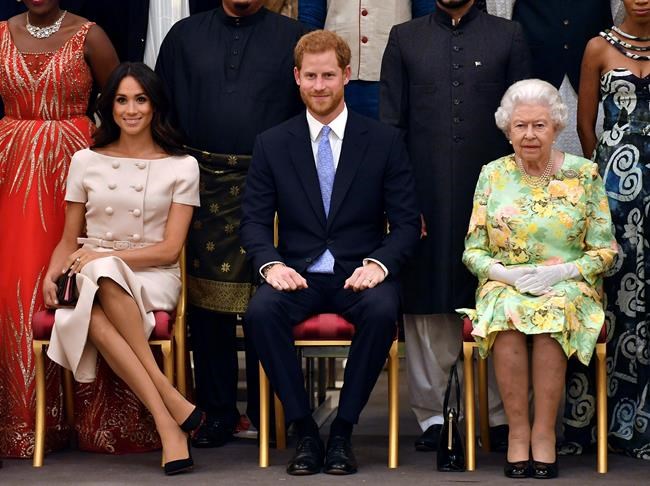
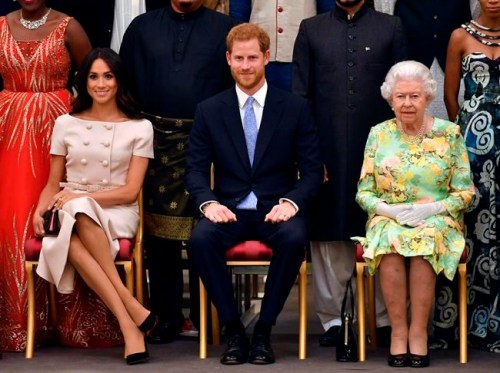
Britain's Queen Elizabeth, Prince Harry and Meghan, Duchess of Sussex pose for a group photo at the Queen's Young Leaders Awards Ceremony at Buckingham Palace in London on Tuesday, June 26, 2018. A journalism expert says Prince Harry and Meghan may have been drawn to Canada's
Britain's Queen Elizabeth, Prince Harry and Meghan, Duchess of Sussex pose for a group photo at the Queen's Young Leaders Awards Ceremony at Buckingham Palace in London on Tuesday, June 26, 2018. A journalism expert says Prince Harry and Meghan may have been drawn to Canada's "deferential" media culture as they mulled their part-time move across the pond. THE CANADIAN PRESS/AP, John Stillwell/Pool Photo

While the British tabloids are locked in a cutthroat competition to hunt down sensational headlines, Canada’s media oligopoly favours a less aggressive approach to covering high-profile subjects, said Dvorkin.

“We still have a strong colonial mentality in this country that occasionally leaches into the journalistic culture, which is about being respectful and knowing one’s place,” he said.

“It’ll be a challenge for Canadian journalism to find the right tone, without being seen to be overly deferential and overly Canadian polite, as we tend to be.”

There’s a long history of bitter relations between Fleet Street — London’s historical journalistic hub — and Buckingham Palace, said Dvorkin. But until recently, the rule was that the monarchy “never bites back.”

From the first official statement by Kensington Palace confirming their coupling in 2016, it was clear that Harry and Meghan would take a different tack in calling out what they deemed to be “a wave of abuse and harassment” directed at the biracial Markle, including commentary with “racial undertones.”

Dvorkin said racism has always lurked beneath the veneer of British civility, but has come to the fore in recent years as Brexit unleashed a swell of nationalist sentiment that branded Meghan as “not one of us.”

He said the prince’s mistrust of the media traces back to the untimely demise of his mother, Diana, who was killed in a car crash in 1997 while being pursued by photographers.

Last year, the young royals launched a lawsuit against the Mail on Sunday newspaper over its publication of a letter written by Meghan. Harry said he feared “history repeating itself… I lost my mother and now I watch my wife falling victim to the same powerful forces.”

Hostilities came to a head earlier this month, when as part of their reduced role within the monarchy, the Sussexes announced they would opt out of the “royal rota” system, which grants a handful of U.K. outlets special access to the House of Windsor.

Professing their commitment to a “strong and open media industry,” the couple said they would work with “grassroots” media outlets and “up-and-coming journalists.”

The move was met with outrage by the British press. In a statement, the general secretary of the National Union of Journalists accused the Sussexes of attempting to interfere with journalists’ abilities to do their jobs, adding that reporters should not need a “royal seal of approval” to cover an institution funded by the public purse.

While Dvorkin agreed that public officials shouldn’t be able to handpick who covers them, he described the royal relationship with the media as “antiquated.”

He said Harry and Meghan might find Canadian journalists to be a breath of fresh air in their circumspection, noting that the family spent the holidays on Vancouver Island with next to no public photos surfacing.

David Fraser, a privacy lawyer at McInnes Cooper, said the Canadian media’s sense of decorum appears to be cultural rather than written into the letter of the law.

Fraser said public figures in Canada have similar legal protections against intrusions of privacy as those in the U.K., but there also haven’t been as many cases of celebrities suing the press to test those boundaries.

“We haven’t developed in Canada a press that’s based on popularity and celebrity and royal obsession,” said Fraser. “But who knows if we get members of the royal family living here six months a year?”

Given the high price tag of celebrity images, Fraser predicted that Canada could see an influx of paparazzi and tabloid writers who are more eager to push limits, which could lead to a rise in trespassing charges against overzealous shutterbugs.

Dvorkin believes Canada’s media landscape could benefit from the international competition.

“The Canadian media culture is so owned and operated by a few influential media organizations … there’s not a lot of room to try out really new ideas,” he said.

“Meghan and Harry might be a boon to Canadian journalism, if Canadian journalism decides to report them in a more effective way.”

This report by The Canadian Press was first published Jan. 14, 2020.

Report Error Submit a Tip

More Stories

Tibial tray connected to aerospace sector …

Aaron Epp 6 minute read Preview

Tibial tray connected to aerospace sector …

Aaron Epp 6 minute read Monday, May. 4, 2026

There are thousands — perhaps tens of thousands — of people in the United States who are walking around with Manitoba-made metal parts in their bodies.

After Winnipeg-based manufacturing solutions provider Precision ADM Inc. got started in 2015, one of its first jobs was fabricating U.S. Food and Drug Administration-approved tibial trays — a critical component for knee replacement surgery that transmits loads from the femur to the tibia, ensuring stability, alignment and durability over millions of cycles of use.

Manufacturing the tibial trays for a client in the U.S. stands out as a vivid memory for Martin Petrak, the company’s co-founder and president.

“We made something that could go into a human, that should be there for the rest of their life,” he says. “We thought, we’ve finally done something significant here as an organization, as a company, with staff that believed that we could do this.”

Read
Monday, May. 4, 2026

International flavour: Canadian investors may want to make like Ottawa, diversify beyond U.S.

Joel Schlesinger 6 minute read Preview

International flavour: Canadian investors may want to make like Ottawa, diversify beyond U.S.

Joel Schlesinger 6 minute read 2:01 AM CDT

Canada is learning the hard way about the dangers of putting too many eggs in its U.S. economic basket.

Much has been made about the need to diversify our economy away from the United States.

Diversification is understandably beneficial. The more varied streams of revenue a nation has, the less affected the economy will be when one of those sources is interrupted.

The same can be said about investment portfolios.

Read
2:01 AM CDT

May be whiff of truth to ex’s odour ardour

Maureen Scurfield 5 minute read 2:01 AM CDT

DEAR MISS LONELYHEARTS: I ran into an old boyfriend I used to curl on a team with, and we went for drinks. We’ve been almost eight years apart, and I couldn’t remember why we broke up, as we always had such a great time together.

It wasn’t until the second date — this time on a weekend — that it came back to me, with a jolt. Pee-yew! I remembered he doesn’t use deodorant on weekends. Why? He enjoys his own body odour. I recalled that a bit too late, and it was just as awful as ever! I went home early.

Tonight, he called and I refused him another date. I said, “Think back. You remember why we broke up?” Then he said, “Oh yeah, you hated my no-deodorant weekend policy. Well, guess what? Some women don’t mind!” I said I really doubted that, and that ended the conversation. Miss L., wouldn’t any women find stinky underarms offensive?

— Sensitive Nose, Fort Richmond

Royals can expect 'deferential' Canadian coverage: expert

Adina Bresge, The Canadian Press 5 minute read Preview

Royals can expect 'deferential' Canadian coverage: expert

Adina Bresge, The Canadian Press 5 minute read Tuesday, Jan. 14, 2020

Jeffrey Dvorkin remembers returning home to the Annex in downtown Toronto to find his quiet neighbourhood transformed by a swarm of paparazzi, reporters, police and security. At the centre of the pandemonium was none other than Prince Harry, who at the time, was courting the "Suits" actress then known as Meghan Markle.

Since then, the press has proved to be an unwelcome third wheel in the couple's relationship. And after years of mounting tensions, the Duke and Duchess of Sussex have decided to shirk their senior royal duties, including their traditional media obligations.

As the Sussexes prepare for a part-time move across the pond, Dvorkin, the director of the journalism program at the University of Toronto's Scarborough campus, suspects they'll find Canada's media environment much more hospitable than back home.

While the British tabloids are locked in a cutthroat competition to hunt down sensational headlines, Canada's media oligopoly favours a less aggressive approach to covering high-profile subjects, said Dvorkin.

Read
Tuesday, Jan. 14, 2020

Broadening prediction-market gambling a bad idea

Editorial 4 minute read Preview

Broadening prediction-market gambling a bad idea

Editorial 4 minute read 2:01 AM CDT

Let’s make a prediction: sooner or later, when Canadian governments find a way to take their own cut of the action, prediction-contract gambling on everything from sports to entertainment to political decisions is going to come to Canada.

And that’s a horrible, dangerous, pernicious idea.

Unless you have particular access to information — either inside information or strategic information based on skills or education — you’re not likely to make money at it. In fact, structurally, you’re likely to lose. In prediction markets, you basically pay an amount, plus fees from the company involved, to bet on whether something will or will not happen within a certain time frame. The amount you pay for your contract depends on how other people are also betting.

As Wealthsimple describes it, “You buy whichever side you think is right. Prices move with demand, so if the market leans towards one outcome, the more that side costs. If a lot of people are backing the TSX to finish above 38,000, yes gets more expensive and no gets cheaper.”

Read
2:01 AM CDT

What’s luck got to do with it?

Tim Kist 5 minute read 2:01 AM CDT

We all seek certainty in our daily lives. We expect if we make a decision, the outcome will be just as we planned: a direct correlation between the decision and result.

You, as a business leader, seek the same certainty from the decisions you make. And sometimes, the result is what was expected. Sometimes, it isn’t.

The big question is: why is it so difficult to achieve the business results you expect when you carefully craft your plans and seemingly make good decisions?

The truth is we cannot predict the future. This means we almost never know precisely how customers will respond to a sales quote, what competitors are planning, and a myriad of other external variables at play.