Climate protesters shut down bridges in Canadian cities as part of global action

Advertisement

Advertise with us

Protesters shut down traffic on major bridges across Canada on Monday as part of an international movement meant to galvanize governments into taking more urgent action against climate change.

Read this article for free:


or

Already have an account? Log in here »

To continue reading, please subscribe:

Subscribe and receive a limited-edition Free Press branded hat or tote.

Digital Subscription

One year of digital access for only $205*

  • Enjoy unlimited reading on winnipegfreepress.com
  • Read the E-Edition, our digital replica newspaper
  • Access News Break, our award-winning app
  • Play interactive puzzles

*First annual payment billed as $205.00 + GST for one year. This annual subscription will automatically renew at $233.00 + GST every 52 weeks (10% off the regular annual price of $259.35). Offer available to new and qualified returning subscribers only. Cancel any time.

To continue reading, please subscribe:

Add Free Press access to your Brandon Sun subscription for only an additional

$1 for the first 4 weeks*

  • Enjoy unlimited reading on winnipegfreepress.com
  • Read the E-Edition, our digital replica newspaper
  • Access News Break, our award-winning app
  • Play interactive puzzles
Start now

*Your next Brandon Sun subscription payment will increase by $1.00 and you will be charged $17.95 plus GST for four weeks. After four weeks, your payment will increase to $24.95 plus GST every four weeks.

Hey there, time traveller!
This article was published 08/10/2019 (2555 days ago), so information in it may no longer be current.

Protesters shut down traffic on major bridges across Canada on Monday as part of an international movement meant to galvanize governments into taking more urgent action against climate change.

Activists with the environmental group Extinction Rebellion blocked traffic on spans in Halifax, Toronto, Edmonton and Vancouver, and social media posts show similar demonstrations took place in Calgary and Victoria later in the day.

The Canadian protests did not attract the same numbers seen in some European cities where hundreds of activists turned out in force, but nonetheless sparked anger among people caught up in major traffic delays.

Extinction Rebellion’s Toronto chapter said disrupting traffic was a necessary, if inconvenient, tactic.

“In a car-dependent city, interfering with traffic is one of the best ways of interfering with business as usual,” the group wrote in a Facebook post.

“We are not attempting to shame or blame drivers — we all live in a toxic system and have few good options in our daily lives without system change.”

Dozens of protesters showed up to block the Bloor Viaduct for between four and five hours. Police said they made 20 arrests at the end, but said the protests were peaceful.

Vancouver Police say 10 people were arrested late Monday for obstruction of justice after they refused to leave a bridge linking the city’s downtown to the west side.

They say between 10 and 11 p.m., “police were forced to arrest” environmental protesters who refused to leave the Burrard Street Bridge even after requests and warnings. The four-lane bridge sees about 55,000 vehicles a day.

Organizer Kevin Imrie said the recent turnout for global climate change marches suggests Canadians recognize the need for urgent climate change action even if they disagree with the group’s approach.

“I think most Canadians believe this is an important thing,” he said. “I think people would disagree with disruption, and I don’t blame them. It’s an extreme response, but it’s an extreme crisis.”

In Edmonton, a handful of protesters linked arms to block traffic on the Walterdale Bridge connecting the city’s south side with the downtown core.

Police kept the peace between activists and angry drivers, some of whom got out of their cars to yell obscenities.

Alberta Premier Jason Kenney criticized the protesters on Twitter, saying they were preventing workers from reaching their jobs and barring parents from taking kids to school.

“Somehow this is all supposed to be in the name of environment, but hundreds of cars are now idling unnecessarily as they wait,” he wrote.

The scene was more peaceful at Halifax’s Angus L. Macdonald Bridge, even when police moved in about four hours after the demonstration got underway.

Officers arrested 18 people positioned on the artery linking the city to nearby Dartmouth. Early in the day, police said less than a hundred protesters, many of them waving flags and signs, had gathered near the toll plaza on the Dartmouth side.

The Macdonald bridge was reopened to traffic by mid-day.

“I think this is a huge success,” protest organizer Patrick Yancey said just moments before he was arrested.

“I think it’s going to be great for the whole world to see all of the people who are willing to make this sacrifice in order to get some action on this climate crisis.”

Lorna McLagen of Annapolis Royal, N.S., was also among the group arrested. She said she felt compelled to act.

“I’ve been part of the problem for so long and now, before I die, I’d like to try to do something,” said McLagen. “As uncomfortable as it makes me feel, I have to do it.”

A protest slated to take place in Montreal was postponed until Tuesday due to rain.

Extinction Rebellion members usually sit or lie down in front of traffic until they are arrested and taken away by police officers. Such a scene played out in cities around the world throughout Monday, although some saw more dramatic efforts.

In New York City, protesters doused a famous statue of a charging bull near Wall Street with fake blood. Other activists splashed with red dye staged a “die-in” in front of the New York Stock Exchange — lying down as if dead while tourists watched.

Afterward, a few participants were seen mopping the fake blood off the ground.

“The blood of the world is here,” said Justin Becker, an organizer who made a link between the fossil fuel industry and the financial interests of Wall Street. “A lot of blood has been spilled by the decisions of the powerful and the status quo and the toxic system that we live in.”

Demonstrators playing steel drums marched through central London as they kicked off two weeks of activities designed to disrupt the city.

In Paris, hundreds either locked arms or chained themselves together in the city’s central square, while in Berlin about 1,000 people gathered before dawn to block the Grosser Stern traffic circle in the middle of the German capital’s Tiergarten park.

Founded in Britain last year, Extinction Rebellion, also known as XR, now has chapters in some 50 countries. The group said the protests Monday were taking place in 60 cities worldwide.

— With files from Keith Doucette in Halifax, Beth Leighton in Vancouver and The Associated Press

This report by The Canadian Press was first published Oct. 7, 2019.
Report Error Submit a Tip

More Stories

The alternative is in the ground

Stuart Williams 4 minute read Wednesday, Jul. 29, 2026

The cheapest 750 megawatts isn’t a methane plant. It’s our own furnaces.

Manitoba Hydro wants to build up to $3 billion worth of additional methane turbines near Brandon — 750 megawatts of fossil-fuelled power, to get us through the coldest winter evenings and the driest years.

As the Public Utilities Board weighs the plan this summer, Manitobans should ask a simple question — is burning methane really the cheapest way to keep the lights on and the furnaces running?

The evidence says no.

Biographer delves deep into the comedy and the tragedy of Robin Williams' troubled life

Reviewed by GC Cabana-Coldwell 6 minute read Preview

Biographer delves deep into the comedy and the tragedy of Robin Williams' troubled life

Reviewed by GC Cabana-Coldwell 6 minute read Saturday, Jun. 16, 2018

Whenever I’m asked with whom I’d love to dine, entertainer Robin Williams always tops my short list of three. Still.

It’s immaterial that we didn’t move in the same social circles. Or that our career paths never crossed, even though one of his many movies, The Big White, was partially shot in Winnipeg in 2005. Something about him — that hairy persona, those kind blue eyes, the “aw shucks” grin — had intrigued me since watching the debut of his Mork & Mindy TV sitcom in 1978. His off-the-wall goofiness simply sealed the deal.

Comedian Williams became movie-star Williams, and I bought every flick — the good, the not-so-good and the real stinkers. His raunchy standup recordings, often released between his movies, were just an added, adult-only bonus.

So I, like many, was gutted when, at age 63, Williams took his own life in 2014. I didn’t “get” it: how could an award-winning, funny guy, admired by so many for so long, get so beaten up inside that he’d off himself?

Read
Saturday, Jun. 16, 2018

Seven Wilsons, one regional spirit

Hersh Seth 5 minute read Preview

Seven Wilsons, one regional spirit

Hersh Seth 5 minute read 2:00 AM CDT

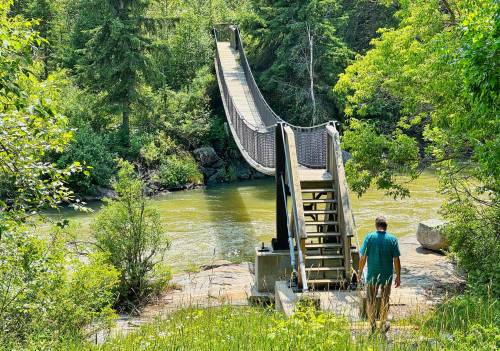
In Dryden, Ont., a 34-metre suspension bridge crosses the Wabigoon River rapids. It is named after a man who paid for a quarter of the bridge himself. A plaque recognizes Roy Wilson’s “many contributions to City Revitalization” and mentions his 40 years in the Rotary Club, whose motto is “service above self”.

My father sold business machines from the 1970s through the ’90s, during the shift from carbon copy machines and typewriters to photocopiers, fax machines, and early office computers and printers. His sales territory — which he covered mostly by car but also by propeller plane — was Saskatchewan, the Northwest Territories, Manitoba, and northwestern Ontario, though much of it really belonged to the Wilsons.

In business machines, selling the machine was only half the job — the other half was ensuring a technician would fix it in January. Wilson’s set the standard for dealers across most of my dad’s regions. My father worked with Roy’s son Greg (who would later go on to become mayor of Dryden) but really respected Roy for teaching Greg to run the company with the towns they served as the priority.

Wilson’s service routes went beyond where roads stopped. Even if customers lived north of the highway system, Wilson’s still found a way to help, using three company planes based at the Dryden airport. As a result, a stationery shop from a paper mill town served all of northwestern Ontario and later northern Manitoba. Imagine a photocopier strapped into a small plane, a technician beside it, and a gravel runway waiting at the other end.

Read
2:00 AM CDT

Essential workers ruling raises questions

Editorial 4 minute read Preview

Essential workers ruling raises questions

Editorial 4 minute read 2:00 AM CDT

Ever been to a Dynacare clinic? Most of us have been. It’s an amazing demographic and ethnic slice of the city we’ve become. Old patients. Young patients. New arrivals. Long-time Canadians. People who know the ropes — others who are startled by the crowds and the noise and the lockstep forward motion of professionals doing what they have been trained to do. It seems, all at the same time, both chaotic and diagnostic, as names of patients are steadily called out and thousands of tests are performed.

But Dynacare is at the centre of a new kind of test and this time, we’re all in the test tube together.

It’s the first real test for new labour law put in place by the government of Premier Wab Kinew in 2024 — a law that redefined what essential services are for provincially-regulated workplaces. Under this law, companies and their employee and unions must have an agreement of which employees are essential — which ones must stay on the job during a legal strike for the protection of the health and safety of the public.

Dynacare had that kind of essential employee agreement with its staff and union — the company and the union had agreed the employees were not essential.

Read
2:00 AM CDT

Festival riffs off Main Street’s storied past

Melissa Martin 7 minute read Preview

Festival riffs off Main Street’s storied past

Melissa Martin 7 minute read Friday, Jun. 10, 2022

Fifty years later, Billy Joe Green can still remember one of the biggest breaks of his career. It was 1971, and his band was asked to become the house band at the Brunswick, an old Main Street hotel and bar.

People would line up around the block to see them, and for a while Green, who was barely out of his teens, could really feel as if he’d made it.

“That was like the high-end place to play for our people,” he says, with a nostalgic smile.

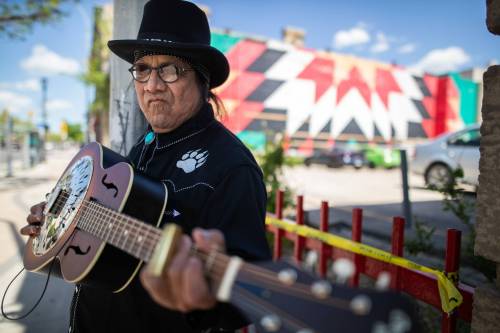
Oh, if the walls of the Main Street strip could talk, they would tell a million stories, and Green would be in a bunch of them. An Ojibwa man and member of Shoal Lake 40 First Nation, Green is one of Winnipeg’s most iconic blues guitarists; back then, he was jamming on the Main Street circuit, slinging out country and rock hits.

Read
Friday, Jun. 10, 2022

Olympic soccer, boxing qualifiers in China affected by virus

The Associated Press 2 minute read Preview

Olympic soccer, boxing qualifiers in China affected by virus

The Associated Press 2 minute read Wednesday, Jan. 22, 2020

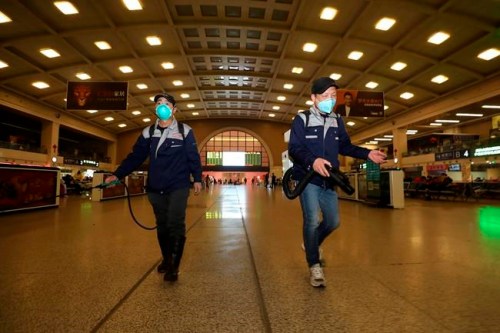
KUALA LUMPUR, Malaysia - Olympic qualifying events in two sports were moved from the Chinese city of Wuhan on Wednesday because of an outbreak of a deadly viral illness.

A four-nation Asian qualifying group for the women’s soccer tournament was switched from the city at the centre of the health scare to Nanjing.

The Asia-Oceania boxing qualifying tournament scheduled for Feb. 3-14 in Wuhan was cancelled. No new plans were announced.

The decisions followed Chinese health authorities telling people in Wuhan to avoid crowds and public gatherings.

Read
Wednesday, Jan. 22, 2020