Author tackles tale of murdered missionaries
Winnipegger spent five years researching Operation Auca while writing fourth novel
Advertisement
Read this article for free:
or
Already have an account? Log in here »
To continue reading, please subscribe:

Digital Subscription
One year of digital access for only $205*
- Enjoy unlimited reading on winnipegfreepress.com
- Read the E-Edition, our digital replica newspaper
- Access News Break, our award-winning app
- Play interactive puzzles
*First annual payment billed as $205.00 + GST for one year. This annual subscription will automatically renew at $233.00 + GST every 52 weeks (10% off the regular annual price of $259.35). Offer available to new and qualified returning subscribers only. Cancel any time.
To continue reading, please subscribe:
Add Free Press access to your Brandon Sun subscription for only an additional
$1 for the first 4 weeks*
- Enjoy unlimited reading on winnipegfreepress.com
- Read the E-Edition, our digital replica newspaper
- Access News Break, our award-winning app
- Play interactive puzzles
*Your next Brandon Sun subscription payment will increase by $1.00 and you will be charged $17.95 plus GST for four weeks. After four weeks, your payment will increase to $24.95 plus GST every four weeks.
Read unlimited articles for free today:
or
Already have an account? Log in here »
Hey there, time traveller!
This article was published 10/09/2019 (2523 days ago), so information in it may no longer be current.
In early 1956, five American evangelical Christian missionaries set up camp along the Curaray River in Ecuador with the hopes of connecting with an indigenous Amazonian community they called the “Auca.” The goal was to convert the Auca (from the Quichua term for “savages”), bringing the teachings of the Bible from the United States to the northeastern Ecuadorian community.
On Jan. 8, the five men were speared to death in an event dubbed Operation Auca that became known throughout the western world thanks to a story (and photographs) in Life magazine.
This real-life tragedy had long been known to Winnipeg novelist Joan Thomas, whose latest book, Five Wives, published Sept. 3 by HarperCollins, is a fictionalized account of events leading up to the deaths, the fallout from Operation Auca and the ways in which the missionaries’ widows and extended family coped and, in some cases, thrived.

“I grew up in an evangelical household; I knew the story of the missionaries well as a child,” Thomas says prior to the launch of her fourth novel on Wednesday at McNally Robinson Booksellers’ Grant Park location, where she’ll be joined in conversation by fellow critically acclaimed Winnipeg writer David Bergen.
“Elisabeth Elliot (a prolific author and one of the missionary widows) is kind of an icon of the Canadian and American evangelical church. Her books were very well-known when I was a child. I don’t think you could find a story that’s viewed as more of a sacred text for evangelicals.”
A 2012 New Yorker piece by Patrick Radden Keefe about Operation Auca spurred Thomas to begin researching the 1956 event, before her 2014 novel The Opening Sky was even completed.
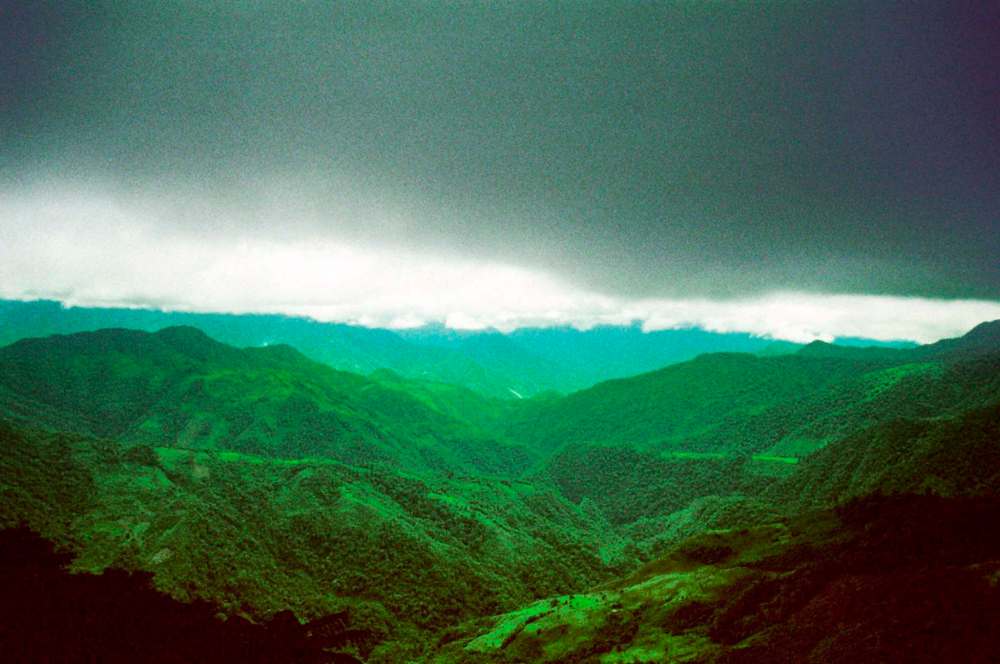
Once that novel (which won the McNally Robinson Book of the Year award at the Manitoba Book Awards) was finished, Thomas turned her attention back to the failed mission, spending the next five years researching Five Wives. This included two trips to northeast Ecuador, where Thomas absorbed the environment experienced by the missionaries and their families.
Rather than appropriating the voices of the Waorani people (as they came to be known, rather than Auca) and their reactions to the foreign visitors, Thomas chose to focus on exploring the stories of the missionaries and their families.
As was the case in The Opening Sky, Five Wives offers the reader multiple perspectives on events. “This book is almost like seven novellas, with seven different points of view and with the baton being passed forward,” Thomas says. “I was quite struck by how different these women turned out to be. You have a sense that when people are so steeped in ideology and express themselves in the same way, you assume that they have a lot in common. But they were profoundly different.”
Moving from an entirely fictionalized, close-to-home novel like The Opening Sky to a continent- and decades-spanning fictionalized true story provided both challenges and benefits.
“I loved writing about the contemporary world in The Opening Sky, but everything is invented and imagined,” Thomas explains. “It’s kind of a gift to a writer when you don’t have to invent everything, when there’s a story already there. In some ways it’s a little bit confining, but I kind of love it — it gives you the infrastructure for the whole story.”
“This book is almost like seven novellas, with seven different points of view and with the baton being passed forward. I was quite struck by how different these women turned out to be.”
In addition to chronicling the lives of the women, one of the ways Thomas explored the fallout of Operation Auca was to create fictional offspring of the missionary families rather than include any of the nine real-life (and still living) children. This includes a modern-day narrative courtesy of Abby, a fictional granddaughter of Elliot who openly questions the stifling evangelical ways passed down by her father, David.
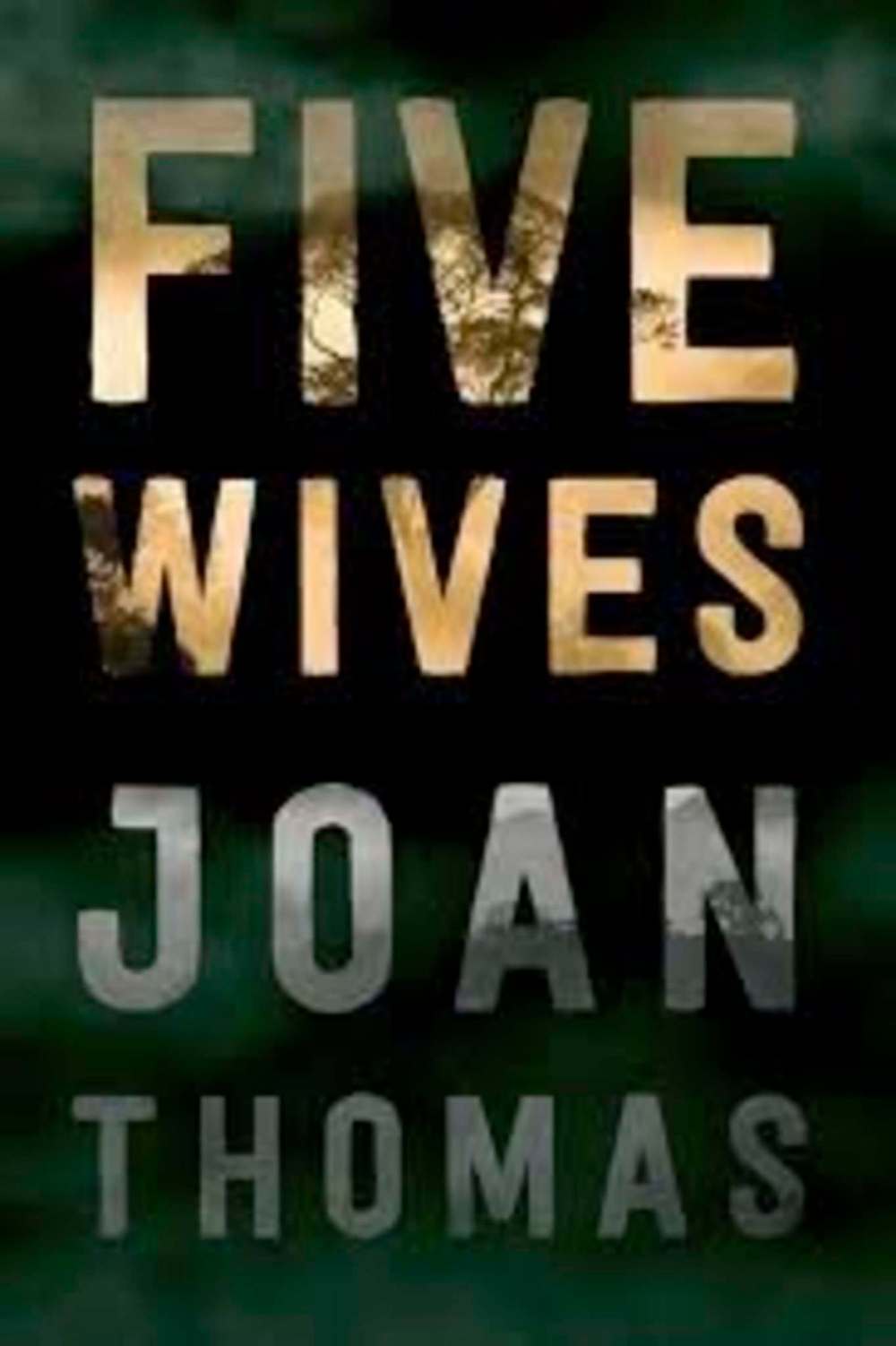
“It was very important to me to include a contemporary frame,” Thomas says. “I found it so illuminating in terms of social attitudes, especially in the United States. In the five years I wrote, this story became more urgent and timely.
“You see, for example, the evangelical church as a bloc supporting Donald Trump, and all these heinous attitudes towards those coming to the southern border. Yet at the same time they’re sending missionaries to South America. I really wanted to investigate some of the attitudes that let people live with this kind of doublethink.”

The loss of Waorani land in the 1950s to oil companies is also intimately linked to issues surrounding the Amazon rainforest today. “The Waorani people are at the forefront of the fight to save the Ecuadorian rainforest,” Thomas explains. “They just had a huge court victory this spring; they managed to challenge the auctioning of one of the oil blocks that had been their traditional homeland.”
Thomas’s novel also explores how smart people can hold seemingly inexplicable opinions or beliefs that seem outlandish to the greater public — both in matters of faith and beyond.
“Elisabeth Elliot is a brilliant writer. One of the missionaries was a PhD student in philosophy, another was a lawyer. I wanted to pose the question: how do deeply intelligent people operate in a way that seems so unreasonable to us? We’re up against that as a society in terms of climate change, for example. I think we’re having to revise our view of what reasonable human behaviour is, the extent to which our unreasonable motives shape our behaviour.”
Thomas adds, “I hope stories like this are helping us to rethink some of our assumptions about our presence in the world.”
books@freepress.mb.ca
Event preview
An evening with Joan Thomas
Launching Five Wives and in conversation with David Bergen
McNally Robinson Booksellers, Grant Park location
Wednesday, 7 p.m.
Free
Winnipeg novelist's latest offering a riveting fictional account of missionaries' plight
Posted:
In 1955, five American missionary couples set out to evangelize the Waorani, an Indigenous people group of the Ecuadorian rainforest that had never had contact with the outside world. They dubbed their mission “Operation Auca.”
Related Articles
Winnipeg author's novel a product of rejecting long-held beliefs
Advertisement Advertise With Us
Advertisement Advertise With Us