

Remembering the horrors of nuclear war
Winnipeggers join global community in honouring Hiroshima, Nagasaki dead with lantern ceremony
Advertisement
Read this article for free:
or
Already have an account? Log in here »
To continue reading, please subscribe:

Digital Subscription
One year of digital access for only $205*
- Enjoy unlimited reading on winnipegfreepress.com
- Read the E-Edition, our digital replica newspaper
- Access News Break, our award-winning app
- Play interactive puzzles
*First annual payment billed as $205.00 + GST for one year. This annual subscription will automatically renew at $233.00 + GST every 52 weeks (10% off the regular annual price of $259.35). Offer available to new and qualified returning subscribers only. Cancel any time.
To continue reading, please subscribe:
Add Free Press access to your Brandon Sun subscription for only an additional
$1 for the first 4 weeks*
- Enjoy unlimited reading on winnipegfreepress.com
- Read the E-Edition, our digital replica newspaper
- Access News Break, our award-winning app
- Play interactive puzzles
*Your next Brandon Sun subscription payment will increase by $1.00 and you will be charged $17.95 plus GST for four weeks. After four weeks, your payment will increase to $24.95 plus GST every four weeks.
Read unlimited articles for free today:
or
Already have an account? Log in here »
Marking small lanterns with messages of “No More War,” “Peace for Everyone” and “Nuclear Free,” Winnipeggers gathered Thursday to mark 81 years since the bombings of Hiroshima and Nagasaki.
The Lanterns for Peace event, one of many around the globe, brought dozens of people to the fountain at Memorial Park to honour those killed by atomic weapons at the end the Second World War.
Growing up in Japan, Hiroe St. Louis remembers how every year, the importance of peace was stressed across the country as the Japanese reflected on the devastation in Hiroshima.
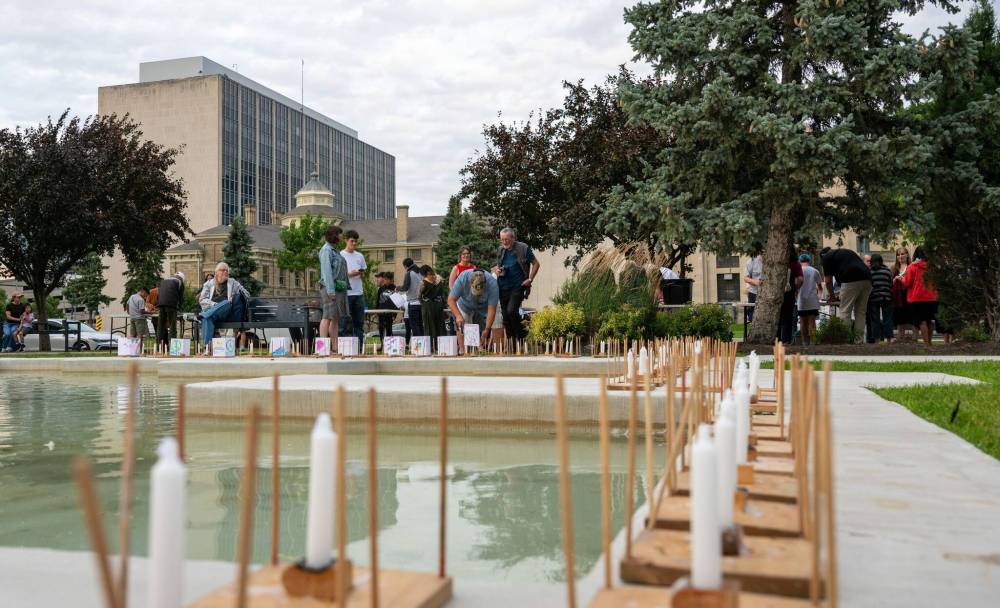
The lanterns bear messages such as ‘No More War’ and ‘Peace for Everyone.’
It was a lesson her grandmother would embed in St. Louis as she grew up near Osaka. While her grandmother was not in a city hit by a nuclear weapon, her home of Yokkaichi burned to the ground during the war. Across the country, people were just trying to survive, St. Louis says.
She said her grandma’s experience helped her understand why peace is critical. It’s a lesson she hopes to pass along to her daughter Momo, 13, who spoke at Thursday’s event.
“How lucky we are now,” she said. “It’s really important to recognize.”
St. Louis says her grandmother taught her that people must take responsibility, doing what they can to encourage peace. That’s why she and her daughter are regulars at the annual event.
“She cares about people, she cares about the world, I think that’s really important to us,” she said.
Momo said she also feels attending the event is important, so she can learn about the horrors of nuclear war while passing down what she’s been taught by her mother.
“It’s good that I have a connection to the history, so I can learn more, from my mom especially, because she’s heard real stories from people who went through it,” she said. “It’s important to share and pass down and then I can share the stories with other people too.”
Several dignitaries including Deputy Mayor Janice Lukes and MLA David Pankratz, Manitoba’s military envoy, spoke at the event, and for the first time, the gathering received a message of thanks from Hiroshima Mayor Matsui Kazumi.
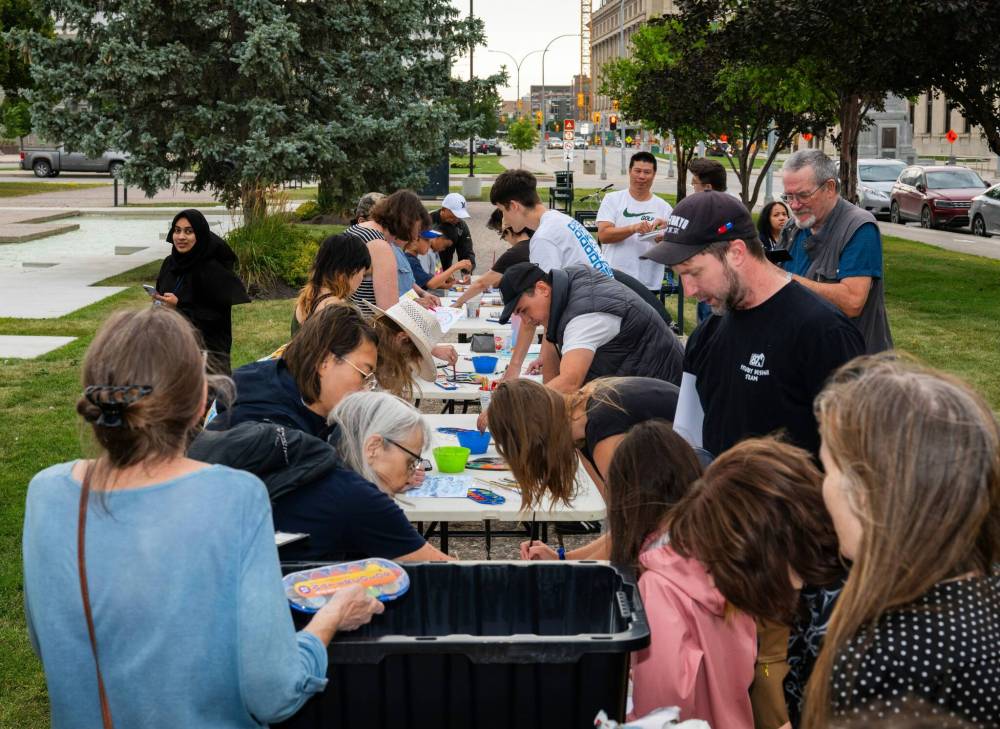
PHOTOS BY ROBERT LEE / FREE PRESS
Dozens decorate lanterns at Winnipeg’s Memorial Park fountain for the Lanterns for Peace ceremony on Thursday.
The U.S. military attacks on the Japanese mainland cities — Aug. 6 (Hiroshima) and Aug. 9 (Nagasaki), 1945 — ushered in the end of Second World War, with an estimated 110,000 to 210,000 people killed, according to the Bulletin of the Atomic Scientists website.
The day after the bomb dropped, the Free Press front page bore the headline: “Atomic Bomb Is So Powerful It Could Rend Globe Asunder,” above a report detailing the attack on “death-dealing” explosive, which it said was like something out of a H.G Wells novel.
Now as the world again grapples with international conflict, organizers of the event said the importance of honouring those lost to war — especially nuclear war — and calling for a ban on nuclear arms carries with it a difference weight.
Rachel Reesor-Taylor, with Peace Alliance Winnipeg, says the peace movement is needed now, more than ever.
“We can’t forget it,” said Saaya Hayashi, a Japanese citizen who has lived in Canada for 12 years. “We have to tell the next generation.”
Watching her children Tatsuki, eight, and Yoshiki, five, paint lanterns for peace with her husband Chris Dare, she said the two are trying to teach their children that war is not the answer.

“They’re innocent kids,” said Dare. “They’re an open canvas, so we’re teaching them now that war is not good.”
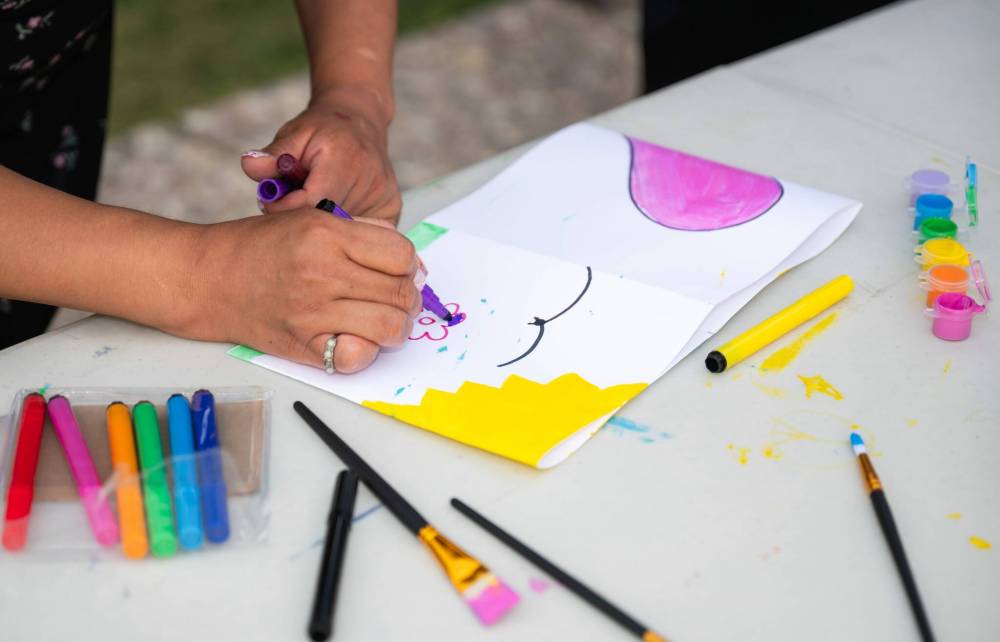
photos by robert lee / free press
Once completed, the lanterns were floated on the Memorial Park fountain.
Alongside remembering those killed during the 1945 attacks, the event also gives people a chance to speak out against nuclear weapons, and call for abolition.
Ashley Pomykala, 33, visited the Hiroshima Peace Memorial Museum as a high-school student and said the experience resonated strongly with her and is one she’ll never forget, as it was only then she comprehended what people went through following the bomb.
“Making sure that (people) understand, that while we’re grateful to live in a place where things are safe … there are other places that may not be. And tomorrow, who knows what could happen, so just hold your close ones close.”
morgan.modjeski@freepress.mb.ca