Federal carbon tax could send N.B. motorists across borders for gas, expert says

Advertisement

Advertise with us

FREDERICTON - New Brunswick gas prices jumped by more than four cents a litre Monday, with one expert predicting the federal carbon tax could push motorists across the province's borders looking for cheaper gas.

Read this article for free:


By clicking the button above, an account will be created and you will begin to receive some of our recommended newsletters. You may opt out of any newsletter by visiting your Email and Communication Preferences page or by clicking "unsubscribe" at the bottom of any email.

or

Already have an account? Log in here »

To continue reading, please subscribe:

Digital Subscription

One year of digital access for only $1.44 a week*

  • Enjoy unlimited reading on winnipegfreepress.com
  • Read the E-Edition, our digital replica newspaper
  • Access News Break, our award-winning app
  • Play interactive puzzles

*Billed as $5.77 plus GST every four weeks. After 52 weeks, price increases to the regular rate of $19.95 plus GST every four weeks. Offer available to new and qualified returning subscribers only. Cancel any time.

To continue reading, please subscribe:

Add Free Press access to your Brandon Sun subscription for only an additional

$1 for the first 4 weeks*

  • Enjoy unlimited reading on winnipegfreepress.com
  • Read the E-Edition, our digital replica newspaper
  • Access News Break, our award-winning app
  • Play interactive puzzles
Start now

*Your next Brandon Sun subscription payment will increase by $1.00 and you will be charged $17.95 plus GST for four weeks. After four weeks, your payment will increase to $24.95 plus GST every four weeks.

Hey there, time traveller!
This article was published 01/04/2019 (2757 days ago), so information in it may no longer be current.

FREDERICTON – New Brunswick gas prices jumped by more than four cents a litre Monday, with one expert predicting the federal carbon tax could push motorists across the province’s borders looking for cheaper gas.

New Brunswick is among four provinces that refused to impose their own emissions pricing, so Ottawa imposed a tax as of Monday.

Gas prices rose 4.42 cents per litre plus HST. Diesel jumped 5.37 cents per litre, and home heating fuel jumped 5.37 cents per litre.
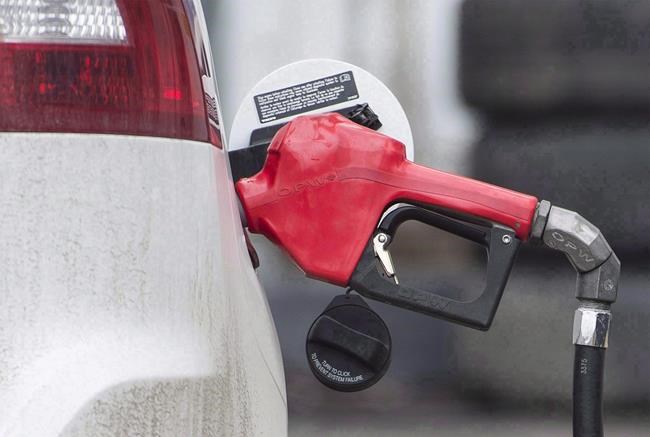
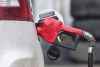
A gas pump is shown at a filling station in Montreal, Wednesday, April 12, 2017. New Brunswick gas prices jumped by more than four cents a litre today, with the provincial Tory government saying the federal carbon tax has turned out to be a
A gas pump is shown at a filling station in Montreal, Wednesday, April 12, 2017. New Brunswick gas prices jumped by more than four cents a litre today, with the provincial Tory government saying the federal carbon tax has turned out to be a "very bad April Fool's joke" from Ottawa. THE CANADIAN PRESS/Graham Hughes

The New Brunswick government said P.E.I. is paying just a penny more per litre of gas in carbon tax, and it’s less than half that in Newfoundland and Labrador. Nova Scotia is also estimated to face an extra penny per litre.

“This carbon tax is like a very bad April Fool’s joke,” Jeff Carr, provincial minister of environment, said in a statement. “But unfortunately, the fact is that New Brunswickers are being hit with the highest carbon gas tax in Atlantic Canada.”

Carol Montreuil of the Canadian Fuels Association said the patchwork system of carbon pricing plans across the country is especially pronounced in the Atlantic region given the relatively low increases in the provinces that neighbour New Brunswick.

Montreuil said rising costs in New Brunswick could potentially drive consumers over nearby provincial borders for cheaper fuel.

“People are very, very sensitive to retail prices,” Montreuil said from Montreal.

“To what extent will consumers drive long distances to take advantage of a difference of four to five cents? No one knows, but it is an important number,” he said.

Truck drivers, he noted, could choose to fuel up in other provinces along their route.

Premier Blaine Higgs’ Tory government argues the tax will punish the many rural New Brunswickers who can’t ditch their vehicles for public transit.

Carr said in an interview New Brunswick can fight climate change without raising taxes.

“This is a global issue and we’re not opposed to taking our precautions here in New Brunswick and doing what we can and doing our part, but we don’t need a tax to do that here,” Carr said.

New Brunswick is an intervener in legal challenges launched by Saskatchewan and Ontario in its fight against the carbon levy.

Liberal MLA Andrew Harvey, a former environment minister, said his party encourages Higgs to negotiate with the federal government rather than take the issue to court.

Residents of the four provinces will be getting rebates as well on their income tax returns. The rebates start at $128 annually, vary between provinces and increase for people with spouses or dependents at home.

David Coon, leader of the provincial Greens, said the federal government has failed to properly educate Canadians on climate change and said the carbon tax lacks an effective outlet that would use the revenue to help individuals reduce their carbon footprints.

“This has been, botched, in my view, provincially and federally,” said Coon. “I don’t see much cause for optimism with the two old parties in terms of how they’re approaching the climate emergency, neither of them seem to be taking it very seriously.”

In a visit to the province Thursday, Prime Minister Justin Trudeau criticized Higgs’ Tories and other Conservative provincial governments who “don’t think that fighting climate change is a priority.”

“I regret that the government of New Brunswick doesn’t think that putting a price on pollution is important,” Trudeau said. “It’s the 21st century. We know climate change is real. We know that one of the challenges we have is that pollution has been free. We need to put a price on it.”

The federal government says the carbon tax is a sensible way to protect the environment – put a price on activities that pollute to discourage emissions, and give back most or all of the money through income taxes.

The federal tax is $20 a tonne for this year and is set to increase by $10 annually until it reaches $50 a tonne in April 2022.

— By Holly McKenzie-Sutter in St. John’s, N.L.

Report Error Submit a Tip

More Stories

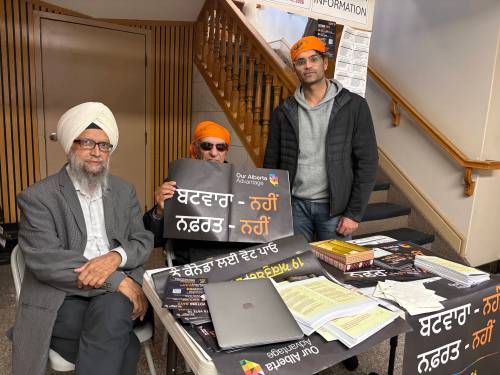
Alberta’s immigrants feeling xenophobic chill from some questions in Monday’s referendum

Melissa Martin 10 minute read Preview

Alberta’s immigrants feeling xenophobic chill from some questions in Monday’s referendum

Melissa Martin 10 minute read Thursday, Oct. 15, 2026

EDMONTON — When Gurnam Singh Dodd came to Canada in 1976, he landed first in southern Ontario, where his brother lived. At the time, the province was mired in the era of stagflation, and it was difficult to find work; but he had some friends living in Edmonton, and asked for their advice.

“Come to Alberta,” they told him. It was a land of opportunity. The economy was booming, bolstered by soaring oil and gas prices; Dodd could surely find multiple jobs within days. With that, the young Sikh newcomer packed up and headed west, looking to put down roots on the edge of the Canadian Prairies.

Nearly 50 years later, that proved to be a wise decision. Dodd worked hard to succeed in his new home, moving up from his first minimum-wage jobs to a successful career with Edmonton Transit, and then as a driver’s licence examiner. He raised a thriving family, gave back to his community and became, in all ways, a very proud Albertan.

Around the turn of the millennium, eager to do his part in the province’s public life, he joined what was then Alberta’s Progressive Conservative party, under the leadership of premier Ralph Klein. (Klein’s father, Dodd says proudly, was a friend, and helped get him into politics.)

Read
Thursday, Oct. 15, 2026

Ukrainian musicians find healing in performance after fleeing war-torn homeland

Jen Zoratti 5 minute read Preview

Ukrainian musicians find healing in performance after fleeing war-torn homeland

Jen Zoratti 5 minute read Saturday, Dec. 10, 2022

For the Ukrainian people, Mariia Balieieva says, there is a before and an after.

Read
Saturday, Dec. 10, 2022

Database issues cloud city homeless numbers

Scott Billeck 5 minute read Preview

Database issues cloud city homeless numbers

Scott Billeck 5 minute read Yesterday at 2:00 AM CDT

The head of End Homelessness Winnipeg says she has no confidence in data about the city’s homeless population due to problems with the federal system that tracks those numbers.

Jennifer Rattray, the organization’s chief executive officer, told the Free Press Thursday it continues to work with the federal government to resolve problems with the Homeless Individuals and Families Information System, which keeps tabs on people who access homelessness services.

CBC has reported it obtained an internal memo from EHW that shows that as of the end of March, the number of chronically homeless Winnipeggers had fallen to 436 from about 4,400, as a result of efforts to correct the database.

Earlier this year, the organization had reported more than 8,000 people were accessing services.

Read
Yesterday at 2:00 AM CDT

New chapter for Yellowquill University College

Tory McNally 7 minute read Preview

New chapter for Yellowquill University College

Tory McNally 7 minute read 2:01 AM CDT

Sometimes, a milestone is about much more than a degree. It is about opportunity, recognition and the doors that open for the people who come next.

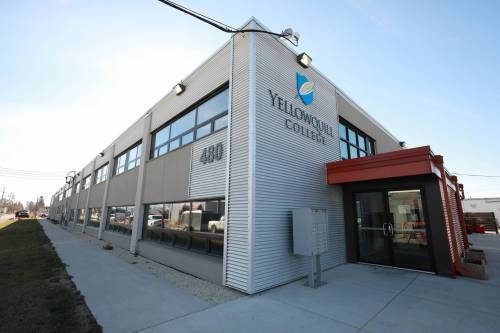
Yellowquill University College reached a historic milestone on Oct. 1, when new Manitoba legislation came into effect formally recognizing the institution within the province’s post-secondary education system and granting it authority to award degrees.

Established in 1984, Yellowquill is now Manitoba’s first fully recognized First Nations-owned and operated post-secondary institution with degree-granting authority.

It is an achievement worth celebrating, not only for Yellowquill and the communities it serves, but also for what it represents about education, career development and the future of Manitoba’s workforce.

Read
2:01 AM CDT

Health ministers meeting ends without long-term funding commitment from Ottawa

Carol Sanders 4 minute read Preview

Health ministers meeting ends without long-term funding commitment from Ottawa

Carol Sanders 4 minute read 2:01 AM CDT

Canada’s health minister failed to deliver the promises of long-term funding increases that her provincial and territorial counterparts, who were gathered in Winnipeg this week, had been seeking.

Instead, Marjorie Michel reiterated the federal government’s commitment to working collaboratively towards renewing bilateral funding agreements and to meet again before the end of the year to discuss long-term funding.

“The decision we all agreed on is to have our public service… start the work on what will be the next step for the next negotiation on Canada Health Transfer and other agreements,” Michel said Friday at a news conference after meeting with the other health ministers.

When asked why the federal government couldn’t commit to maintaining funding levels geared, at a minimum, to the rate of inflation over the long term, Michel said that it’s time to update agreements signed a decade ago.

Read
2:01 AM CDT

Chronic kidney disease must be recognized

Carrie Thibodeau 5 minute read Yesterday at 2:00 AM CDT

Canada needs a strong plan of action to tackle chronic kidney disease.

Canada is facing a looming health crisis that remains largely unaddressed and invisible at the policy and health system level. More than four million Canadians live with chronic kidney disease (CKD) and 50,000 currently receive dialysis or are living with a transplant, both life-sustaining but burdensome treatments.

With no cure, CKD profoundly impacts quality of life, contributing to lost income, overall poor health, and uncertainty about the future. The implications of CKD extend far beyond patients and families. CKD is now the 11th leading cause of death in Canada and one of our most expensive chronic diseases. Health-care costs exceed $11.7 billion annually, with most expenses incurred in the later stages of the disease, particularly dialysis and transplantation.

By 2050, the total cost burden of CKD is projected to rise to $17.6 billion and an estimated 6.2 million Canadians will be affected, driven by an aging population and rising rates of diabetes and high blood pressure.