Equalization protests from Alberta likely pre-election talk: Quebec minister

Advertisement

Advertise with us

OTTAWA - Quebec's finance minister brushed off complaints from Alberta on Monday about his province's share of the federal equalization-funding pie, calling them pre-election posturing in the Prairie province.

Read this article for free:


or

Already have an account? Log in here »

To continue reading, please subscribe:

Subscribe and receive a limited-edition Free Press branded hat or tote.

Digital Subscription

One year of digital access for only $205*

  • Enjoy unlimited reading on winnipegfreepress.com
  • Read the E-Edition, our digital replica newspaper
  • Access News Break, our award-winning app
  • Play interactive puzzles

*First annual payment billed as $205.00 + GST for one year. This annual subscription will automatically renew at $233.00 + GST every 52 weeks (10% off the regular annual price of $259.35). Offer available to new and qualified returning subscribers only. Cancel any time.

To continue reading, please subscribe:

Add Free Press access to your Brandon Sun subscription for only an additional

$1 for the first 4 weeks*

  • Enjoy unlimited reading on winnipegfreepress.com
  • Read the E-Edition, our digital replica newspaper
  • Access News Break, our award-winning app
  • Play interactive puzzles
Start now

*Your next Brandon Sun subscription payment will increase by $1.00 and you will be charged $17.95 plus GST for four weeks. After four weeks, your payment will increase to $24.95 plus GST every four weeks.

Hey there, time traveller!
This article was published 10/12/2018 (2853 days ago), so information in it may no longer be current.

OTTAWA – Quebec’s finance minister brushed off complaints from Alberta on Monday about his province’s share of the federal equalization-funding pie, calling them pre-election posturing in the Prairie province.

Canada’s often contentious equalization program has come under fire again after the public learned over the weekend that Alberta, despite dealing with a painful collapse in oil prices, once again failed to qualify to receive payments from Ottawa.

The energy-producing province has been struggling with the economic consequences of a global oil-price drop as well as an extra discount on the price of western Canadian crude caused by transportation constraints.
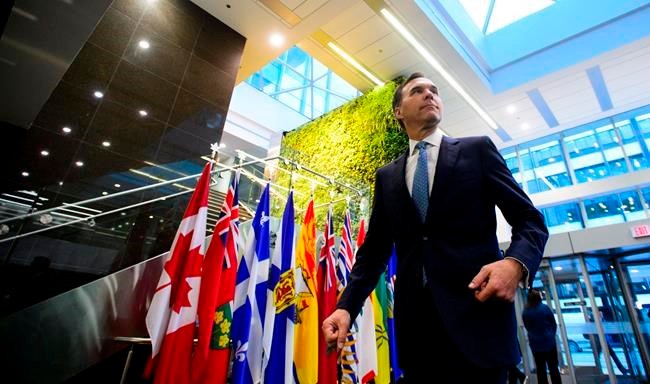
Finance Minister Bill Morneau makes his way to a meeting with his provincial and territorial counterparts in Ottawa on Monday, Dec. 10, 2018. THE CANADIAN PRESS/Sean Kilpatrick

Opposition politicians in Alberta’s legislature and other observers quickly expressed anger that Quebec will see its payment from the $19.8-billion program rise nearly $1.4 billion to $13.1 billion next year.

Quebec will receive two-thirds of the entire national envelope, even though its economy has strengthened in recent years and its government is predicting a budgetary surplus.

In comparison, Alberta is facing several years of deficits. Critics charge that equalization is based on a flawed formula.

“Equalization does not work for Alberta,” said Alberta’s Finance Minister Joe Ceci, at a national meeting of finance ministers in Ottawa.

Quebec Finance Minister Eric Girard said protests about his province’s equalization share are likely louder than usual because of Alberta’s forthcoming provincial election in May 2019.

“The fact that Alberta will be in an election may be raising the volume on the equalization payment,” Girard said.

Girard, part of the newly elected Coalition Avenir Quebec government, said he recognizes and sympathizes with Alberta’s difficult situation caused by the recent plunge in oil prices — which has meant cheaper gasoline for consumers but punched holes in Alberta’s finances. He said he hopes things will improve for the province.

“For me, it has nothing to do with equalization,” he said.

The complex equalization formula is based on a three-year moving average of economic performance, so a province’s have- or have-not status can lag behind economy-altering events. It’s designed to help poorer provincial governments provide public services that are reasonably comparable to those in other provinces.

Girard also defended Quebec’s equalization payment, arguing his province is 20-per-cent less rich than the Canadian average and has the second-highest debt burden after Newfoundland and Labrador. He said Quebec is also home to 23 per cent of Canada’s population, but only 19 per cent of the national economy.

The goal for his government is to improve on all these fronts with the aim of eventually reducing Quebec’s dependence on equalization, Girard said.

British Columbia, Saskatchewan, Ontario and Newfoundland will also not get equalization payments in 2019-20. Alberta and other so-called “have” provinces have been calling for a review of the program, which was renewed last year for another five-year term.

Federal Finance Minister Bill Morneau, who hosted Monday’s meeting, showed no willingness to re-open the equalization formula until its next renewal. He said the system was renewed after a “robust discussion.”

Even with renewal years away, Alberta’s Ceci said there are changes that can be made right away. For example, Ceci said provinces with strong economies should not receive “floor payments” under equalization, loans that go to provinces that are no longer eligible for equalization payments they had been expecting.

And he pitched for help solving his province’s oil-transportation trouble.

Ceci said the entire national economy will benefit if Alberta can get its oil to international markets beyond the United States and he insisted pipelines are the safest way to get crude to ocean ports.

TransCanada Corporation had proposed a $15.7-billion pipeline called Energy East, to carry western crude through Quebec to New Brunswick for shipment overseas — but the company abandoned the project more than a year ago, citing market changes and red tape.

With a shortage of pipeline capacity, Alberta recently announced it will buy rail cars to ship another 120,000 barrels of oil a day. The province has been seeking help from the federal government, but Ottawa has been reluctant to offer financial support.

Following Monday’s meeting, Ceci said he repeatedly pressed Morneau to pitch in.

“It’s Christmas, I’m certainly hopeful that there are some things under the tree,” Ceci said.

Asked about rail cars Monday, Morneau said he believes the most important thing Ottawa can do is focus on long-term solutions such as its purchase of the Trans Mountain pipeline. The goal is to get it expanded and carry more Alberta oil to the B.C. coast.

Report Error Submit a Tip

More Stories

Prairie sculptor Joe Fafard pays tribute to revered Dutch master

Alan Small 6 minute read Preview

Prairie sculptor Joe Fafard pays tribute to revered Dutch master

Alan Small 6 minute read Tuesday, Jul. 10, 2018

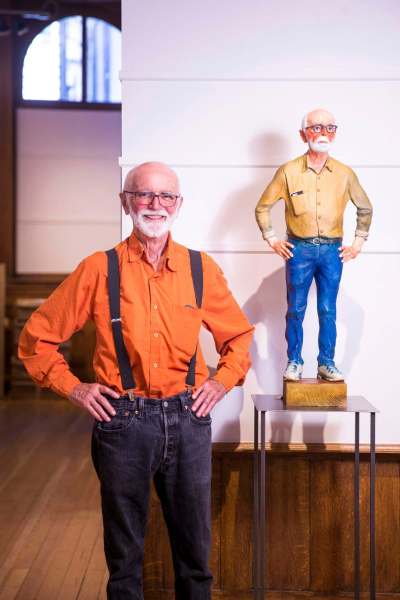
Vincent van Gogh has been inspiring artists for close to 150 years. For sculptor Joe Fafard, the Dutch master’s life and art have been objects of fascination for many of his 75 years.

So much so that Fafard’s latest Winnipeg exhibition, The Essential Joe Fafard — Van Gogh and Other Inspirations, which opened Friday at Mayberry Fine Art, includes several sculptures of van Gogh, who began painting in 1881 but lived a short, turbulent life, fraught with mental illness, before committing suicide in 1890 at the age of 37.

“Starting about 1983, I started doing portraits of van Gogh,” Fafard says in a phone conversation from his home near Regina.

“Essentially, people used his life, his career and his anguish as sort of a stereotype of an artist’s blueprint for artistic endeavour. I became quite fascinated to see that he was the Christ and other artists were the apostles.”

Read
Tuesday, Jul. 10, 2018

You’re a solid, loyal sister, so worry not

Maureen Scurfield 5 minute read 2:00 AM CDT

DEAR MISS LONELYHEARTS: I ran into my sister’s husband at the bar recently. He was drinking with a bunch of people from his work. I noticed he was sitting close to a young woman, with his arm around her.

I just nodded without a smile as I slowly passed them. I kept on going, but he knew I saw them together. A few minutes later he came over — obviously drunk — and said, “You’re a good girl! You won’t say anything to your sister, will you?” Ha! I looked at him and said, “Of course I’m going to say something!”

My loyalty will always be to my sister. I phoned my sis in my car and blabbed. She tried to laugh it off, but she’s gone silent since — not answering my calls or messages. So apparently now I’m the troublemaker? That’d be just her style! What should I do?

— Worried About Us, North Kildonan

Calm, balanced approach to game, life is what matters to unassuming Stastny

Jeff Hamilton 14 minute read Preview

Calm, balanced approach to game, life is what matters to unassuming Stastny

Jeff Hamilton 14 minute read Friday, Feb. 19, 2021

When the day comes for Paul Stastny to hang up his skates for good, ending what’s already been a sparkling pro career, he hopes to leave a lasting mark on the game he loves.

He didn’t use the word legacy, nor would he. If you’ve had the chance to speak with Stastny before, you quickly realize his discomfort in talking about personal accolades, despite possessing many. He’s been selected as an NHL all-star, and represented the United States on multiple occasions, including at two Olympics.

In 961 NHL games, Stastny has 253 goals and 482 assists for 735 points. He’s played another 97 playoff games, having reached the Western Conference final on three separate occasions over his career, adding another 25 goals and 42 assists to his point totals. He’s still chasing his first Stanley Cup.

But at 35 years old, and in the middle of his 15th NHL season, which includes a second go-around with the Winnipeg Jets, it’s not what shows up on the scoresheet that matters most to the veteran centre. Stastny is acutely aware that professional sports can be unforgiving; a good season one year doesn’t necessarily guarantee one the next. But what doesn’t have to change, he says, is how he approaches the game, and the way he treats the people around him.

Read
Friday, Feb. 19, 2021

Crusaders football celebrates 95th anniversary

Joshua Frey-Sam 4 minute read Preview

Crusaders football celebrates 95th anniversary

Joshua Frey-Sam 4 minute read Friday, Sep. 25, 2026

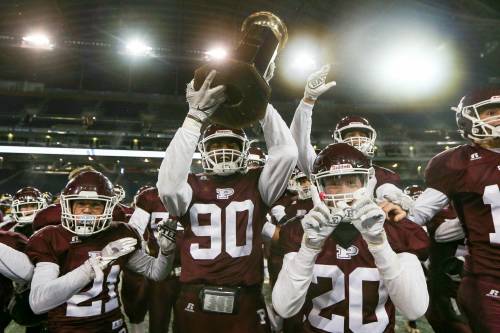
Few understand better than Stacy Dainard how steeped the St. Paul’s High School football program is in history.

The head coach of the Crusaders’ varsity team for the last 25 years has watched the institution’s presence on the gridiron blossom over four decades since he donned the maroon and white as a player from 1984-87.

Dainard figures he will harken back to those days more this weekend when a flock of Crusaders alumni from across the country gather to commemorate the football program’s 95th anniversary.

“We were a competitive team. We had some very committed coaches and some very committed student-athletes,” said Dainard, who reached the provincial championship in each of his first three seasons as a student-athlete. “It was a good time. Football wasn’t as big as it is now, or at least high school football wasn’t as big as it is now. But it was a very competitive league.”

Read
Friday, Sep. 25, 2026

Gillingham talks trash, pledges big bin boost

Joyanne Pursaga 4 minute read Preview

Gillingham talks trash, pledges big bin boost

Joyanne Pursaga 4 minute read 2:01 AM CDT

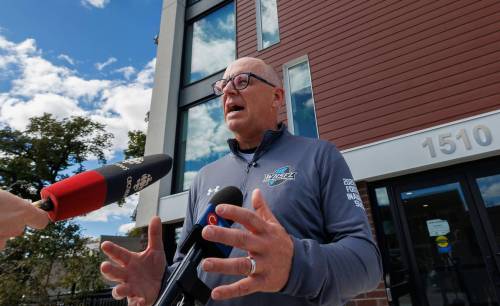
Scott Gillingham says he would add hundreds of locked garbage bins downtown to prevent unsightly trash piles if re-elected as mayor.

Gillingham led a program that added about 120 locked garbage bins along Portage Avenue and Main Street last fall, after trash was repeatedly strewn around the area. If he wins a second term, he plans to add at least 200 more of the receptacles.

A look at how one locked Main Street recycle/garbage bin in front of city hall fared offers an example of the bins’ success so far, he said.

“Every day, you would see the lids up, and people had been rifling through it, or someone left the lid up and the wind picked up the garbage and (spread) it everywhere. It’s much more difficult now. Once the garbage is in, the garbage stays in,” said Gillingham.

Read
2:01 AM CDT

Transit, roads and city council’s priorities

Erna Buffie 5 minute read Preview

Transit, roads and city council’s priorities

Erna Buffie 5 minute read 2:00 AM CDT

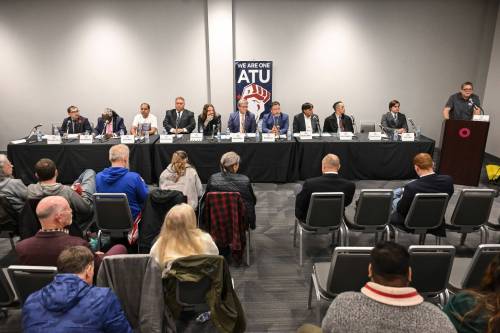
Did any of you happen to notice that the week of Sept. 14 marked an interesting confluence of events in Winnipeg? First up was the mayoral debate on public transit. Second was an announcement that the city would be undertaking a survey to determine whether their citizens’ “transportation needs” are being met.

The debate on our public bus system, from which our current Mayor Scott Gillingham was tellingly absent, focused primarily on safety rather than the efficiency of the system.

Which, on one level, is no great surprise.

After all unlawful incidents on buses and at transit stops have increased by 280 per cent compared to levels recorded around 2016. Moreover, the candidates were primarily speaking to the bus drivers’ union that organized the event, and bus drivers are often the victims of violent episodes.

Read
2:00 AM CDT