Under pressure
Telling Han Solo's back story puts director Ron Howard under the microscope
Advertisement
Read this article for free:
or
Already have an account? Log in here »
To continue reading, please subscribe:
Digital Subscription
One year of digital access for only $1.44 a week*
- Enjoy unlimited reading on winnipegfreepress.com
- Read the E-Edition, our digital replica newspaper
- Access News Break, our award-winning app
- Play interactive puzzles
*Billed as $5.77 plus GST every four weeks. After 52 weeks, price increases to the regular rate of $19.95 plus GST every four weeks. Offer available to new and qualified returning subscribers only. Cancel any time.
To continue reading, please subscribe:
Add Free Press access to your Brandon Sun subscription for only an additional
$1 for the first 4 weeks*
- Enjoy unlimited reading on winnipegfreepress.com
- Read the E-Edition, our digital replica newspaper
- Access News Break, our award-winning app
- Play interactive puzzles
*Your next Brandon Sun subscription payment will increase by $1.00 and you will be charged $17.95 plus GST for four weeks. After four weeks, your payment will increase to $24.95 plus GST every four weeks.
Read unlimited articles for free today:
or
Already have an account? Log in here »
Hey there, time traveller!
This article was published 25/05/2018 (3082 days ago), so information in it may no longer be current.
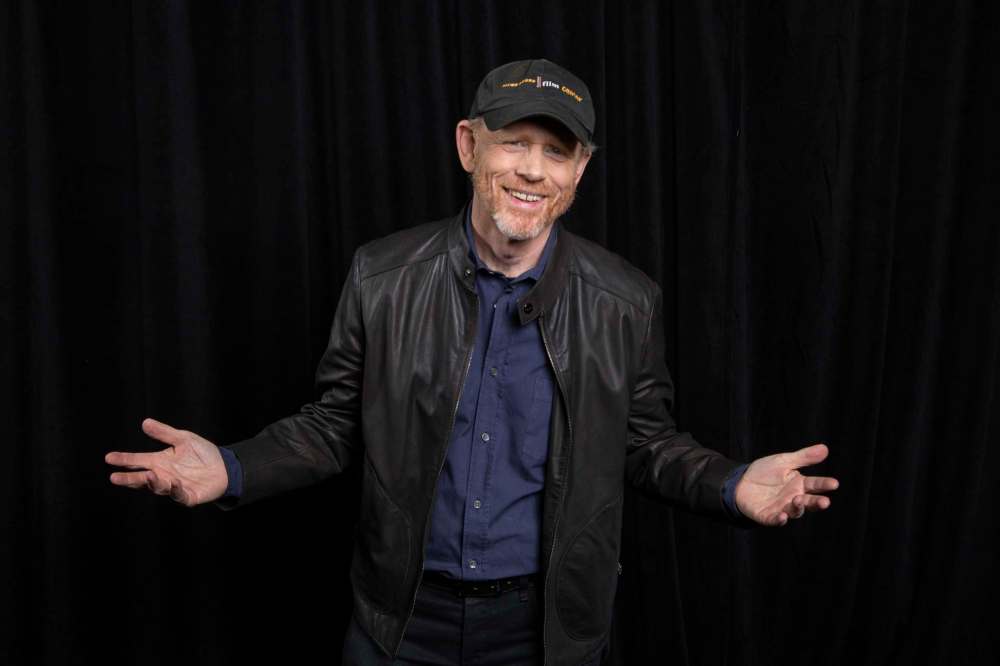
LOS ANGELES — Ron Howard says his first thought when he took over as director of Solo: A Star Wars Story was the same as when it was announced he would be making a documentary on the Beatles. Both projects meant taking on the biggest icons in pop culture history.
“I could tell from the moment it was announced, ‘Ron, don’t (expletive) this up,’” Howard says.
He didn’t mess up his documentary, The Beatles: Eight Days a Week — The Touring Years. The 2016 film, which captured the chaos and craziness of the Fab Four’s 250 concerts from 1963-1966, earned praise from critics and fans.
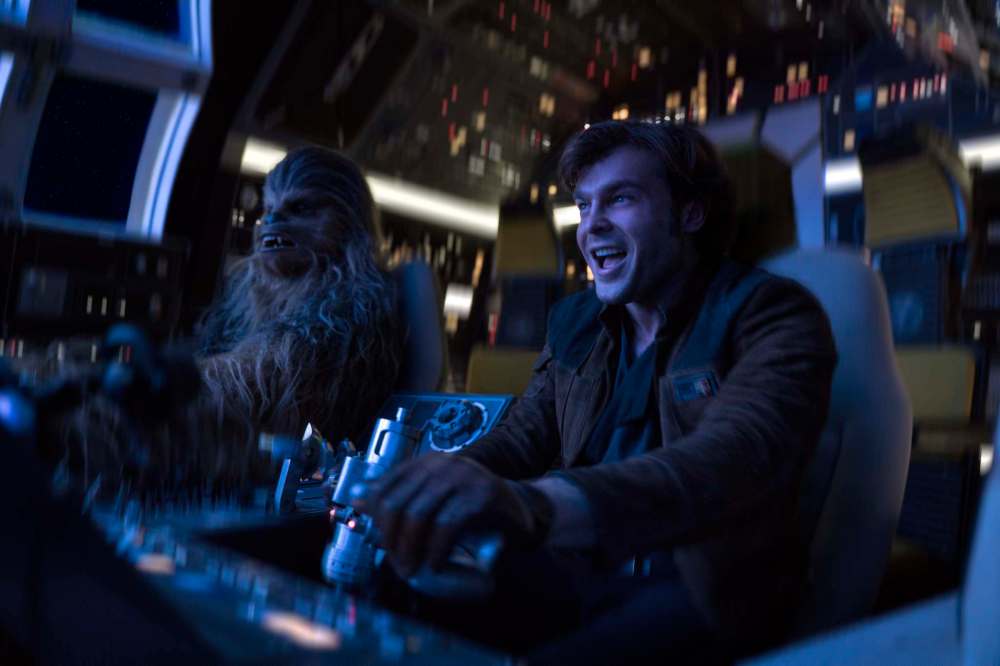
He needed to repeat that success with his latest project. That meant all he had to do with the latest instalment in the Star Wars franchise was tell the origin story of one of its most popular characters, Han Solo. He would be dealing with everything from his first experiences with the Millennium Falcon to the unwavering friendship with Chewbacca.
“I’m at a point in my life where I like experimenting. I like to take some chances. The level of anticipation is really unlike anything I’ve done — even some pretty big titles with a lot of interest. You fall into it and it’s amazing,” he says. He wasn’t worried about the outcome of either as much as getting the chance to have the creative experience with both projects.
Howard’s Solo follows a young Han Solo (Alden Ehrenreich), who wants to find a way that he and his true love, Qi’ra (Emilia Clarke), can get their own ship and escape an oppressive world. That effort takes Solo into a military life he hates and then to being a part of a group of thieves under the guidance of the Tobias Beckett (Woody Harrelson). Solo’s plan is to do one job and use that money to start a new life. The quest brings him in contact with many familiar people, places and things that define who he becomes in Star Wars: A New Hope.
Howard’s film joins the growing list of movies in the Star Wars universe, but he sees his production as being different because of how much focus is put on the characters’ relationships. Where the other films have been carried along by the mythology that developed around the galactic fight between both sides of the Force, he made Solo the story of one man’s adventures.
“In some ways it’s kind of similar to Raiders of the Lost Ark. It’s a single hero’s journey, and then there’s a lot of fun in that journey and there are a lot of twists and turns, but it’s really about that character,” Howard says. “All of the different relationships were very important to me because it was all about what impact these characters are going to have on this young Han Solo.
“That was interesting. But what surprised me was how complicated and exciting and fun it was to stage the big action scenes, which is something that I hadn’t done in a long, long time. And they were complicated and sometimes it was hard and sometimes it was physically difficult.”
One thing that made the project more of a challenge was Howard preferred to use practical sets rather than computer-generated imagery whenever he could. When Han and Chewbacca are seated at the controls of the Millennium Falcon, the actors were inside a cockpit built on the set. Howard even had a flying instructor teach Ehrenreich how to handle the controls so it would look like he was really piloting the ship.
“The great effect supervisors will tell you in-camera is always what you want to go for first. The approach here always was to try to get as much in-camera as you could and then build,” Howard says. “That’s what’s so magical and amazing about ILM (Industrial Light & Magic) and what they can do. To make the experience as palpable and immersive as it could possibly be.

“Because the people around a movie like Solo are so dedicated to not just what’s existed before, but what else they could do within that framework, that universe, that galaxy, creatively it’s unbelievably stimulating for a filmmaker.”
The team helped Howard make the transition when he was brought when the original directors, Phil Lord and Chris Miller, left the project over creative differences. Howard’s approach was to go back to the kind of movies that he has made over the years that were based on true stories such as Apollo 13, Frost/Nixon and even the Beatles documentary.
He needed to go with that approach because while Howard is a fan of the Star Wars movies, he doesn’t have a die-hard knowledge. He had to rely more on his own instincts for making the movie, the script by Lawrence and Jonathan Kasdan to tell the story, and the cast to bring it to life.
“I sort of go for the heart. I go for the drama, the excitement of the narrative, of the story and then I let the technical advisers tell me where else it could go or what I might be overlooking. And that’s honestly the way I approached this. And so many people around it were those guides for me,” Howard says. “But I was just operating off my own imagination and my own sort of sense of what I’d like to see or what I think these characters could be going.”
— Tribune News Service
Movie preview
Solo: A Star Wars Story
● Directed by Ron Howard
● Grant Park, Kildonan Place, McGillivray, Polo Park, St. Vital, Towne
● PG
● 143 minutes
See Saturday’s Weekend Review for Randall King’s review
Related Articles
Solo: world's most expensive fan film?
Advertisement Advertise With Us
Advertisement Advertise With Us