The heat is on
Hot-sauce gourmet turns a farmer's market cult hit into a five-alarm business
Advertisement
Read this article for free:
or
Already have an account? Log in here »
To continue reading, please subscribe:
Digital Subscription
One year of digital access for only $1.44 a week*
- Enjoy unlimited reading on winnipegfreepress.com
- Read the E-Edition, our digital replica newspaper
- Access News Break, our award-winning app
- Play interactive puzzles
*Billed as $5.77 plus GST every four weeks. After 52 weeks, price increases to the regular rate of $19.95 plus GST every four weeks. Offer available to new and qualified returning subscribers only. Cancel any time.
To continue reading, please subscribe:
Add Free Press access to your Brandon Sun subscription for only an additional
$1 for the first 4 weeks*
- Enjoy unlimited reading on winnipegfreepress.com
- Read the E-Edition, our digital replica newspaper
- Access News Break, our award-winning app
- Play interactive puzzles
*Your next Brandon Sun subscription payment will increase by $1.00 and you will be charged $17.95 plus GST for four weeks. After four weeks, your payment will increase to $24.95 plus GST every four weeks.
Read unlimited articles for free today:
or
Already have an account? Log in here »
Hey there, time traveller!
This article was published 06/01/2018 (3226 days ago), so information in it may no longer be current.
A few hours after 1882 Fruit-based Hot Sauce made its official debut at a downtown farmers’ market in early November, owner Patrick Michalishyn posted a self-mocking message on his business’s Facebook page that read, “three products, no banner, salesman with a head shaped like a milk jug… still a success.”
“Yeah, to say I wasn’t totally ready for that first sale would be putting it mildly,” Michalishyn says, seated in a Portage Avenue nightspot, a few days after Christmas. “Most of the people who sell at these markets are totally organized, with these elaborate setups and tasting booths that look super-professional. And there was me, with a bunch of cardboard boxes stacked haphazardly and a piece of loose-leaf taped to my table, with my prices scrawled across it in black marker.”
Michalishyn, whose venture is named for the year the Winnipeg Fire Department was founded (“hot sauce, fire, get it?”), laughs as he recalls how a customer eventually took pity on his shambolic self, after she purchased a couple bottles from him.
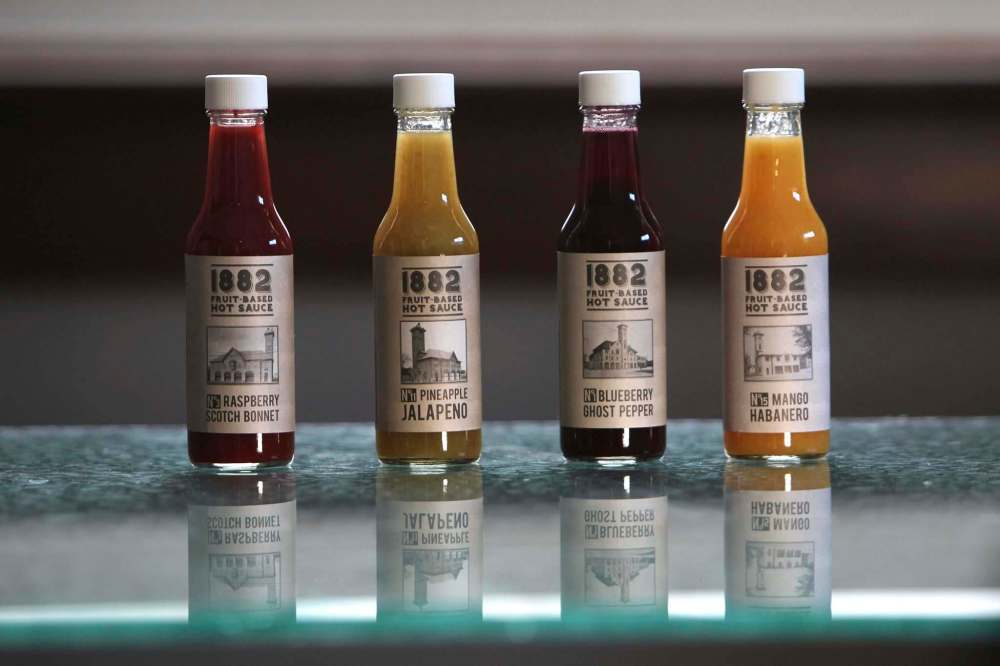
“She works in the same building as where the market was, and the first thing she did when she got back to her office was throw together this great-looking sign for me on her computer,” he says, pointing out each of his flavours boasts a black-and-white photograph of a different, yester-year Winnipeg fire hall on its label. “She came rushing back downstairs holding it up saying, ‘Here, use this instead,’ which was cool, because now I’m totally legit.”
● ● ●
If you had asked Michalishyn about hot sauce at this time last year, he might have told you he enjoyed Tabasco sauce on fajitas or Frank’s RedHot on scrambled eggs. But that would have been pretty much it, conversation-wise. Last spring, however, the 31-year-old, volunteer host of the CKUW radio program The Wonderful and Frightening World of Patrick Michalishyn “got totally into hot sauce” after catching episodes of Hot Ones, an online web series that features famous athletes, actors and musicians discussing their everyday lives, while chowing down on increasingly more fiery chicken wings.
“They have 10 wings in front of them, and have to eat them in ascending order of heat till they get to ridiculous-hot,” Michalishyn says, mentioning Breaking Bad’s Bryan Cranston and rapper B.o.B. as some of the celebs he’s watched torch their taste buds. “It’s hilarious, and because of that show, I started buying all these crazy, unique (hot) sauces.”
Here’s the catch; in August 2017, Michalishyn, who also runs the 18-month-old, punk rock music label Sounds Escaping, quit his full-time job stocking shelves at a warehouse-style, big-box store — a move that led him to wonder how he was going to continue feeding his hot-sauce habit, while he was looking for work.
Figuring it would be cheaper in the long run to simply make his own sauces, he began spending his idle time researching recipes on the internet. While most of what he read recommended using purèed vegetables such as onions and carrots as a primary ingredient, he opted for fruit instead, largely in order to, in his words, “stand out from the crowd.”
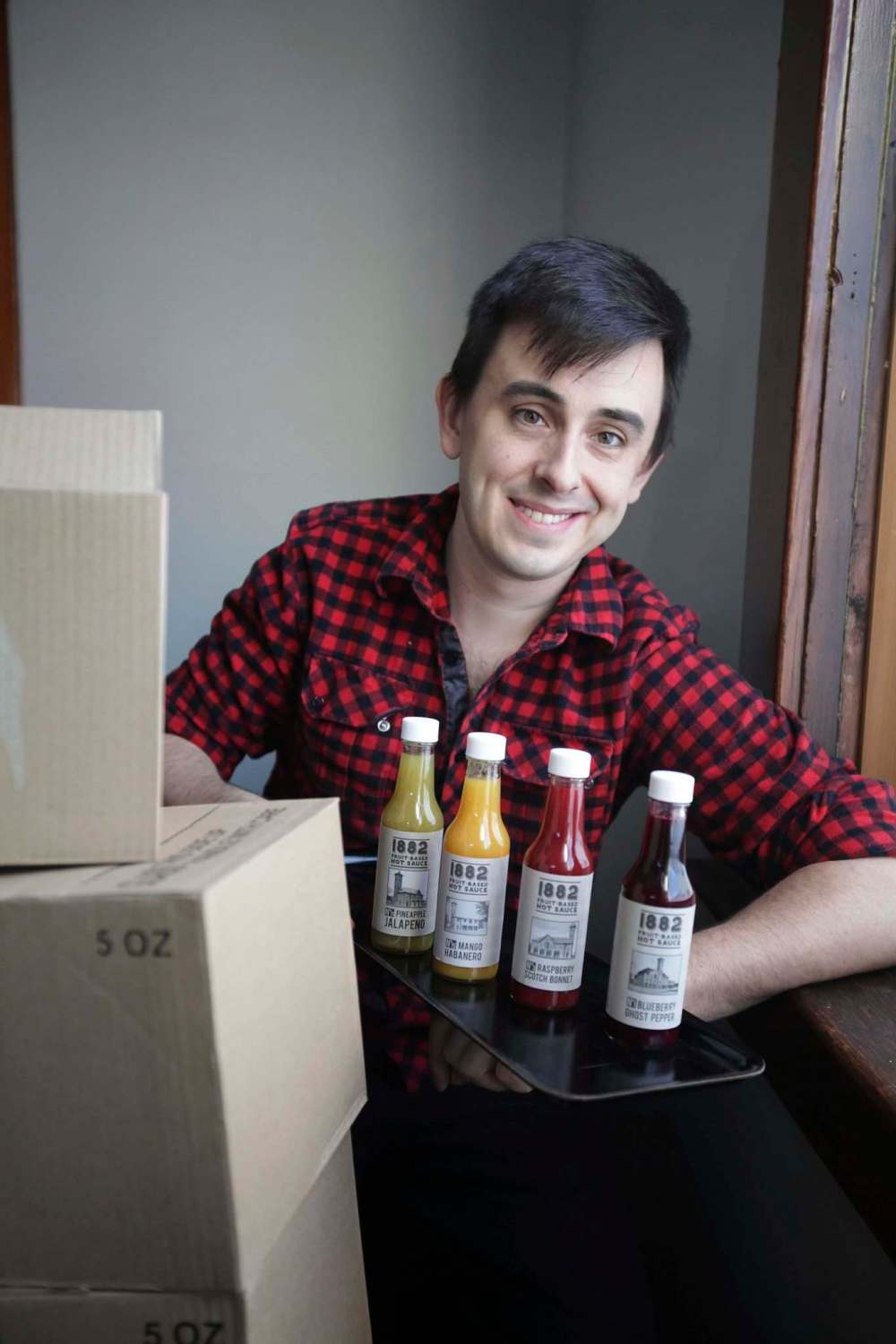
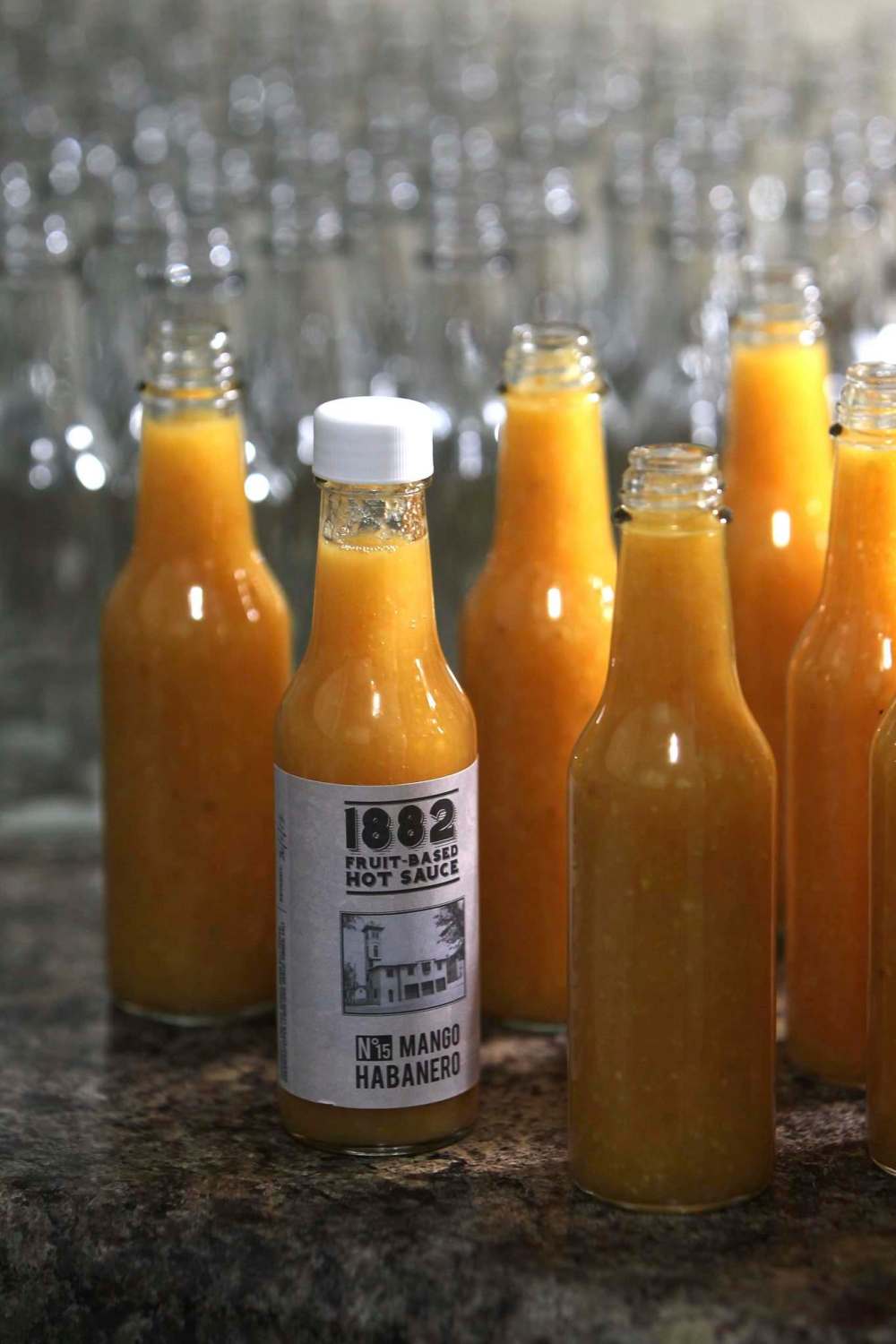
The first sauce he came up with was a mango-habanero blend. He kept it in a mason jar in his fridge, and when friends came over for pizza or tacos or whatever, he fetched it out and spooned a bit over everybody’s portion. One evening, after giving it a shot for the first time, one of his buddies remarked, “You know, if you ever bottle this and sell it, I will 100 per cent buy it.”
“This is the thing,” Michalishyn says, speaking loud enough to be heard over the bar’s in-house stereo system. “I’m my own worst critic and any time somebody is excited or impressed by something I do, well… it just feels a little weird to me. But after more and more people started telling me my sauces were amazing, and that I should get my food handler’s licence and pursue this for real, I was like, OK, maybe I am onto something here.”
In mid-October, Michalishyn announced via Facebook that his three varieties of hot sauce — by then, he had added raspberry scotch bonnet and blueberry ghost pepper to the mix — were available for purchase at $7 per five-ounce bottle, or $20 for a set of all three. Within 24 hours he was sold out. Encouraged by that response, he quadrupled his production a few days later and was amazed when every last bottle was scooped up almost immediately, yet again.
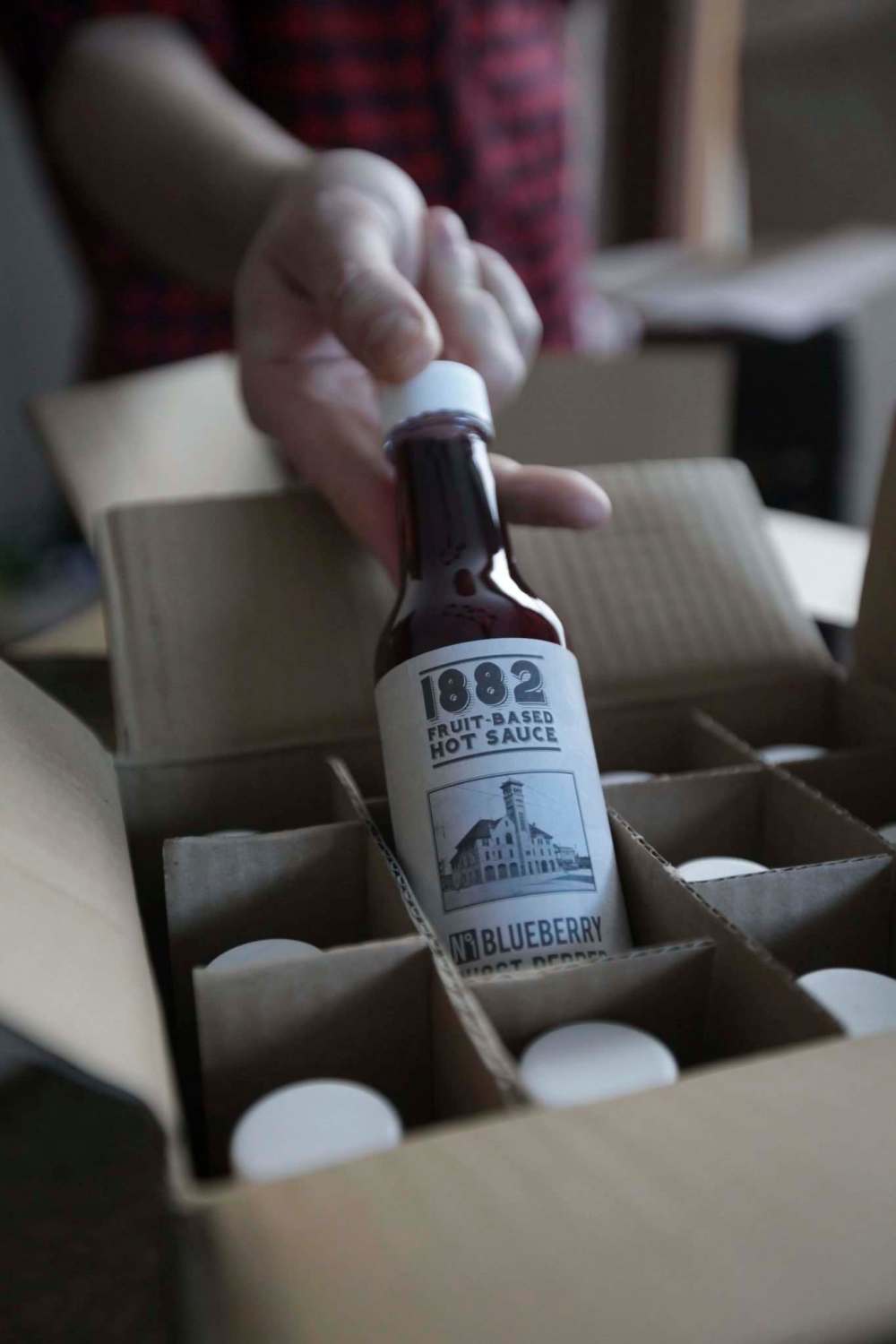
By the time he showed up for that first farmer’s market — he’s since attended a half-dozen more, as far away as Lac du Bonnet — he was turning out 200 to 300 bottles of hot sauce “per cook,” and had already been approached by a number of retail store managers, who were interested in carrying his products in their locales. (Michalishyn says his sauces have a shelf-life of about 10 months, owing to the fact “there’s enough vinegar in there to preserve a small animal.”)
“With farmers’ markets, I’m allowed to cook at home. But what I’ve learned is that in order to grow the business, and get my sauces into places like DeLuca’s or Miller’s (Meats), I’m going to need to move into a commercial kitchen,” he says, pausing to inform his bartender, who’s about to try some of his latest creation, a pineapple-jalapeno sauce, on her kale salad, that it’s not only gluten-free but vegan-friendly, to boot. “So the current plan is to begin renting space out by the airport by the end of January, in order to take that next step.”
In the meantime, Michalishyn will attempt to get through a trip to the grocery store without parking his cart in the produce section to ponder what sort of sauce he could make with plums… or limes… or figs.
“Last night I had trouble falling asleep, because I was thinking so much about golden pear and chipotle,” he says, adding he’s already looking ahead to next Christmas, when he hopes to unveil a mandarin-orange-based hot sauce he’s been brainstorming, lately. “Honestly, there are so many sauces I could do, even with something like olives, which, technically, are a fruit.

“So what I think would be fun down the line is to make some random, seasonal ones, kind of like how Half Pints comes out with special beers at Halloween or whenever. My problem is I’m super-anal about making sure each flavour features a picture of a different Winnipeg fire hall so yeah, it might be a case of running out of old photos, before I run out of ideas.”
Oh, by the way, you know that burning sensation you get if you absent-mindedly rub your eyes while handling hot peppers? Well, Michalishyn learned the hard way that he should be wearing specially-made, rubber-nitrate gloves, at all times, when preparing his sauces.
“I haven’t hurt my eyes, yet, knock on wood,” he says, “but it seems no matter how many times you wash your hands, some of the oil stays on your fingers. And if you’re a guy, and you inevitably have to go the bathroom to perform a function that requires, uh, aiming… let’s just say I’ve had accidents, and it isn’t pretty.”
Michalishyn will be a vendor at the Downtown Farmers’ Market at cityplace from 10 a.m. to 3 p.m. on Jan. 18. For more information, go to www.facebook.com/1882HotSauce.
david.sanderson@freepress.mb.ca
Dave Sanderson was born in Regina but please, don’t hold that against him.
Our newsroom depends on a growing audience of readers to power our journalism. If you are not a paid reader, please consider becoming a subscriber.
Our newsroom depends on its audience of readers to power our journalism. Thank you for your support.
History
Updated on Saturday, January 6, 2018 9:15 AM CST: Updates story, adds new thumbnail image