

What you need to know about the Beijing Paralympics, which start this week
Advertisement
Read this article for free:
or
Already have an account? Log in here »
To continue reading, please subscribe:

Digital Subscription
One year of digital access for only $205*
- Enjoy unlimited reading on winnipegfreepress.com
- Read the E-Edition, our digital replica newspaper
- Access News Break, our award-winning app
- Play interactive puzzles
*First annual payment billed as $205.00 + GST for one year. This annual subscription will automatically renew at $233.00 + GST every 52 weeks (10% off the regular annual price of $259.35). Offer available to new and qualified returning subscribers only. Cancel any time.
To continue reading, please subscribe:
Add Free Press access to your Brandon Sun subscription for only an additional
$1 for the first 4 weeks*
- Enjoy unlimited reading on winnipegfreepress.com
- Read the E-Edition, our digital replica newspaper
- Access News Break, our award-winning app
- Play interactive puzzles
*Your next Brandon Sun subscription payment will increase by $1.00 and you will be charged $17.95 plus GST for four weeks. After four weeks, your payment will increase to $24.95 plus GST every four weeks.
Read unlimited articles for free today:
or
Already have an account? Log in here »
Hey there, time traveller!
This article was published 02/03/2022 (1670 days ago), so information in it may no longer be current.
If there was any doubt that Paralympic athletes are tough, surely that’s been put to rest.
Not only do they ski, snowboard, play hockey and curl with physical impairments, they do so in wartime. Peace in Europe holds out for the Olympics but not always for the Paralympics, which start about two weeks after the Olympics end.
Eight years ago, Russian President Vladimir Putin sent troops to capture and occupy the Crimean Peninsula in Southern Ukraine in the days between the Sochi Olympics and Paralympics. This time, he invaded the entire country. Now, with the Beijing Paralympic Winter Games set to open Friday, Russia is intensifying its bombardment of Ukraine’s biggest cities with airstrikes.
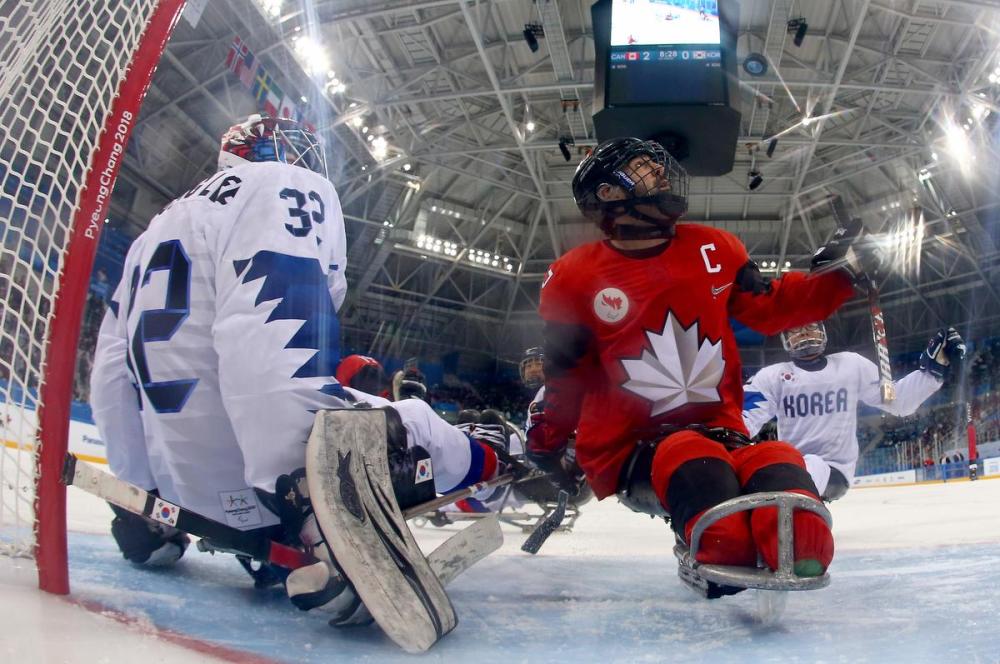
Throw in the warmer March weather, which isn’t great for snow conditions, and the general sports fatigue that comes after wall-to-wall coverage of the Olympics and it’s easy to see that Paralympians don’t get to do anything the easy way.
You have questions, no doubt. We have answers.
Will Russia be there?
No, and invasion-supporter Belarus won’t be either. In an about-face, a day after the International Paralympic Committee said it couldn’t legally bar the two nations from competing, it decided to do just that.
On Thursday, IPC president Andrew Parsons said “we are very firm believers that sport and politics should not mix” but “war has now come to these Games.”
“Ensuring the safety and security of athletes is of paramount importance to us and the situation in the athlete villages is escalating and has now become untenable,” he said.
Also worth noting is the flood of athletes and teams that threatened not to compete if Russia and Belarus did. That certainly helped push the IPC from its Wednesday stance, that banning them wasn’t legally possible because “it is currently not a membership obligation for an IPC member to ensure compliance with the Olympic Truce.” Its Thursday stance is that barring the two countries was necessary “in order to preserve the integrity of these Games.”
Previously, the IPC announced that it intends to hold a meeting later this year to discuss requiring nations to comply with the Olympic Truce.
What is this Olympic Truce?
It dates back to the ancient Olympic Games in 776 BC. It called for an end to armed conflict beginning seven days before the Games and ending seven days after to allow athletes and others to travel safely to the Games.
The International Olympic Committee revived the idea in 1992 and negotiated a deal to allow athletes of the former Yugoslavia to participate as independent athletes in the Summer Games in Barcelona.
Starting with the 1994 Lillehammer Games, a United Nations resolution “building a peaceful and better world through sport and the Olympic ideal” has been adopted by the General Assembly prior to every Games. It calls for observance of the Olympic Truce for the Olympic and Paralympic Games.
How are the Beijing Paralympics different from the Olympics?
To start with, there’s less of everything: fewer countries (49 delegations compared to 91); fewer athletes (650 to 2,900); and fewer events (78 medal events across six sports to 109 medal events across 15 sports). There are no judged events; everything is a race or a game.
There’s a classification system that groups athletes with similar impairments together, such as standing, sitting and visually impaired classes in skiing. And there is a factoring system that takes into account the severity of a disability and helps level the playing field and determine winners.
What’s the same?
The Paralympics are the height of an athlete’s career and the event they spend four years working toward. And just like the Olympics, Canada wants to win medals. The federal funding body, Own the Podium, allocated $17 million to targeted Paralympians in the four years leading up to the 2022 Games.
What are the six sports?
Alpine skiing, cross-country skiing, biathlon, snowboarding, hockey and mixed team curling.
Are the Paralympics gender-equal?
Not even close. Only a third of the athlete slots at the Beijing Paralympics were even available to women. There are six snowboard events for men and just two for women. There’s hockey for men but not women. The mixed curling team of four players is only required to include one woman. And, just like the Olympics, the event distances in cross-county skiing and biathlon are shorter for women than men.
The IPC has expanded the number of women’s slots at a greater rate than men’s but there’s still a very long way to go in ensuring equal support and opportunity for female athletes.
What do we know about Team Canada?
The delegation includes 49 athletes, including four guides. The youngest is 19-year-old alpine skier Logan Leach and the oldest is 60-year-old wheelchair curler Dennis Thiessen. The team includes 25 athletes who have already won Paralympic medals and 19 athletes making their Games debut. They hail from nine provinces and territories with the largest group, 21, from Ontario.
Who is Canada’s flag-bearer?

Two were named Wednesday: wheelchair curler Ina Forrest and para ice hockey player Greg Westlake. Forrest is one of the world’s most decorated wheelchair curlers with two Paralympic gold medals and a bronze; Westlake is competing in his fifth Paralympics and already has a full set of medals.
Speaking of medals, how will Canada do?
Based on past experience, Canada should be near the top of the table. Canada won 28 medals last time — its most at a Winter Paralympics — and was second in the overall count.
March 3, 2022: Editor’s note — This story has been updated from a previously published version to reflect that organizers of the Winter Paralympics on Thursday reversed course and expelled athletes from Russia and Belarus.
Kerry Gillespie is a Toronto-based sports reporter for the Star. Reach her via email: kgillespie@thestar.ca