

Heavy-handed host
Trump’s graceless own goal sabotaged World Cup’s spirit of fair play
Advertisement
Read this article for free:
or
Already have an account? Log in here »
To continue reading, please subscribe:
Digital Subscription
One year of digital access for only $1.44 a week*
- Enjoy unlimited reading on winnipegfreepress.com
- Read the E-Edition, our digital replica newspaper
- Access News Break, our award-winning app
- Play interactive puzzles
*Billed as $5.77 plus GST every four weeks. After 52 weeks, price increases to the regular rate of $19.95 plus GST every four weeks. Offer available to new and qualified returning subscribers only. Cancel any time.
To continue reading, please subscribe:
Add Free Press access to your Brandon Sun subscription for only an additional
$1 for the first 4 weeks*
- Enjoy unlimited reading on winnipegfreepress.com
- Read the E-Edition, our digital replica newspaper
- Access News Break, our award-winning app
- Play interactive puzzles
*Your next Brandon Sun subscription payment will increase by $1.00 and you will be charged $17.95 plus GST for four weeks. After four weeks, your payment will increase to $24.95 plus GST every four weeks.
Read unlimited articles for free today:
or
Already have an account? Log in here »
Like many Canadians, I have avoided crossing the U.S. border in the last couple of years. For me, it was a mixture of defiance and uncertainty. What if border guards ask me what I think about President Donald Trump? I would fail the lie detector test.
But the World Cup is going on, and I had a pass for the Seattle stadium. I needed to take advantage of it. After all, I love soccer and I love the World Cup. I see it as one of the great peace movements of our time.
But the irony of travelling to the U.S. for the World Cup wasn’t lost on me. Led by their FIFA Peace Prize-winning president, the country is dropping bombs on World Cup participant Iran. Referee Omar Artan was refused entry into the U.S., where he was to become the first Somali to referee at a World Cup. Fears of ICE raids sent shivers through international communities. Even players were harassed at border points.
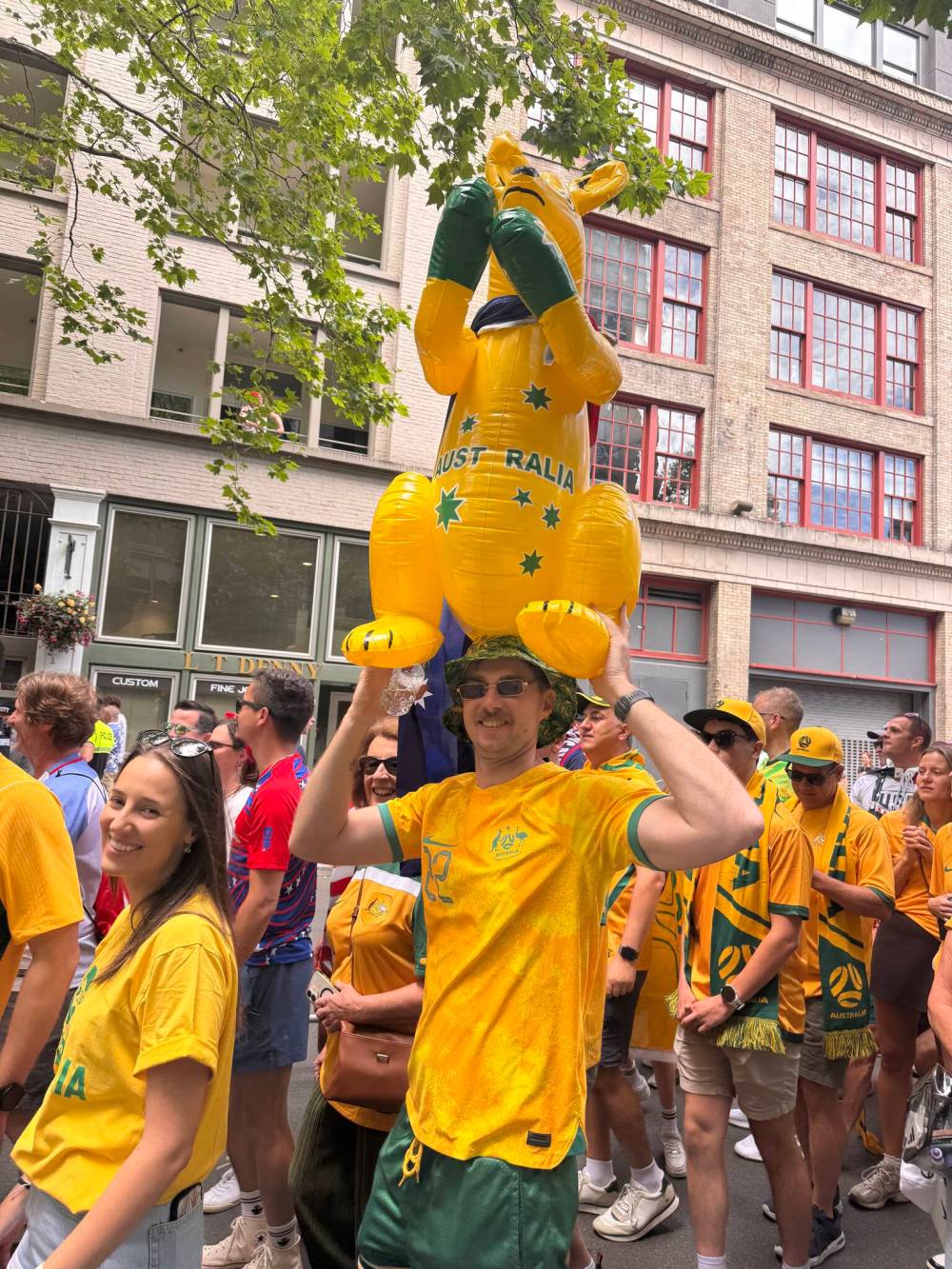
Supplied
Australian fans were keen to party as well.
It was fair to wonder: what would my experience be like?
The first match in Seattle, on June 15, was Belgium versus Egypt, and I planned to drive from Vancouver early in the morning. It’s about a two-and-a-half-hour trek. At midnight, I had flown home from Canada’s thunderous opening tie in Toronto against Bosnia and Herzegovina. By 7 a.m., when I was ready to hop in my car, the battery was dead. I spent the day fixing my vehicle.
Was it a sign, I wondered. Was there a greater guardian angel keeping me away from our hostile southern neighbours who want to turn us into their 51st state?
So I switched gears and jumped into the World Cup party scene in Vancouver, enjoying games at BC Place and the surrounding Fan Fests. Ranked the No.1 World Cup host city by Sports Illustrated, there was plenty to do. Jack Poole Plaza, home of the Olympic cauldron, was inundated with fans. The same was true of the PNE FIFA Fan Fest, Canada Soccer House on the North Shore and Granville Island.
Vancouver did so well. The iconic Science World, resembling the Trionda soccer ball, put the city in a class of its own. Granville Street became the place to go to drink, scream, cheer and wear your team’s colours with delight and abandon.
But still, I wanted to go to Seattle. The next game was the U.S. versus Australia, and I bought a bus ticket that would allow me to be dropped off next to the stadium. I planned to go straight there and directly back. I paid in shrivelled Canadian dollars, and was all set.
The night before the match, Greyhound sent me an email saying my bus was cancelled. No explanation. Just an apology and a refund. Was this another sign? Was the universe trying to say, “Stay away! Don’t go to America!”
If it was, I decided to ignore it. I woke up that morning and drove to the border. You always time drives to the U.S. with fear of a long wait; it could take hours, especially in the summer. There was one car in front of me. Wow. It was true. Canadians really don’t like travelling to the U.S. right now.
The officer asked me the usual questions: where was I going and when was I coming back. He was nice. It was a breeze.
Before long, I was in Seattle, surrounded by 70,000 red, white and blue-clad supporters parading through the downtown streets, serenading their team. No bombs, no bullets, no ICE antics, just fans. Australian supporters in gold joined in, many carrying kangaroos, in hopes of their team’s success, too.
There were lots of “U-S-A” chants, no different than the “Ca-na-da” chants on the streets at home. It was all good fun, a positive, friendly, easy, raucous, sporting wave. There was a military and police presence, for sure, but they were there to keep us safe. The most dangerous encounters I experienced were teenage boys on scooters.
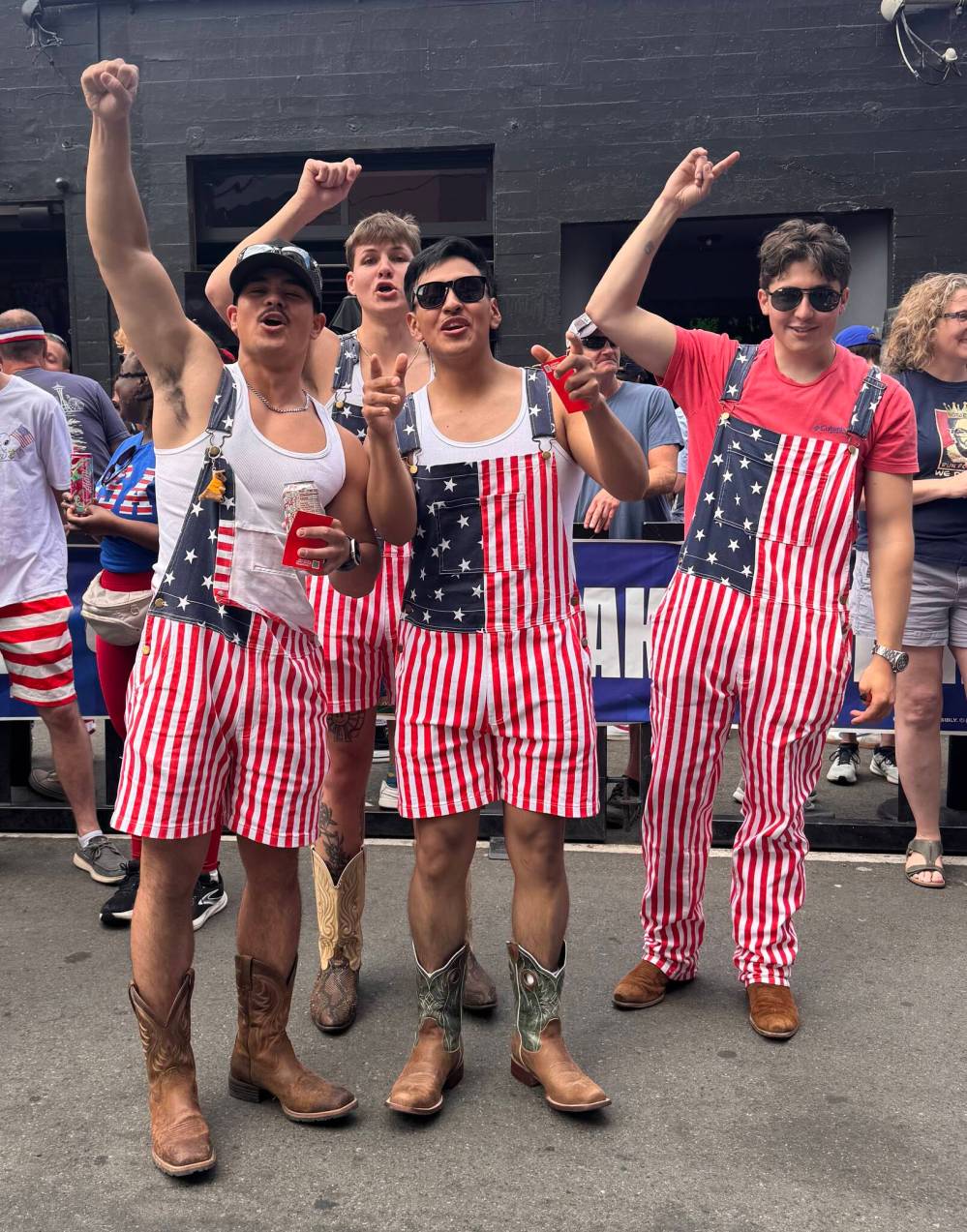
Supplied
The vibe in Seattle was jubilant during group play.
On-field success scuppered
As the tournament advanced, so did the U.S.
Americans were proud of their team as it advanced to the Round of 32, just like we were when Canada did the same. There was tremendous excitement and hope for the Stars and Stripes. They had won three of their four matches. Could this be the year the U.S. wins the World Cup? Expectations were high heading into the Round of 16 match against Belgium.
But then, as we all know by now, President Trump stepped in and had U.S. striker Folarin Balogun’s mandatory red-card suspension lifted from the previous game. Folarin was now available to play in the do-or-die match.
This changed everything. Bam! Party over. People were outraged that FIFA allowed the U.S. government to intervene in the tournament. It was unprecedented, and fans around the world swore corruption. Everyone suddenly wanted the U.S. to lose.
Crossing the border the day before that game was different, too. First, the Blue Jays were in Seattle to play the Mariners. A 40-minute wait signalled Canadians were able to forgive Americans for being American enough to enter the U.S. to see the Jays. They played terribly.
The vibe in Seattle had also shifted. There were still the “U-S-A! U-S-A!” chants from Sam’s Army marching to Lumen Stadium. There was still a mood of hope, but there was less of it. A sense of shame and unease had crept in.
Most Americans I talked to that day excused the intervention with Trump’s argument that it “wasn’t a foul,” despite the hacking of Bosnian defender Tarik Muharemovic’s ankle.
“Yes, we know it’s not really the rules, but it wasn’t a red card anyway,” they would say. “You all do the same in hockey.”
I ran into American friends who had represented their nation on the pitch and now hold high positions in the soccer community. Their reactions were different. “We are so embarrassed. The world already hates us, and now they hate us even more. We are cringing.”
It was true. Maps circulated online of the entire world, except the U.S., swathed in Belgium’s colours.
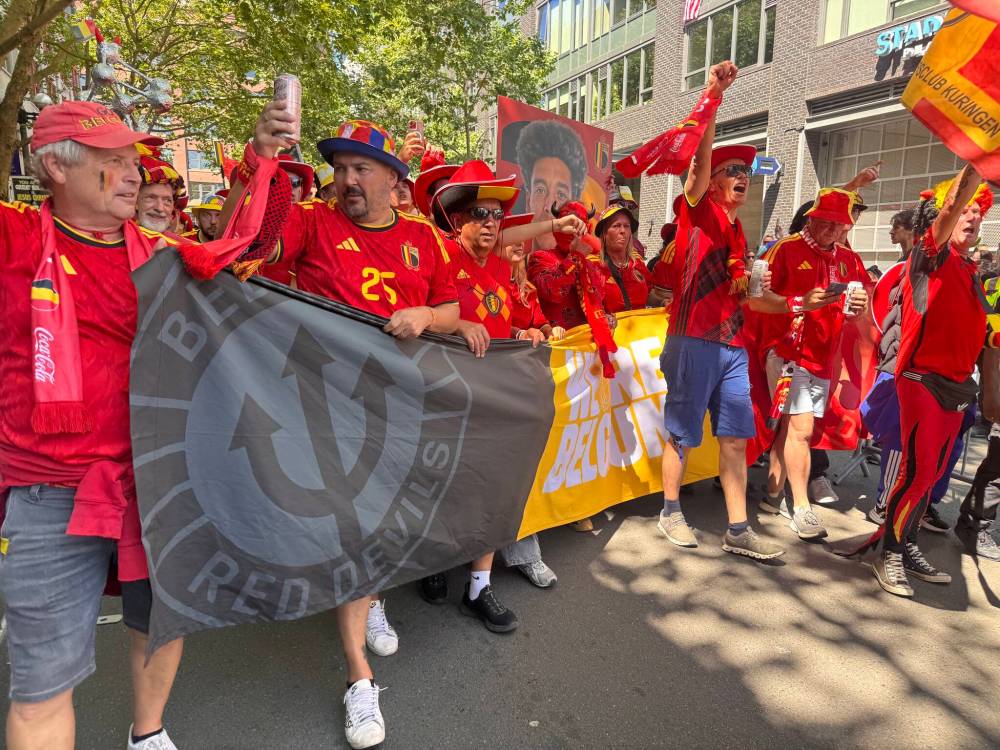
Supplied
Belgian fans make their way to Seattle’s Lumen Stadium for their country’s Round of 16 game against the U.S.
After the Red Devils thumped the U.S. 4–1, the Belgian players were filmed doing the Trump dance to his favourite rally song, YMCA. The rest of us gleefully sighed a relief, too, with the U.S. out of the tournament. Trump had humiliated his country, the World Cup and FIFA.
Yet, the World Cup still has the best games to come.

All three co-hosts were out, but the global soccer elite of France, Spain, England and Argentina were still fighting for supremacy on U.S. soil.
The tournament has been a resounding success, with full stadiums, jubilant matches between 48 competing teams, solid television ratings and very few noteworthy distractions — just Trump doing what Trump does.
The focus has been soccer, the Video Assistant Referee system and Argentina surviving questionable on-field calls.
Trump has promised to hand the World Cup trophy to the winning team. I’ll be glad this time to be watching the final at home in front of a screen here in Canada.
Carrie Serwetnyk is a former Canadian national team soccer player and the first woman inducted to the Canadian Soccer Hall of Fame. This is the 10th-straight men’s World Cup that she’s attended.

Advertisement Advertise With Us
Advertisement Advertise With Us