

Is this Canada’s last generation of ski jumpers? ‘We need to ensure that we stay relevant’
Advertisement
Read this article for free:
or
Already have an account? Log in here »
To continue reading, please subscribe:

Digital Subscription
One year of digital access for only $205*
- Enjoy unlimited reading on winnipegfreepress.com
- Read the E-Edition, our digital replica newspaper
- Access News Break, our award-winning app
- Play interactive puzzles
*First annual payment billed as $205.00 + GST for one year. This annual subscription will automatically renew at $233.00 + GST every 52 weeks (10% off the regular annual price of $259.35). Offer available to new and qualified returning subscribers only. Cancel any time.
To continue reading, please subscribe:
Add Free Press access to your Brandon Sun subscription for only an additional
$1 for the first 4 weeks*
- Enjoy unlimited reading on winnipegfreepress.com
- Read the E-Edition, our digital replica newspaper
- Access News Break, our award-winning app
- Play interactive puzzles
*Your next Brandon Sun subscription payment will increase by $1.00 and you will be charged $17.95 plus GST for four weeks. After four weeks, your payment will increase to $24.95 plus GST every four weeks.
Read unlimited articles for free today:
or
Already have an account? Log in here »
Hey there, time traveller!
This article was published 01/01/2022 (1736 days ago), so information in it may no longer be current.
When Alexandria Loutitt hears European ski jumpers complain about their gear, she can’t help but roll her eyes.
“They’re like, ‘Oh, I’ve only got however many pairs of skis.’ Well, I have to pay for my skis, I don’t get given them. We have to pay for all of our stuff,” says the 17-year-old from Calgary.
“But you know, it’s proof that we really want to be here” on the international circuit. “We’re doing everything we can to be here, to stay here and remain competitive.”
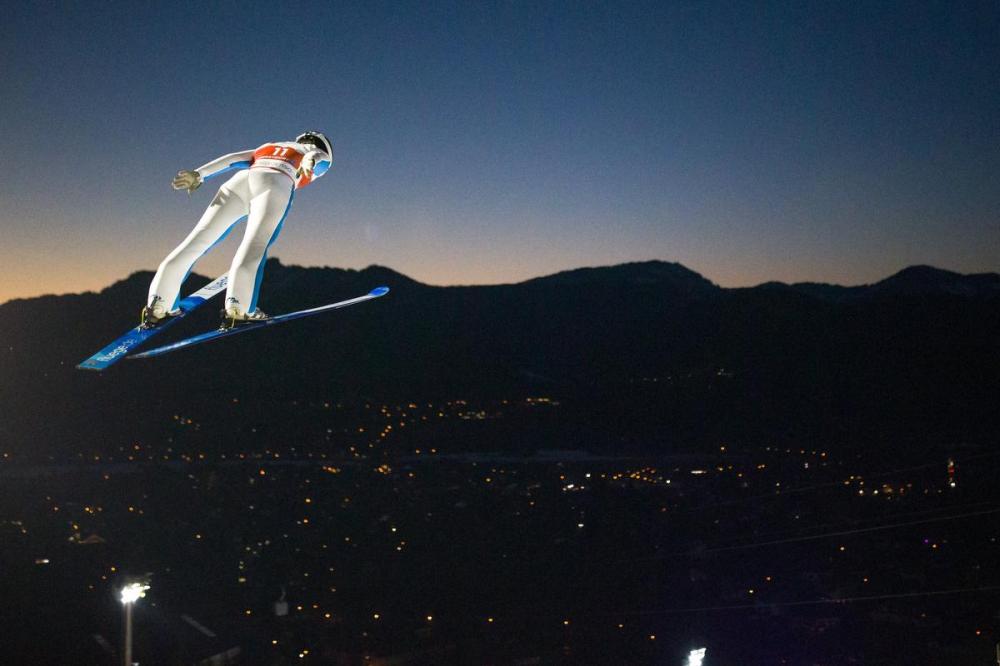
To be a ski jumper from Canada and heading to the Beijing Olympics in February doesn’t just take athletic skill; it demands an unceasingly positive attitude and willingness to continue in spite of the odds.
“It hasn’t been an easy road for them,” says Todd Stretch, chair of Ski Jumping Canada. What they have in spades is “grit and resilience and determination.”
Canada has never won an Olympic medal in ski jumping — Horst Bulau’s seventh place on the large hill at the 1988 Calgary Games is the nation’s best ever finish — and there’s not a single athlete on the national team who doesn’t dream of changing that.
Ski jumping is one of only two winter sports that are completely unfunded by Canada’s high-performance funding body Own the Podium. (The other is nordic combined, which combines ski jumping and cross-country skiing.)
None of that is new. Even in Bulau’s era — so long ago that he recalls Molson sponsoring the World Cup in Thunder Bay and Export A cigarettes backing the Canadian championships — things weren’t easy for Canucks in this European dominated sport.
But things have gotten much worse for Canadian ski jumpers in the last couple of years and, paradoxically, possibly better — at least for the current national team.
If things don’t change, this crop of athletes may well be Canada’s last Olympic ski jumpers.
The senior team of four women and two men, who all hail from Calgary, lost their training base at Canada Olympic Park when WinSport shuttered the ski jumping facility over the high cost of maintaining it. Then COVID-19 hit. That stripped them of the option of easily travelling to the U.S. facilities in Lake Placid and Salt Lake City.
“We were reduced to training outside in fields while Europeans continued training and jumping,” Stretch says.
That’s no way to prepare for the Olympics. So the team up and moved to Slovenia, permanently.
The Canadian women now share a house in a ski jumping town and have a European coach. Canada’s three-time Olympic ski jumper Mackenzie Boyd-Clowes has long made Slovenia his base, and trains there with the U.S. team.
“It changes our whole perspective on everything,” 20-year-old Abigail Strate says of their new circumstances.
Having a permanent base — a home, even if it’s 8,000 kilometres away from family — instead of a suitcase to live out of for more than nine months a year is a big deal. And having that base in a high-performance training environment, surrounded by the top European teams, has enormous advantages.
“We get a lot better perspective on where we’re actually at, whereas when we were training in North America … we’d think we were jumping well and then we’d come to a World Cup and get totally smacked in the face because these Europeans are training in way tougher conditions,” she says.
But, of course, none of this comes cheaply and that’s a limiting factor for the future of this sport in Canada.
“We do fundraising through golf tournaments and things like that to help our team, but largely they’re self-funded,” says Stretch.
To the tune of about $50,000 a year, he adds.
The travel, training and competition schedule makes a paying side job all but impossible, and Loutitt is still a high school student. So that means a lot of work tapping family, applying for sport grants and hunting down potential sponsors just for the opportunity to develop their talent and represent Canada on the global stage.
“The athletes we have now, the grit and resilience and determination they have, it’s incredible. Nothing will stop them,” Stretch says.
But what of Canada’s next crop?
“Attracting people with those associated costs is definitely cause for concern,” he says.
And how will young Canadians even become ski jumpers?
The Calgary jumps are closed and the ones in Whistler, built for the 2010 Vancouver Olympics, are rarely open for training.
This is a tough sport to be good at for many reasons, not least of which is launching down an in-run on skis, flying high and far through the sky before landing, hopefully knees intact.
Ski jumpers start young, usually around eight to 12.
Loutitt, who started when she was nine, in part to prove she was a better athlete than her brother, jokes that you need to get athletes young, when “they haven’t learned that it’s a scary sport yet.”
And though they start young, this sport takes years, decades even, to master. This isn’t like some sports where new and young athletes can spring up and win Olympic medals.
High costs, a long development timeline and no training facilities in Canada make it hard to see much of a future for the sport here. Already, Loutitt and Strate have seen most of the ski jumpers they started with leave the sport.
Stretch calls the high-performance benefits of the move to Slovenia “a silver lining within the cloud” for the athletes who were advanced enough to make that move.
“Certainly it’ll take ski jumps back in Calgary or Whistler fully operational, or other ski jumps in this country, to build a program. Because it’s, what’s next? We need to ensure that we stay relevant and we have kids in the program and new Mackenzies and Horst Bulaus.”
As it stands now, Canadians who might become inspired by watching the likes of Loutitt, Strate or Boyd-Clowes fly high in Beijing have no real path to follow.
For Strate, all the effort that goes into staying in her sport and working her way up the rankings is worth it, for the challenge and joy it brings.
“It’s just like total Zen floating through the air,” she says.
Loutitt agrees: “It’s like someone has hit pause on the rest of the world and you’re isolated in a moment.
“You’re flooded with confidence and adrenalin and everything’s moving really slow. You can feel the wind underneath your skis, lifting you up,” she says. “It still gets me every time. I love that feeling.”
What also helps to lift her up is the knowledge that many people think she should give up.

Loutitt still remembers playing a game on an elementary school trip where the kids took turns saying what they wanted to be when they grew up.
“I said, ‘I’m going to be an Olympian,’ and the leader of the group was like, ‘That’s very good, it doesn’t have to be realistic,’” she recalls, laughing.
“All those people, all those snide comments — ‘You’re wasting your time, why are you doing this?’ — all those little things, it’s just fuel in the tank that builds up and adds to the power when I take off.
“There’s always an upside to everything.”
Kerry Gillespie is a Toronto-based sports reporter for the Star. Reach her via email: kgillespie@thestar.ca
Related Articles
Prepare for the Beijing Games with this Olympic quiz







Advertisement Advertise With Us
Advertisement Advertise With Us