

Donald Trump and tariffs, ad nauseam
Advertisement
Read this article for free:
or
Already have an account? Log in here »
To continue reading, please subscribe:

Digital Subscription
One year of digital access for only $205*
- Enjoy unlimited reading on winnipegfreepress.com
- Read the E-Edition, our digital replica newspaper
- Access News Break, our award-winning app
- Play interactive puzzles
*First annual payment billed as $205.00 + GST for one year. This annual subscription will automatically renew at $233.00 + GST every 52 weeks (10% off the regular annual price of $259.35). Offer available to new and qualified returning subscribers only. Cancel any time.
To continue reading, please subscribe:
Add Free Press access to your Brandon Sun subscription for only an additional
$1 for the first 4 weeks*
- Enjoy unlimited reading on winnipegfreepress.com
- Read the E-Edition, our digital replica newspaper
- Access News Break, our award-winning app
- Play interactive puzzles
*Your next Brandon Sun subscription payment will increase by $1.00 and you will be charged $17.95 plus GST for four weeks. After four weeks, your payment will increase to $24.95 plus GST every four weeks.
Read unlimited articles for free today:
or
Already have an account? Log in here »
Are you tired of it all yet? You should be.
Once again, Canada’s biggest trading partner has launched punitive trade tariffs on Canadian goods: U.S. President Donald Trump has levied a 50 per cent tariff on a wide range of Canadian exports, a move that is expected to affect US$20 billion in Canadian exports. The reason? Because Canada had the temerity to actually respond to unilateral U.S. tariffs despite Canada’s trade deals with that country.
Long a fan of using ancient and esoteric law to push his tariff agenda, this time Trump has reached back to the Dirty Thirties to resurrect section 338 of the Smoot-Hawley Tariff Act, part of a piece of tariff legislation that economists say severely deepened the Depression.
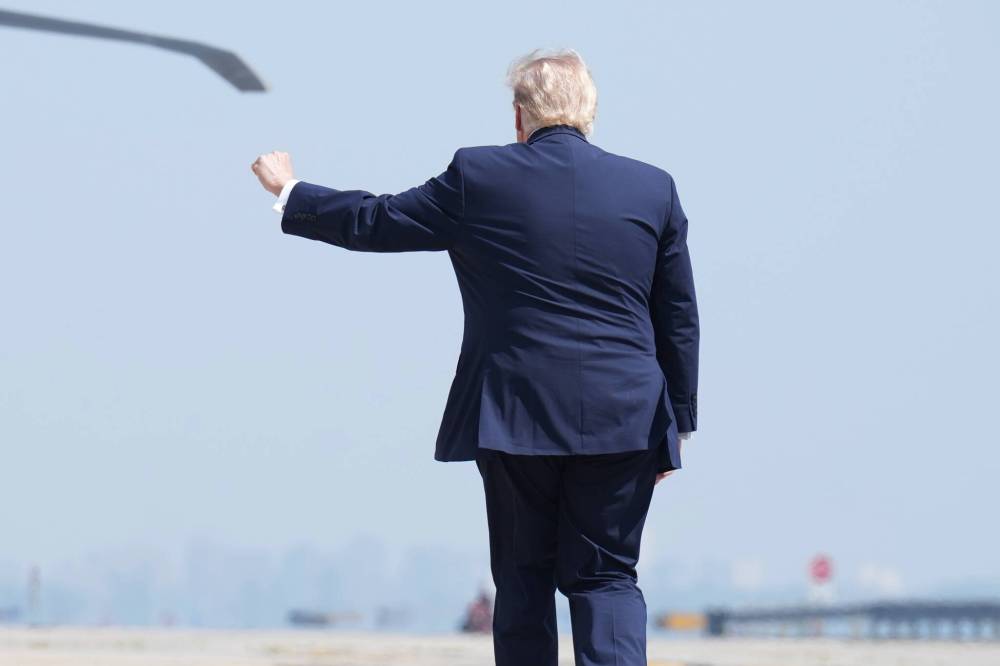
Jacquelyn Martin / The Associated press
U.S. President Donald Trump
Is this an attempt to use leverage in ongoing negotiations in the Canada-U.S.-Mexico trade agreement? Possibly, because the reason Trump says he’s imposing the tariffs mirrors the complaints he’s made publicly about CUSMA — dairy imports into Canada among them.
Is it an attempt to test-drive using section 338 to impose tariffs after his earlier tariff efforts were thrown out by the U.S. Supreme Court? Again, possibly.
Is it because the war against Iran is going badly and he needs to create a distraction? Possibly again.
Whatever the reason, it’s both tiresome and dangerous for the Canadian economy — and for American customers, who will be the people actually paying the cost of the new tariffs on everything from wood for housing construction to bedsheets and, for some reason, mosses, lichens and fake beards.
It’s worth looking at the effects of the Smoot-Hawley legislation. So why not look at the analysis offered up by the U.S. Senate of how successful the tariff law was for an America on the edge of the Great Depression?
“It was on June 13, 1930, that the Senate passed the Smoot-Hawley Tariff, among the most catastrophic acts in congressional history,” a page on the U.S. Senate website says. “A thousand economists signed a petition, drafted by a Chicago economist and future U.S. senator Paul Douglas, that implored the president to veto the tariff. … Ignoring the experts, Hoover signed the tariff on June 17, 1930. As the economists predicted, the high tariff proved to be a disaster. … Nor did the tariff sit well with the voters. In 1932 they turned the majority in both houses over to the Democrats, by large margins. The voters also made clear their disdain for the Smoot-Hawley tariff by booting both Reed Smoot and Willis Hawley out of office that year.”
Smoot-Hawley was a clear example of the perils of starting trade wars, and an object lesson that Donald Trump seems to have failed to understand. It might, however, be obvious to ordinary Americans, as prices rise on US$20 billion worth of products.
That doesn’t make the risks to Canadians any smaller — but what exactly are we expected to do? Mollify the bully? Accept the blackmail, lower our opposition and expect that Capo Trump won’t turn around and come back for more?

Because he most definitely will.
We have to continue to try and find global partners who uphold the agreements they’ve signed, whose word is their bond (not simply a timely convenience) and move forward.
We have to continue to negotiate on CUSMA, but from the pragmatic point of view that a new deal might well not be worth the paper it’s printed on.
Smoot-Hawley was an economic disaster for the United States in the 1930s.
Son of Smoot will likely be no better.