

Vaping: a clear and present danger
Advertisement
Read this article for free:
or
Already have an account? Log in here »
To continue reading, please subscribe:

Digital Subscription
One year of digital access for only $205*
- Enjoy unlimited reading on winnipegfreepress.com
- Read the E-Edition, our digital replica newspaper
- Access News Break, our award-winning app
- Play interactive puzzles
*First annual payment billed as $205.00 + GST for one year. This annual subscription will automatically renew at $233.00 + GST every 52 weeks (10% off the regular annual price of $259.35). Offer available to new and qualified returning subscribers only. Cancel any time.
To continue reading, please subscribe:
Add Free Press access to your Brandon Sun subscription for only an additional
$1 for the first 4 weeks*
- Enjoy unlimited reading on winnipegfreepress.com
- Read the E-Edition, our digital replica newspaper
- Access News Break, our award-winning app
- Play interactive puzzles
*Your next Brandon Sun subscription payment will increase by $1.00 and you will be charged $17.95 plus GST for four weeks. After four weeks, your payment will increase to $24.95 plus GST every four weeks.
Read unlimited articles for free today:
or
Already have an account? Log in here »
The numbers are startling. According to a recent Free Press story, nearly one-fifth (18.4 per cent) of Manitoba teens in grades 7 to 12 reported using ‘vapes’, known more formally as e-cigarettes, within the month prior to answering a Health Canada survey in 2023-24.
For the unaware, vaping refers to the practise of using a battery-powered device to heat a nicotine-infused liquid (a.k.a. ‘juice’), which turns it into a vapour that can be inhaled. Vape juices are often flavoured to taste like candy and local health and education officials say vaping has become the go-to nicotine delivery system for teens and young adults in Manitoba.
That’s scary, especially since Canadians under 18 have been banned from purchasing vaping products since 2018, and the promotion and marketing of vaping to youth is prohibited.
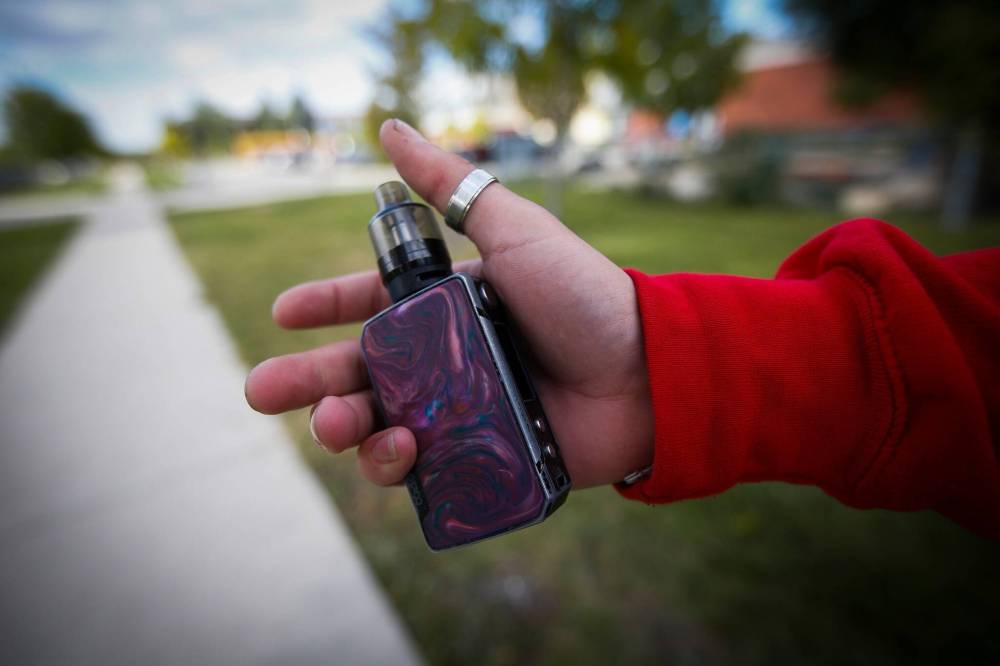
Free Press files
Teen vaping numbers are alarming medical officials, health advocates and educators.
Regardless, it is obvious our kids are getting hold of vaping devices and juices in ever-increasing numbers. And now school officials, medical professionals and health advocates alike are sounding the alarm.
Juliette Mucha, CEO of the Manitoba Lung Association, told the Free Press that vaping “has skyrocketed into a crisis.”
Substance-use counsellors in River East Transcona School Division have identified vaping as the leading substance-use concern among students in grades 6 to 8 — children who are just 11 to 13 years old.
Because nicotine is a highly addictive substance that affects the dopamine response system in the brain, people find it incredibly difficult to stop using products which deliver nicotine. And therein lies the real alarm.
In addition to nicotine, vaping juices contain ingredients that break down into known toxic and carcinogenic compounds. Since vaping products only entered the Canadian market in 2004, medical and scientific research into their long-term effects is ongoing and incomplete. But the fear that vaping may be as harmful as cigarette-smoking is real.
There is already scientific evidence that the genes of regular vapers can be altered by the practice, and University of Manitoba researchers are actively investigating how vaping affects lung health of. It’s unlikelythe results will bear good news and, based on what we already know, young vapers are at risk of long-term illness and, potentially, fatal disease
So, what to do?
Prohibition is not the answer, as was shown with alcohol and cannabis in the 20th century. Banning those substances drove users and suppliers underground, created illegal black markets and encouraged illicit, often violent activity, as suppliers fought for territory and markets. Enforcement of associated laws largely criminalized users and local distributors, while major suppliers often evaded prosecution.
As mentioned, 2018 amendments to Canada’s Tobacco Act and the Non-Smokers’ Health Act banned sales and marketing of vaping products to youth under 18. But the mere existence of these laws is not enough.

If federal and provincial jurisdictions want to keep children from vaping, they must take a three-pronged approach that involves further regulation, effective enforcement and comprehensive, preventive education.
Just as they have done with tobacco, legislators should act proactively to control and limit the nicotine strength and toxic ingredients of vapes and vaping products. Points of sale should be limited to specific retail outlets — perhaps a combination of pharmacies and cannabis dispensaries, which are already age-limited.
In addition, a tiered system of fines and punishments — up to and including the suspension of business licences — should be enacted and vigorously enforced.
At the same time, medical professionals, health advocates and educators must co-operatively develop preventative mandatory educational programs — aimed squarely at middle-school students — designed to discourage and ultimately prevent our children from taking up the latest ‘disgusting habit.’
All this will take investments of time and resources. It will be expensive — but it’s the least we can do for our kids.