

PMO stumbles with Sio Silica communique
Advertisement
Read this article for free:
or
Already have an account? Log in here »
To continue reading, please subscribe:

Digital Subscription
One year of digital access for only $205*
- Enjoy unlimited reading on winnipegfreepress.com
- Read the E-Edition, our digital replica newspaper
- Access News Break, our award-winning app
- Play interactive puzzles
*First annual payment billed as $205.00 + GST for one year. This annual subscription will automatically renew at $233.00 + GST every 52 weeks (10% off the regular annual price of $259.35). Offer available to new and qualified returning subscribers only. Cancel any time.
To continue reading, please subscribe:
Add Free Press access to your Brandon Sun subscription for only an additional
$1 for the first 4 weeks*
- Enjoy unlimited reading on winnipegfreepress.com
- Read the E-Edition, our digital replica newspaper
- Access News Break, our award-winning app
- Play interactive puzzles
*Your next Brandon Sun subscription payment will increase by $1.00 and you will be charged $17.95 plus GST for four weeks. After four weeks, your payment will increase to $24.95 plus GST every four weeks.
Read unlimited articles for free today:
or
Already have an account? Log in here »
Let’s file this under the heading “not helpful.”
While attending the G7 summit last week in Évian, France, Prime Minister Mark Carney touted “new investment partnerships” between Canada and Germany, including a memorandum of understanding (MOU) signed by Canadian-based Sio Silica and German solar technology firm RCT Solutions for the extraction of high-purity silica sand used in solar-panel manufacturing.
For the international community (and likely most of Canada outside Manitoba), the readout on the MOU probably seemed like a good-news story regarding a bilateral agreement to “support a high-purity silica project, to extract 99.9 per cent-plus pure silica sand, highly valued for manufacturing solar panels and semiconductors, advanced manufacturing, and defence-related technologies.”
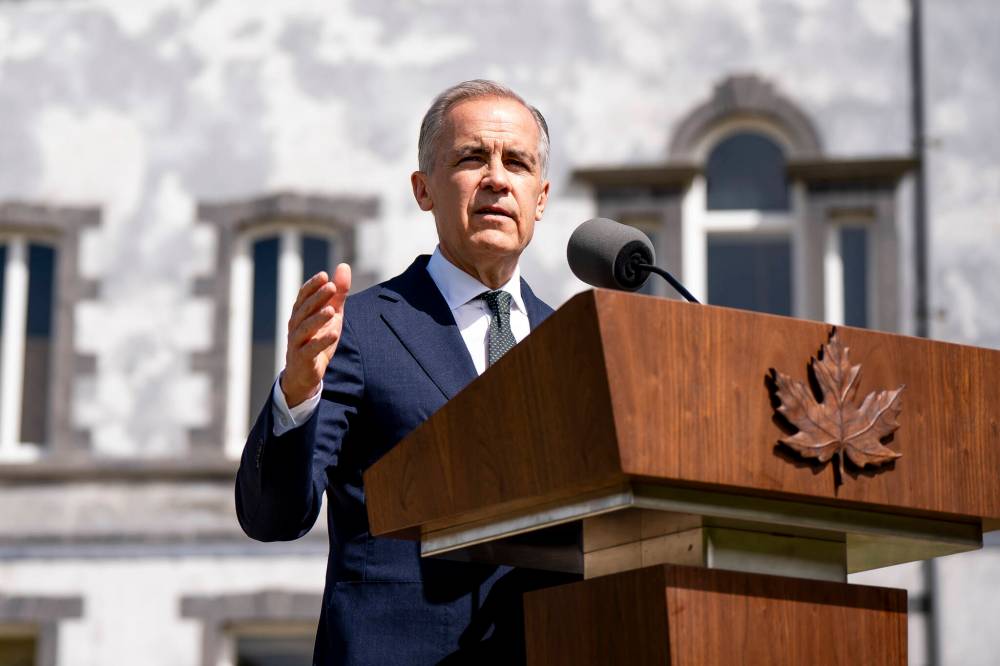
CHRISTOPHER KATSAROV / THE CANADIAN PRESS
Prime Minister Mark Carney
A second memorandum described by Carney involves the two companies and the Southern Chiefs’ Organization in a partnership to build a fully integrated solar manufacturing hub in Manitoba.
Such an announcement would be very much in character for a leader who has invested significant political capital into raising Canada’s global profile by promoting economic co-operation among so-called “middle powers” in the face of disruptions of traditional trade relationships during the tumultuous second term of U.S. President Donald Trump.
But here in Manitoba, Carney’s seemingly out-of-nowhere support of the Sio Silica initiative no doubt felt like an unwelcome intrusion into an issue that has involved years of controversy and political wrangling and, despite the persistent ongoing efforts of the company in question, remains anything but a done deal.
The reference to the sand-extraction MOU was included in a press release from the Prime Minister’s office describing 13 new partnerships and initiatives involving no less than eight countries under the Critical Minerals Resilience and Production Alliance, which was launched last year during Canada’s G7 presidency.
“In an uncertain world, Canada is a pivotal, powerful, and purposeful force for good,” Carney says in the release. “At the G7 Leaders’ Summit in Évian, we secured new partnerships to build energy projects in Canada.”
But “secured” is a decidedly inappropriate characterization of Sio Silica’s Manitoba initiative. Despite years of lobbying and applications, the company has yet to satisfy environmental concerns about the project(s) and has, to date, been unsuccessful in obtaining the necessary licences and approvals for the initiative to proceed.

The most likely scenario is that Carney and his staff were eager to roll out a roster of trade-deal “wins” during the G7 event and included the Sio Silica/RCT Solutions MOU, unaware of the lingering controversy that surrounds the company in Manitoba. What would be more troubling is if Carney was aware of the ongoing environmental/licensing standoff and chose to include the memorandum anyway.
Not surprisingly, Sio Silica president Carla Devlin promptly seized on Carney’s communique as a means of advancing the in-limbo initiative’s chances. “We are grateful for the support and engagement of the Government of Canada in helping showcase Canadian opportunities on the world stage,” she said.
As is his tendency when he perceives things going amiss politically, Manitoba Premier Wab Kinew stepped directly into the discussion, saying he works for the people of eastern Manitoba, not the G7 elite, and his focus will remain on safeguarding the drinking water and health of people who live here.
Given the generally collegial nature of their interactions so far, there’s little reason to believe this episode will adversely affect broader Carney/Kinew relations. But the PM’s office would be well advised to extract a useful lesson from its unstudied attempt to enhance its global standing by touting a project whose local fate has yet to be decided.
It’s an approach that benefits no one.