

Climate change demands action, not hope
Advertisement
Read this article for free:
or
Already have an account? Log in here »
To continue reading, please subscribe:
Digital Subscription
One year of digital access for only $1.44 a week*
- Enjoy unlimited reading on winnipegfreepress.com
- Read the E-Edition, our digital replica newspaper
- Access News Break, our award-winning app
- Play interactive puzzles
*Billed as $5.77 plus GST every four weeks. After 52 weeks, price increases to the regular rate of $19.95 plus GST every four weeks. Offer available to new and qualified returning subscribers only. Cancel any time.
To continue reading, please subscribe:
Add Free Press access to your Brandon Sun subscription for only an additional
$1 for the first 4 weeks*
- Enjoy unlimited reading on winnipegfreepress.com
- Read the E-Edition, our digital replica newspaper
- Access News Break, our award-winning app
- Play interactive puzzles
*Your next Brandon Sun subscription payment will increase by $1.00 and you will be charged $17.95 plus GST for four weeks. After four weeks, your payment will increase to $24.95 plus GST every four weeks.
Read unlimited articles for free today:
or
Already have an account? Log in here »
Hoping against hope may have suddenly, quietly, become the world’s new strategy for addressing climate change.
An ancient biblical concept, hope against hope describes our ability to believe everything is going to be alright despite abundant evidence to the contrary. It’s relevant now because, after two decades of aggressive progress in reducing carbon emissions, we’ve started to retreat.
There has been progress in the energy generation sector, where zero-emission options such as hydro, wind and solar have been increasing at an aggressive rate. However, coal and oil still account for roughly two-thirds of all electricity generation in the world, even as severe weather causes trillions of dollars in damage and lost economic activity around the world.
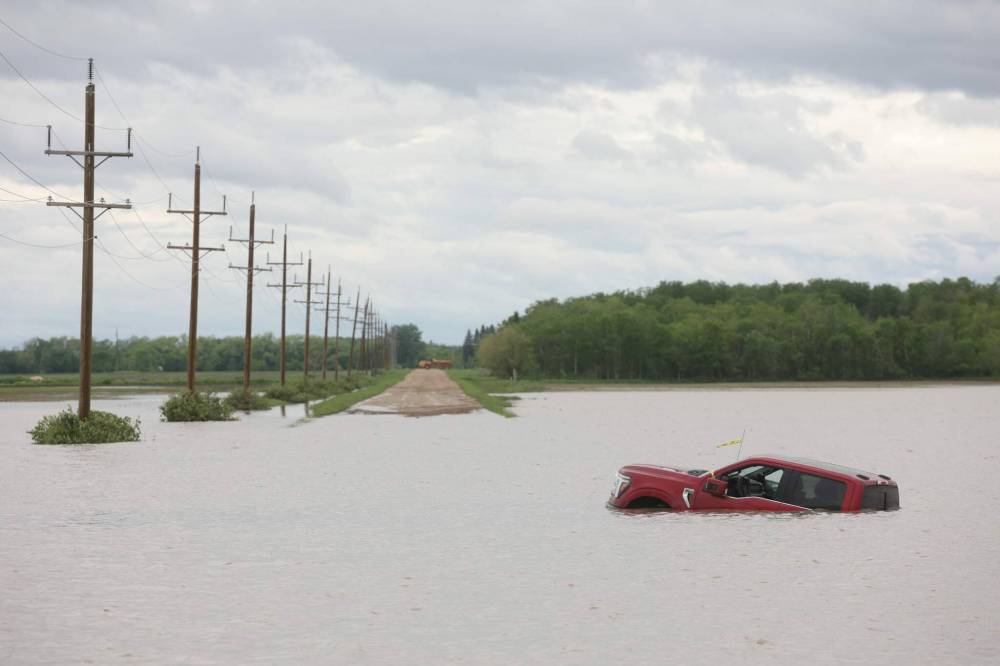
Tim Smith / Brandon Sun files
Wildfires, floods and other severe weather events have become annual occurrences in Manitoba.
Manitoba offers a good example of how climate change has been de-emphasized against a backdrop of severe weather. Destructive wildfires and floods have become annual events in Manitoba, but not convinced the NDP government to become more aggressive on carbon emissions.
Premier Wab Kinew gave citizens a $350-million break on gasoline taxes to help with affordability with the knowledge it would encourage fuel consumption. Other carbon reduction policies have been unimpressive.
The Kinew government promised to make Manitoba’s energy grid carbon neutral by 2035, introduced programs to promote energy efficiency and dangled incentives for the purchase of EVs. However, these measures seem insufficient given the magnitude of the threat of severe weather.
It is the same all over the globe.
The New York Times reported last week that leading Democrats acknowledged they are unlikely to unseat the Republicans if they take a traditionally aggressive stance against oil and gas. In 2023, the Democrats railed against the fossil fuel industry and were trounced by Trump’s “drill baby drill” mantra. Now, instead of directly attacking the fossil fuel industry, leading Democrats are focusing solely on promoting clean, renewable energy while dropping hyperbole around the impending climate apocalypse.
Does this shift in political rhetoric also signal a lack of intention on the part of lawmakers to aggressively pursue carbon reduction?
The Trump administration has done everything it can to eliminate climate change as a policy imperative, promoting increased drilling for fossil fuels and removing federal support for wind, solar and EV initiatives.

Canada has been much less hostile to carbon reduction but Prime Minister Mark Carney has been decidedly bullish on expanding oil and gas and rather muted on measures to lower carbon emissions.
Still, there are strong signs the general public — both in Canada and the United States — would like to see more done to stop climate change. A YouGov poll of American voters in February found that 57 per cent wanted government to do more to fight climate change. An Abacus poll taken the same month in Canada found that two-thirds of respondents want political leaders to do more to combat climate change.
There is, of course, a disconnect between what poll respondents are saying about the importance of combating climate change and how they are voting. Low voter turnout may mean that a lot of climate-conscious citizens are simply not imposing their will on leaders and parties. That is a huge and potentially tragic mistake.
Voters need to convince political leaders that climate change is still a priority. This can be done with a shift in priorities for those who do vote, or a commitment by those who prioritize climate change to get out and vote.
Either way, the need for progress on climate change has not diminished. Hope isn’t going to keep the floodwaters at bay.