

Iran and its potential role in the United Nations
Advertisement
Read this article for free:
or
Already have an account? Log in here »
To continue reading, please subscribe:
Digital Subscription
One year of digital access for only $1.44 a week*
- Enjoy unlimited reading on winnipegfreepress.com
- Read the E-Edition, our digital replica newspaper
- Access News Break, our award-winning app
- Play interactive puzzles
*Billed as $5.77 plus GST every four weeks. After 52 weeks, price increases to the regular rate of $19.95 plus GST every four weeks. Offer available to new and qualified returning subscribers only. Cancel any time.
To continue reading, please subscribe:
Add Free Press access to your Brandon Sun subscription for only an additional
$1 for the first 4 weeks*
- Enjoy unlimited reading on winnipegfreepress.com
- Read the E-Edition, our digital replica newspaper
- Access News Break, our award-winning app
- Play interactive puzzles
*Your next Brandon Sun subscription payment will increase by $1.00 and you will be charged $17.95 plus GST for four weeks. After four weeks, your payment will increase to $24.95 plus GST every four weeks.
Read unlimited articles for free today:
or
Already have an account? Log in here »
There is an ongoing conversation, globally, about what the international order looks like in a post-Trump world, as the hegemonic power of the United States wanes.
In some cases, that has meant shaking hands and brokering deals with countries Canada has had tense relationships in the past, such as China. Now, we are faced with a new question: how to treat Iran?
Conservative members of Parliament have criticized the government of Prime Minister Mark Carney for refusing to follow its allies in challenging the nomination of Iran to two different UN bodies — the monthlong review conference on the global nuclear non-proliferation treaty, and the UN’s economic and social council.
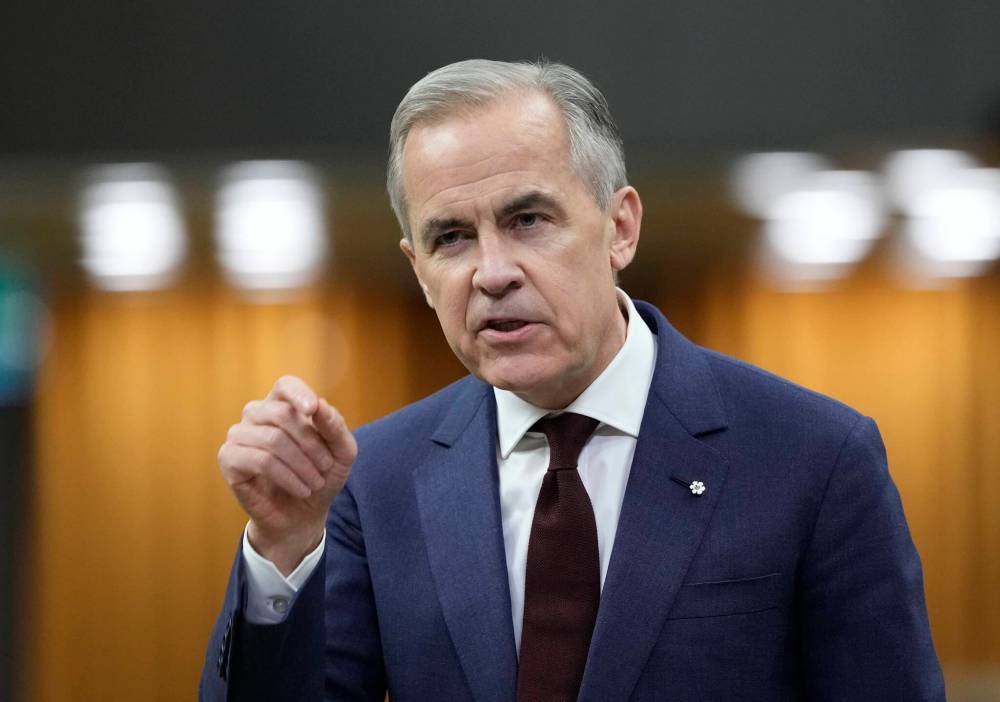
Adrian Wyld / The Canadian Press
Prime Minister Mark Carney
Foreign Affairs Minister Anita Anand has offered a clarification that the government does not support “the Iranian regime and any leadership positions it holds.”
However, Canada did not directly challenge the nominations.
There has been pushback on the nomination to the non-nuclear proliferation group from allied nations including France, Germany, the U.K. and Australia, among others. The concerned MPs are not alone in their objections, and certainly, concern about Iran’s role on the international stage is well-established in the West.
But we must consider, amid recent developments, exactly why that is and what we hope to gain from that.
Iran has been a member of the United Nations since 1945. It is an active and significant player in its geopolitical region with, we have recently been reminded, significant power over a key shipping lane.
Yet the global community’s treatment of Iran seems fixed on a portrait painted in the past. Former U.S. president George W. Bush named it among an “axis of evil” in 2002, along with North Korea and Iraq. The world continues to treat Iran as the nefarious entity Bush described.
This is not to say Iran’s regimes, past and present, are innocent ones. Its recent record of violence against its own citizens is absolutely deplorable. However, it is a case of Western chauvinism that Iran must forever be vilified and denied a seat at the international table while countries like Russia (which invaded Ukraine) sit on the UN Security Council holding a veto — to say nothing of other powerful players such as China.
Nations across the international community must be able to hold one another accountable — or, at a minimum, shed light on their wrongdoing. Iran is not exempt from that, nor has it been.

But it also cannot be refused opportunities to have a potentially meaningful, positive role in global affairs just because of its historic tensions with a crumbling superpower and its (chagrined) allies. Doing so will only fuel more isolationism, more reactionary fervour, in a country which we very much should want to not carry hostile feelings toward its neighbours and the rest of us.
Iran has been accused, for years, of attempting to develop nuclear weapons. Former president Barack Obama struck a deal with Iran to ensure the country’s nuclear development would be peaceful. U.S. President Donald Trump tore that deal up in 2018. Now members of the international community are resisting Iran’s nomination to a body whose purpose is to prevent the spread of nuclear weapons.
What, exactly, are we doing here?
Iran is a country with an ancient history. It, and its people, are not going away any time soon. It has its own weight to throw around, as we have seen with the boondoggle in the Strait of Hormuz. The world can call Iran in, and find a way to move forward with it as a peer nation, or it can keep shutting Iran out.
If the international order chooses the latter, we can’t pretend to be surprised if things get uglier from here.