

Protecting kids from social media is far from easy
Advertisement
Read this article for free:
or
Already have an account? Log in here »
To continue reading, please subscribe:
Monthly Digital Subscription
$1 per week for 24 weeks*
- Enjoy unlimited reading on winnipegfreepress.com
- Read the E-Edition, our digital replica newspaper
- Access News Break, our award-winning app
- Play interactive puzzles
*Billed as $4.00 plus GST every four weeks. After 24 weeks, price increases to the regular rate of $19.95 plus GST every four weeks. Offer available to new and qualified returning subscribers only. Cancel any time.
Monthly Digital Subscription
$4.99/week*
- Enjoy unlimited reading on winnipegfreepress.com
- Read the E-Edition, our digital replica newspaper
- Access News Break, our award-winning app
- Play interactive puzzles
*Billed as $19.95 plus GST every four weeks. Cancel any time.
To continue reading, please subscribe:
Add Free Press access to your Brandon Sun subscription for only an additional
$1 for the first 4 weeks*
- Enjoy unlimited reading on winnipegfreepress.com
- Read the E-Edition, our digital replica newspaper
- Access News Break, our award-winning app
- Play interactive puzzles
*Your next Brandon Sun subscription payment will increase by $1.00 and you will be charged $17.95 plus GST for four weeks. After four weeks, your payment will increase to $24.95 plus GST every four weeks.
Read unlimited articles for free today:
or
Already have an account? Log in here »
Premier Wab Kinew is not wrong about the “why” behind promising to ban social media and AI chatbot access for kids.
But the “how” — which Kinew and his government have not yet shared any information about — is a far more difficult goal.
On the face of it, the problem might look simple.
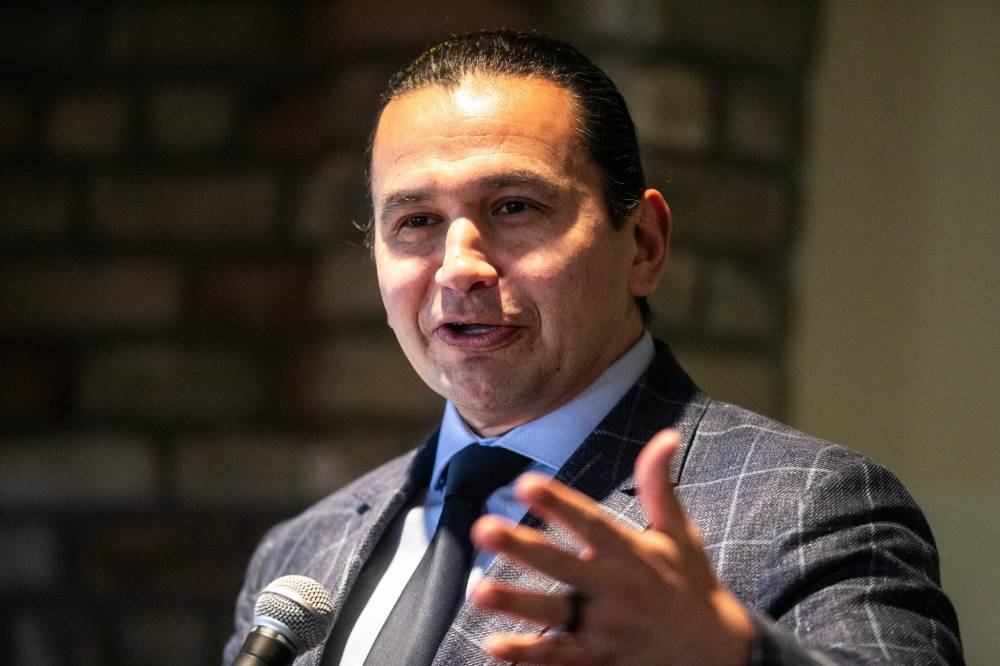
MIKAELA MACKENZIE / FREE PRESS
Premier Wab Kinew
After all, governments have a history of restricting access to products that could harm the development of children, but it’s worth thinking about how those bans are implemented.
Alcohol, cigarettes, cannabis and even adult-rated movies have age limits that restrict access.
If you think an R-rated movie can harm young minds, what kind of damage can the hatred, racism, misogyny and body-shaming of social media sites — let alone the insidious and agreeable persuasion of AI chatbots egging on impressionable teens — do to our youth?
Clearly, social media and chatbots can do — and are doing — considerable and growing harm to our kids, and a government effort that could effectively limit or even stop that damage would be valuable.
But the difference with things such as booze and smokes is that there is a place and a method to directly interrupt their sales to young people.
Fundamentally, such bans are exercised by controls at the point of sale — you come to the door of the Manitoba Liquor Mart, or to the counter of a convenience store selling cigarettes, and you are challenged about your age before you can buy the product. It doesn’t always work, but it does stop many sales.
But what if the shop is the smartphone in your pocket, and the point of sale isn’t even inside the country, let alone this province?
That makes the mechanics a lot more difficult.
And it’s far easier done at a federal level than at a provincial one.
Australia has been moderately successful at introducing age requirements for social media access — Spain has promised to act against what can only be described as social media contagion to protect children as well.
In Canada, the federal government is thinking about the idea — and many argue that the regulation of the internet is a federal power, not a provincial one, because the impacts of internet issues transcend provincial boundaries. As one Federal Court of Appeal judge wrote, “When it comes to the genuinely national goals of safeguarding the digital economy from electronic threats that could easily emanate from, and visit their deleterious effects on, any place in the country, federal regulation is essential.”

Beyond that, does the province of Manitoba even have the tools, and deep enough pockets, to fight the battle it wants to start?
When it comes to David and Goliath battles, we’re certainly David. Manitoba’s annual revenues in 2025 were $24 billion. In Canadian dollars, Meta — the owner of Facebook and Instagram — pulled in $273 billion. Social media’s TikTok alone pulled in the equivalent of $45 billion. (David won in the Bible story, but against tremendous odds.)
On top of that, the most likely tool that seems to be on the table is age verification for social media and AI chatbot users — but there are problems with that. First, there’s the fact that there are relatively easy workarounds for many verification plans, and second, there’s the question of just what kind of a loss of the control of significant personal data, like a teen’s birthdate, would that represent?
About the best thing that can be said is that Kinew and his NDP government have identified a significant threat facing Manitoba’s youth, and want to address it, somehow. That’s fine.
The proof of the pudding is in the eating. Right now, we don’t know what the Kinew government is cooking, or if it will be remotely edible.