

Broad-based tax cuts not the answer
Advertisement
Read this article for free:
or
Already have an account? Log in here »
To continue reading, please subscribe:
Monthly Digital Subscription
$1 per week for 24 weeks*
- Enjoy unlimited reading on winnipegfreepress.com
- Read the E-Edition, our digital replica newspaper
- Access News Break, our award-winning app
- Play interactive puzzles
*Billed as $4.00 plus GST every four weeks. After 24 weeks, price increases to the regular rate of $19.95 plus GST every four weeks. Offer available to new and qualified returning subscribers only. Cancel any time.
Monthly Digital Subscription
$4.99/week*
- Enjoy unlimited reading on winnipegfreepress.com
- Read the E-Edition, our digital replica newspaper
- Access News Break, our award-winning app
- Play interactive puzzles
*Billed as $19.95 plus GST every four weeks. Cancel any time.
To continue reading, please subscribe:
Add Free Press access to your Brandon Sun subscription for only an additional
$1 for the first 4 weeks*
- Enjoy unlimited reading on winnipegfreepress.com
- Read the E-Edition, our digital replica newspaper
- Access News Break, our award-winning app
- Play interactive puzzles
*Your next subscription payment will increase by $1.00 and you will be charged $16.99 plus GST for four weeks. After four weeks, your payment will increase to $23.99 plus GST every four weeks.
Read unlimited articles for free today:
or
Already have an account? Log in here »
There is a familiar political reflex in times of economic strain: cut taxes and promise relief. It sounds simple, immediate and, on the surface, compassionate.
But when governments are already mired in structural deficits — as both Manitoba and Ottawa are — across-the-board tax cuts are not prudent policy. They are expensive distractions that risk making a bad fiscal situation worse, while doing little to help those who need it most.
Manitoba’s decision to expand its provincial sales tax exemption on groceries — including items that stretch the definition of “necessities,” such as junk food — is a case in point. So, too, is federal Conservative Leader Pierre Poilievre’s call to suspend federal fuel taxes for the rest of 2026 in response to rising gas prices.
The Canadian Press FILES
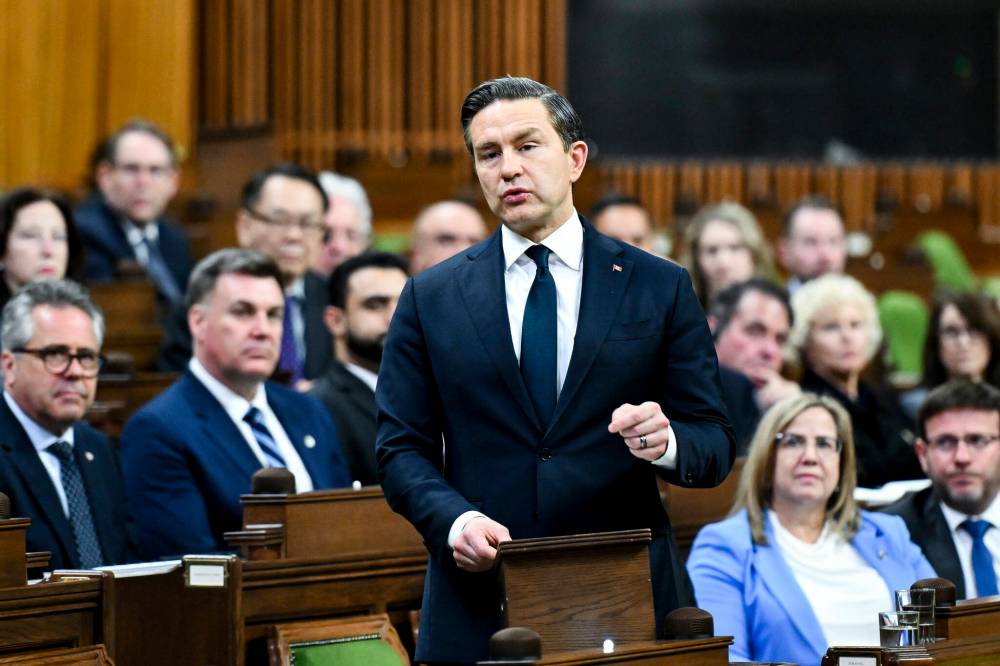
Federal Opposition Leader Pierre Poilievre
Both measures are rooted in the same flawed logic: that broad tax relief is the best way to ease affordability pressures. It is not.
Start with the fiscal reality. Structural deficits are not one-off shortfalls caused by temporary shocks; they are baked into the system. They exist when governments consistently spend more than they take in, even during stable economic periods.
In Manitoba, successive rounds of tax reductions over the past decade — combined with rising costs in health care, infrastructure and social services — have eroded the province’s revenue base.
Federally, the picture is not much different. Years of tax changes, coupled with sustained spending growth, have left Ottawa with little room to manoeuvre.
Cutting taxes further in that environment is akin to digging a deeper hole and calling it progress.
The more fundamental problem, however, is that blanket sales-tax cuts are a blunt instrument. They deliver the largest benefits to those who spend the most — typically higher-income households — while offering comparatively modest relief to low- and moderate-income families.
Take the proposal to eliminate federal fuel taxes. Poilievre argues it would save consumers about 25 cents per litre, translating into roughly $1,200 annually for a family of four. That may sound significant, but it assumes a level of fuel consumption that many lower-income households simply do not have. Those who drive less — or cannot afford a vehicle — would see far smaller benefits, or none at all.
Meanwhile, higher-income households with multiple vehicles and longer commutes would reap the largest gains. The same dynamic applies to sales-tax cuts on groceries. While everyone pays less at the checkout, those who spend more — including on non-essential items — receive the greatest savings.
And all of it comes at a steep cost to the public treasury.
Every dollar governments forgo in tax revenue is a dollar that cannot be spent on health care, education, infrastructure or targeted affordability measures. When deficits are already entrenched, those lost revenues must eventually be made up — through future tax increases, service reductions or more borrowing.

If the goal is to help Canadians cope with high grocery bills and rising fuel costs, there are far more effective tools available.
Targeted measures, such as income-tested rebates, enhanced tax credits or direct transfers to low- and moderate-income households, ensure that assistance goes to those who need it most. These approaches are not only more equitable, they are also more fiscally responsible. They limit the overall cost to government while maximizing the impact on household budgets.
Those solutions may not be as politically attractive as an across-the-board tax cut. That’s because they require nuance, discipline and a willingness to resist short-term populism in favour of fiscal sustainability.
But that is precisely what responsible governance demands.
Tax cuts may win headlines. They do not, in these cases, make for sound fiscal policy.