

Taking time to consider time changes
Advertisement
Read this article for free:
or
Already have an account? Log in here »
To continue reading, please subscribe:
Monthly Digital Subscription
$1 per week for 24 weeks*
- Enjoy unlimited reading on winnipegfreepress.com
- Read the E-Edition, our digital replica newspaper
- Access News Break, our award-winning app
- Play interactive puzzles
*Billed as $4.00 plus GST every four weeks. After 24 weeks, price increases to the regular rate of $19.95 plus GST every four weeks. Offer available to new and qualified returning subscribers only. Cancel any time.
Monthly Digital Subscription
$4.99/week*
- Enjoy unlimited reading on winnipegfreepress.com
- Read the E-Edition, our digital replica newspaper
- Access News Break, our award-winning app
- Play interactive puzzles
*Billed as $19.95 plus GST every four weeks. Cancel any time.
To continue reading, please subscribe:
Add Free Press access to your Brandon Sun subscription for only an additional
$1 for the first 4 weeks*
*Your next subscription payment will increase by $1.00 and you will be charged $16.99 plus GST for four weeks. After four weeks, your payment will increase to $23.99 plus GST every four weeks.
Read unlimited articles for free today:
or
Already have an account? Log in here »
Twice a year, Manitobans go through the same ritual: stumble out of bed groggy after the clocks change and ask themselves why we still do this.
It’s a fair question. And Premier Wab Kinew deserves some credit for finally asking it and for deciding to look at the evidence and consult Manitobans before making any big decisions.
Kinew announced Friday that the province will survey Manitobans about whether to end the twice-annual clock change. The move comes after British Columbia decided to move toward year-round daylight time, raising the inevitable question of whether Manitoba should follow.
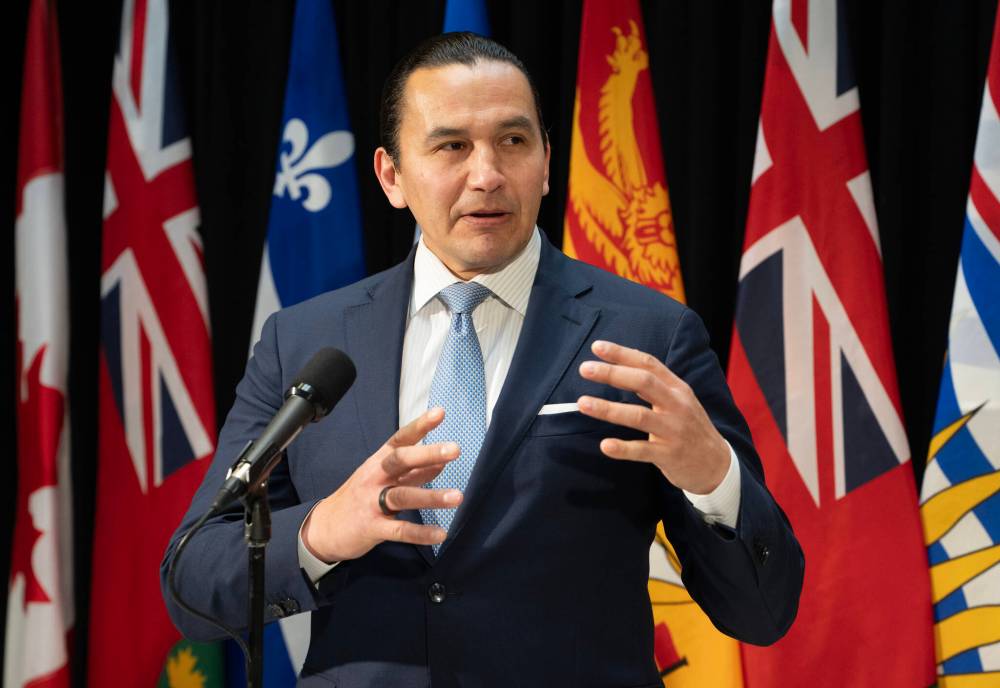
THE CANADIAN PRESS/Adrian Wyld
Manitoba Premier Wab Kinew
A week earlier, Kinew had suggested his government wasn’t looking at the issue because it had other priorities. Some critics will call his latest move a reversal. It’s not. It’s simply a recognition that Manitobans care about the issue and that it deserves thoughtful consideration.
There is broad agreement on one thing: the twice-a-year clock change should at least be revisited. The practice dates back to the early 20th century and was justified during the First World War as a way to conserve energy. Today, those benefits are questionable at best.
What we do know is that the time change disrupts people’s sleep patterns. Many people feel the effects for days after the clocks jump forward in March or fall back in November.
Kinew pointed to a 2025 study from Stanford University that found remaining on one consistent time year-round — either standard time or daylight time — is healthier than switching clocks twice a year.
The study concluded the biannual change disrupts the body’s circadian rhythm, the natural internal clock that regulates sleep, metabolism and many other physiological processes.
That disruption has been linked to increased risks of heart attacks, strokes and other health problems.
But the research adds another wrinkle to the debate: permanent standard time appears to offer the greatest health benefits.
That’s because the human body responds better to natural morning light. Standard time keeps daylight earlier in the day, which helps regulate sleep cycles and overall health.
Public opinion often leans toward permanent daylight time, largely because people enjoy the extra hour of evening daylight in the summer months. Longer evenings mean more time outdoors, more recreation and — for some sectors — more productivity.
Permanent daylight time would mean darker mornings throughout much of the winter. Children could be heading to school in complete darkness and many commuters would start their workdays before sunrise.
Business leaders have also raised legitimate concerns about how any change could affect Manitoba’s economy. The Winnipeg Chamber of Commerce and the Manitoba Chambers of Commerce have both stressed the importance of understanding the implications for national and international business.
Financial markets operate on Eastern Time. Transportation schedules, shipping windows and cross-border trade all depend on coordinated time systems.
A patchwork approach across jurisdictions could create confusion and logistical headaches.
The Canadian Federation of Independent Business reports strong support among Manitoba members for ending the twice-a-year clock changes, but members are split over whether permanent standard or daylight time would be better.
In other words, plenty of people agree the current system is outdated, but consensus on what should replace it remains elusive.

That’s precisely why consultation matters.
Manitoba has an opportunity to avoid the pitfalls seen elsewhere. Some businesses in British Columbia have complained their government’s consultation on the issue was rushed.
Kinew’s approach appears more deliberate.
By surveying Manitobans, reviewing scientific research and considering economic impacts, the province can make a decision based on evidence rather than impulse.
By taking the time — quite literally — to examine the evidence and listen to Manitobans, Kinew is approaching the issue the right way.