

Groceries, prices and efforts to gouge consumers
Advertisement
Read this article for free:
or
Already have an account? Log in here »
To continue reading, please subscribe:

Digital Subscription
One year of digital access for only $205*
- Enjoy unlimited reading on winnipegfreepress.com
- Read the E-Edition, our digital replica newspaper
- Access News Break, our award-winning app
- Play interactive puzzles
*First annual payment billed as $205.00 + GST for one year. This annual subscription will automatically renew at $233.00 + GST every 52 weeks (10% off the regular annual price of $259.35). Offer available to new and qualified returning subscribers only. Cancel any time.
To continue reading, please subscribe:
Add Free Press access to your Brandon Sun subscription for only an additional
$1 for the first 4 weeks*
- Enjoy unlimited reading on winnipegfreepress.com
- Read the E-Edition, our digital replica newspaper
- Access News Break, our award-winning app
- Play interactive puzzles
*Your next Brandon Sun subscription payment will increase by $1.00 and you will be charged $17.95 plus GST for four weeks. After four weeks, your payment will increase to $24.95 plus GST every four weeks.
Read unlimited articles for free today:
or
Already have an account? Log in here »
Hey there, time traveller!
This article was published 26/12/2025 (254 days ago), so information in it may no longer be current.
Premier Wab Kinew seems to want to prove himself to be among the most ambitious premiers Manitoba has ever had. There seems to be no limit to the size and scope of problem he will not at least attempt to solve.
A good case in point is the premier’s recent attention to the never-ending increase in the price of groceries.
Kinew’s first volley in the war against high food prices was the proclamation of a new law that bans grocery store chains from establishing restrictive or exclusive covenants on their properties. In essence, the law is a bid to stop grocery retailers from preventing competitors from moving into properties they have abandoned.
MIKE DEAL / FREE PRESS files
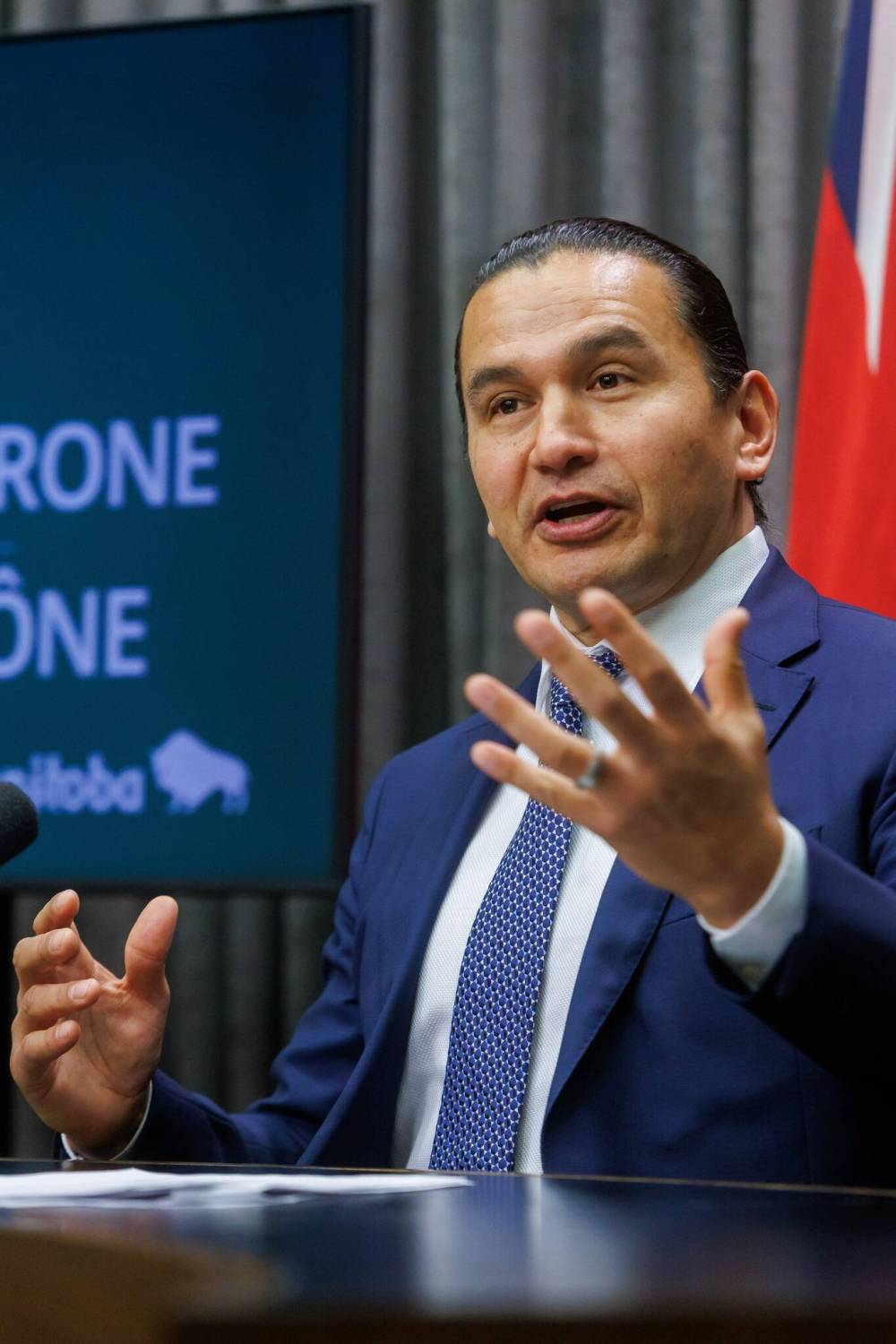
Manitoba Premier Wab Kinew
Kinew believes this will increase competition among grocery retailers and, in the process, lower prices. The premier’s intentions are good, but his expectations are unrealistic. There is plenty of competition among big grocery chains now and it seems as if they have all decided to push prices higher in concert.
More recently, the premier has promised to do something about differential pricing. Broadly speaking, this term describes the technology used by grocery retailers and third-party delivery apps to use dynamic pricing to charge different shoppers different prices for the very same items bought at the same time.
Differential or dynamic pricing is already being used for a variety of things, from tickets to sporting or entertainment events, to airline tickets and hotels. Differential pricing for groceries became a huge issue this week when Consumer Reports published an investigation showing that Instacart, a huge third-party grocery delivery app, was using AI-pricing models to vary the prices of grocery products.
Consumer Reports found that almost 75 per cent of the grocery items they tested were being offered at multiple price points at the same time. The prices being charged varied by as much as 23 per cent.
Kinew is right to suggest that something should be done about this. However, he seems to be launching into an issue before he truly understands how and why it is happening.
If he were to take a bit more time to study this issue, he would realize that differential or dynamic pricing is not really the issue, per se. The broader concern is how this practice reveals the true nature of grocery inflation.
Grocery retailers claim the rapid rise in prices has been driven by inflationary forces beyond their control: supply chain problems, armed conflict, the impact of climate change on crops and rising fuel prices.
However, when confronted with the findings of the Consumer Reports investigation, Instacart revealed that grocery retailers are using AI- dynamic pricing to “test” the tolerance of consumers for higher prices.

In other words, the retailers are experimenting with our capacity to pay higher prices for something. Not because the prices are being forced up by macro economic pressures, but as part of a deliberate and cynical process to see how high they can go up before we stop buying something.
All of which brings us back to Kinew’s stated interest in combating differential pricing.
There may be an opportunity for government to pass laws making it illegal for grocery stores to use dynamic pricing models. However, that law would only have teeth if someone was positioned to catch the grocery stores in the act.
It’s not clear any government wants to endure the cost and complexity of setting up that kind of surveillance system.
Once again, the premier’s intentions are honourable. But if he really wants to give Manitobans relief from high grocery prices, Kinew should perhaps spend a bit more time trying to understand the problem before offering some sort of solution.