

An evening in the emergency room
Advertisement
Read this article for free:
or
Already have an account? Log in here »
To continue reading, please subscribe:

Digital Subscription
One year of digital access for only $205*
- Enjoy unlimited reading on winnipegfreepress.com
- Read the E-Edition, our digital replica newspaper
- Access News Break, our award-winning app
- Play interactive puzzles
*First annual payment billed as $205.00 + GST for one year. This annual subscription will automatically renew at $233.00 + GST every 52 weeks (10% off the regular annual price of $259.35). Offer available to new and qualified returning subscribers only. Cancel any time.
To continue reading, please subscribe:
Add Free Press access to your Brandon Sun subscription for only an additional
$1 for the first 4 weeks*
- Enjoy unlimited reading on winnipegfreepress.com
- Read the E-Edition, our digital replica newspaper
- Access News Break, our award-winning app
- Play interactive puzzles
*Your next Brandon Sun subscription payment will increase by $1.00 and you will be charged $17.95 plus GST for four weeks. After four weeks, your payment will increase to $24.95 plus GST every four weeks.
Read unlimited articles for free today:
or
Already have an account? Log in here »
They’ve been done countless times before. Stories about painfully long wait times in the hospital emergency room.
The reaction is always the same. We get angry. Politicians talk about improvements being made. Then somehow we are appeased enough to let it go. We should trust our government, after all.
This week, while at St. Boniface Hospital, I thought about all of those stories: the burned-out staff, the families of those suffering and why — month after month, year after year — nothing changes. In fact, it looks and feels like the system is worse than ever.
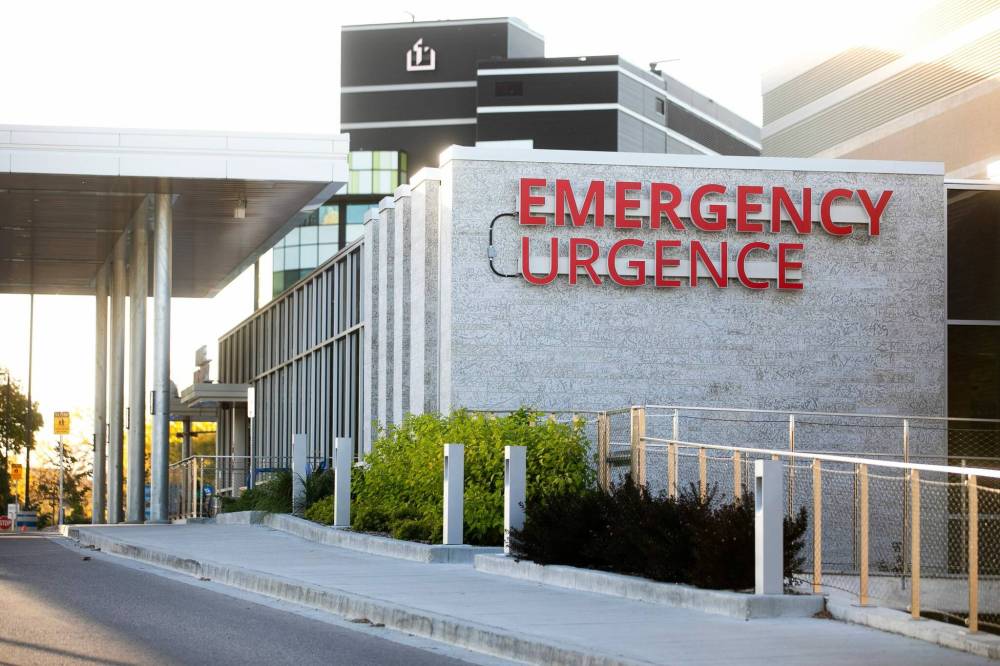
Free Press files
The emergency room entrance at St. Boniface Hospital, which was greylisted in February 2026 by the nurses’ union, due to ‘unsafe or inappropriate’ working conditions.
While in the waiting room, I became angry: for the frail and elderly gentleman beside me, astounded to learn that — after being there for hours, in obvious discomfort — he’d have to wait at least another 13 before seeing a doctor; for the distressed, middle-aged woman and her daughter with worry lining their faces; for the frantic young woman, crying in her father’s arms; for the distraught newcomer couple watching in shock as security officers handled a few of the more unsettling patients; for myself, having to vomit repeatedly in plain sight of 40 strangers.
The wait times continued to increase. The nurses were run ragged.
This. Is. An abomination.
I’d had a good day and was looking forward to attending a social gathering. Late afternoon I was suddenly hit with a litany of unusual symptoms. I couldn’t stand up without falling. By 6 p.m. I asked my partner to call an ambulance.
Anyone who knows me knows I’ll do almost anything to avoid the health-care system. But on this day, I was dizzy and light-headed, vomiting violently, twitching uncontrollably, extremely weak and feeling like my body was a block of ice while simultaneously melting. I’d never experienced anything like it.
I got up to use the washroom but didn’t make it, collapsing instead on the hallway floor, where I stayed, somewhat delirious, until help came.
The first responders arrived within 15 minutes. I mostly remember their voices. My eyes were closed while they asked me questions. I answered in slow motion, like it was the hardest test in the world to know my name. After their initial assessment, I was brought to a stretcher and into the ambulance.
There, Tyler gave me a vomit bag, a shot of Gravol in the thigh and an EKG. He suggested an IV for fluids but I declined, overwhelmed by all the attention.
Upon arrival at the hospital, Tyler stood by me while Neeraj got me admitted. The Gravol hadn’t worked, so he brought me more tissue and regularly asked how I was doing. A nurse came around to ask some questions.
I was wheeled off for another EKG and some blood tests. Afterwards, Tyler explained that he’d need to take me into the waiting room. The thought of sitting didn’t help curb my nausea, but he said that the system was what it was and that was the only option. He got me into a chair, wrapping me with two blankets.
“Don’t tell anyone, but I brought you a whole box of tissue,” he said, as he handed me what felt like a treasured gift.
I thanked him profusely for everything as he left.
Thus began the waiting. 7 p.m., 8 p.m., 9 p.m. … I started feeling better.
But then more and more people came in, visibly volatile, agitated, needing detox. Others, with serious mental health issues, had lost their way. There were gasps when an unpredictable patient walked in, security officers quickly moving towards him.
Heart palpitations set in. The tension in the room increased and I started to feel my mind collapsing along with my body.
10 p.m., 11 p.m. I stopped looking at others and tried to shut out the sounds of misery, but couldn’t.
11:30 p.m. I didn’t think I could hold on another 13-and-a-half hours. When I asked Janet, the kind and tired nurse, about current wait time, she replied, “You don’t want to know.”
My anxiety was rising along with the aggression, frustration and disturbing scenes around me. Panic set in and continued increasing as I watched. We inquired and learned that, if I left, results would still be sent to my doctor.
So we left.
My heart breaks for anyone still there, and anyone who ever has to be there, ever.

A friend said that if we don’t start investing heavily into improving the system, it’s going to crack from the thin ice it’s on. Personally, I think it cracked a while back.
So, do we keep writing op-eds so we can all get angry again until next time?
I left that hospital in despair, feeling unsafe, not knowing why I landed there in the first place. Hopefully, my family doctor will help me understand that part.
As for the rest, this situation needs immediate intervention. Anything less means nothing.
Janine LeGal is a Winnipeg writer.