

Safe sport policies make a difference
Advertisement
Read this article for free:
or
Already have an account? Log in here »
To continue reading, please subscribe:
Digital Subscription
One year of digital access for only $1.44 a week*
- Enjoy unlimited reading on winnipegfreepress.com
- Read the E-Edition, our digital replica newspaper
- Access News Break, our award-winning app
- Play interactive puzzles
*Billed as $5.77 plus GST every four weeks. After 52 weeks, price increases to the regular rate of $19.95 plus GST every four weeks. Offer available to new and qualified returning subscribers only. Cancel any time.
To continue reading, please subscribe:
Add Free Press access to your Brandon Sun subscription for only an additional
$1 for the first 4 weeks*
- Enjoy unlimited reading on winnipegfreepress.com
- Read the E-Edition, our digital replica newspaper
- Access News Break, our award-winning app
- Play interactive puzzles
*Your next Brandon Sun subscription payment will increase by $1.00 and you will be charged $17.95 plus GST for four weeks. After four weeks, your payment will increase to $24.95 plus GST every four weeks.
Read unlimited articles for free today:
or
Already have an account? Log in here »
Times have changed for the better. It is now expected that sports organizations will incorporate impartiality and objectivity into investigations of allegations of misconduct and maltreatment of their athletes. The sine qua non of such investigations has been that an independent third party (ITP) must investigate these complaints.
The historical handling of maltreatment complaints has drawn significant scrutiny and criticism, most recently related to Hockey Canada’s handling of sexual assault allegations dating back to 2018 and 2003. As a result of these concerns, Hockey Canada went through a restructuring in 2022, adopting the ITP system and a national-level complaints system tied to the Office of the Sport Integrity Commissioner (OSIC).
Also in 2022, under Manitoba’s newly enacted Protecting Youth in Sports Act, all provincial sports organizations were mandated to adopt and implement the Sport Manitoba Safe Sport policy manual. For anyone in Manitoba who plays a provincial sport, the Safe Sport policy manual is well worth reading.
Brandon Sun files
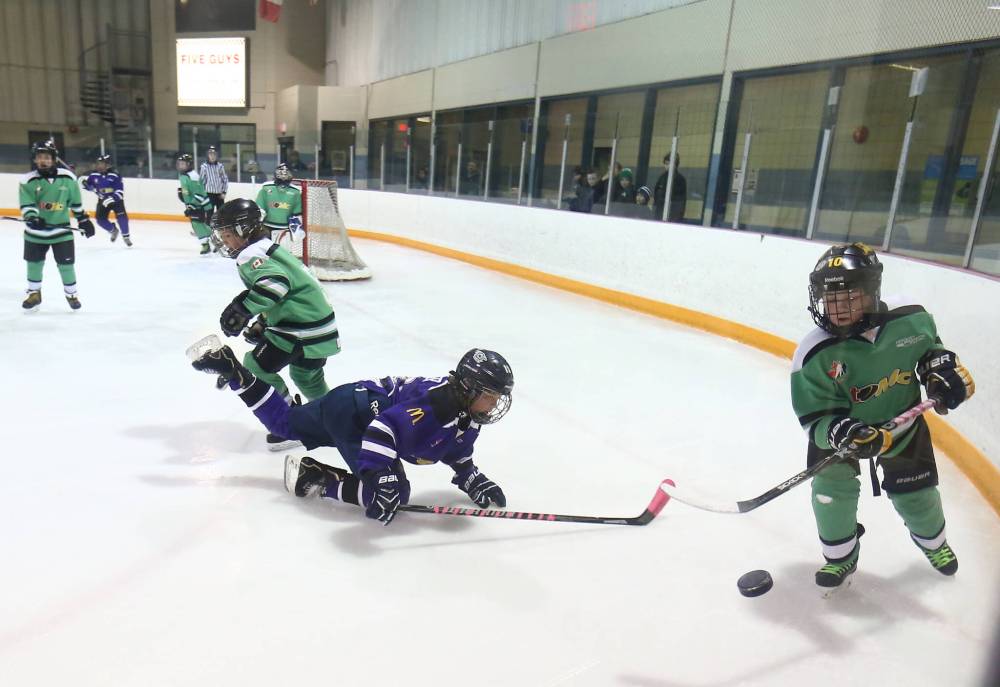
Under Manitoba’s Protecting Youth in Sports Act, all provincial sports organizations must adopt and implement the Sport Manitoba Safe Sport policy manual.
It lays out an extensive code of conduct and ethics policy as well as a discipline and complaints policy. The code of conduct references Sport Integrity Canada’s universal code of conduct and, as such, outlines what constitutes psychological and physical maltreatment, neglect, sexual maltreatment, grooming, boundary transgressions, discrimination and other forms of maltreatment.
A question which arises is “Who benefits from codes of conduct?” The answer is everyone. These codes create safe, respectful and inclusive environments for sports personnel and the public.
Sadly, in the past too many junior hockey players, for example, fell by the wayside, failed by a hockey culture that is characterized by physical and/or sexual abuse, entitlement, hazing, bullying, harassment, misogyny and toxic masculinity. Calgary police estimated that Graham James sexually abused between 25 and 100 hockey players. More recently, how many football players here in Winnipeg were victimized by coach Kelsey McKay?
A code of conduct also protects the public because it applies equally to those who are victims or offenders. Indeed, athletes, coaches, volunteers and other members of the sports organization are bound by their code of conduct and subject to the provisions of the organization’s discipline and complaints policy.
In the past, with a few exceptions, complaints were handled in-house by member organizations. Could junior hockey players, for example, who brought forward allegations of abuse really expect fairness and anonymity, if requested, when an investigation was carried out by a profit-driven owner? Could you trust an organization such as Hockey Canada, which created a secret slush fund to forestall civil suits involving allegations of sexual abuse by personnel under its umbrella?
Typically, complaint investigations have been compromised by the competing loyalties of the person doing the investigation.

School principals or presidents of boards of directors, for example, have a responsibility to mediate the interests of various stakeholders. If they investigate a complaint, is their conclusion going to be objective or will it reflect their role and responsibility? Can you be sure that they were not caught in a conflict of interest?
The Sport Manitoba discipline and complaints policy outlines an objective process, utilizing an ITP program, to deal with complaints or violations of the organization’s code of conduct.
Safe Sport policies are a breath of fresh air in an athletic environment which, for too long, has suffered from a lack of credibility, transparency and accountability. Most importantly these Safe Sport policies have helped to create a level playing field which prioritizes the physical and psychological well-being of all participants.
We have been living in denial. Abuse in sports has been the elephant in the athletic living room. Promoting, discussing and educating others about safe sport policies must be a shared responsibility.
Mac Horsburgh is a former course conductor in Hockey Canada’s Speak Out program and an avid pickleball player.