

After fire and flood, northern Manitoba gathers data
Advertisement
Read this article for free:
or
Already have an account? Log in here »
To continue reading, please subscribe:

Digital Subscription
One year of digital access for only $205*
- Enjoy unlimited reading on winnipegfreepress.com
- Read the E-Edition, our digital replica newspaper
- Access News Break, our award-winning app
- Play interactive puzzles
*First annual payment billed as $205.00 + GST for one year. This annual subscription will automatically renew at $233.00 + GST every 52 weeks (10% off the regular annual price of $259.35). Offer available to new and qualified returning subscribers only. Cancel any time.
To continue reading, please subscribe:
Add Free Press access to your Brandon Sun subscription for only an additional
$1 for the first 4 weeks*
- Enjoy unlimited reading on winnipegfreepress.com
- Read the E-Edition, our digital replica newspaper
- Access News Break, our award-winning app
- Play interactive puzzles
*Your next Brandon Sun subscription payment will increase by $1.00 and you will be charged $17.95 plus GST for four weeks. After four weeks, your payment will increase to $24.95 plus GST every four weeks.
Read unlimited articles for free today:
or
Already have an account? Log in here »
Floods and wildfires are not future risks for northern Manitoba. They are already part of life in the region.
The question is not whether a soil and water-monitoring network can stop them. It cannot. Wildfires will still burn. Floodwaters will still rise. Roads, culverts, shorelines, wetlands, lakes, and community infrastructure will still face pressure from extreme weather and environmental change.
The real question is whether northern Manitoba has the environmental evidence needed to understand what these events leave behind.
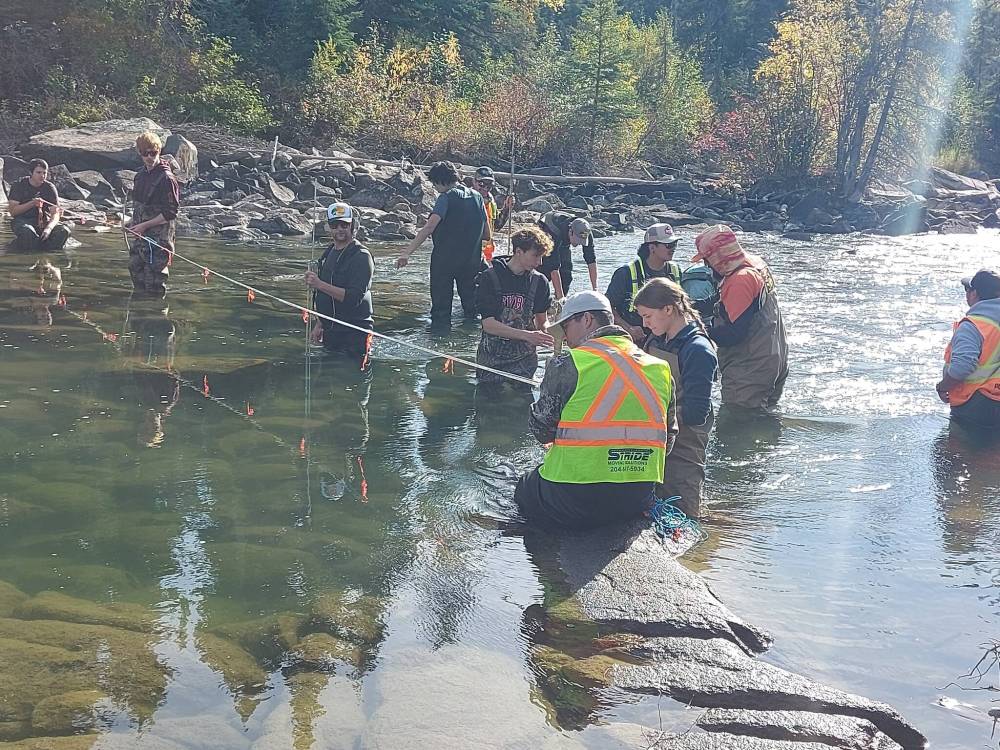
Emmanuel Badewa Photo
University College of the North natural resources management technology students conduct streamflow monitoring in Goose River during a field-based exercise led by Dr. Emmanuel Badewa.
As an instructor who teaches natural resources and environmental monitoring in northern Manitoba, I see this need in practical terms. I see it when students measure streamflow and how moving water connects land, lakes, wetlands, and communities. I see it when we observe wildfire-affected landscapes and ask what fire may mean for soil stability, runoff, erosion, vegetation recovery, and water quality. I see it when students collect soil samples from burned sites and realize that environmental change is not just a classroom topic. It is happening on the land around them.
Northern Manitoba is shaped by water and fire. Lakes, rivers, wetlands, muskeg, forests, and boreal landscapes support drinking water, fish habitat, harvesting, transportation, cultural, and local economies. These same landscapes are also vulnerable to flooding, wildfire, erosion, sediment movement, and infrastructure damage.
Manitoba already has important water-monitoring programs. There are long-term water quality efforts, hydrometric stations, groundwater monitoring, and aquatic monitoring connected to major water systems. These programs are valuable and should be recognized.
But there is still a gap.
Northern Manitoba needs a more co-ordinated soil and water-monitoring approach that connects wildfire impacts, flooding, lakes, wetlands, streamflow, soil disturbance, Indigenous and community knowledge, student training, and local decision-making.
This is not about replacing emergency response. It is about strengthening what happens before, during, and after environmental events.
When wildfire burns through a watershed, the impact does not end when the flames are out. Fire can change ground cover, soil structure, organic matter, infiltration, and erosion risk. Ash, sediment, nutrients, and metals can move from burned landscapes into streams, lakes, and wetlands, especially after heavy rainfall. Without baseline and post-fire monitoring, communities are left asking what changed in the soil, what entered the water, and what should be monitored next.
Flooding raises similar questions. Floodwaters can move sediment, nutrients, contaminants, and pathogens. They can affect wells, fish habitat, roads, culverts, shorelines, and low-lying community areas. In northern regions, where distances are long and access can be difficult, delayed information can make recovery harder.
A standing soil and water monitoring network would not be a permanent solution to flooding or wildfire. It would be a practical tool for preparedness, recovery, and planning. It would provide baseline data, track environmental changes after fire and flood, support local training, and help communities make better decisions about water quality, soil disturbance, erosion, infrastructure, wetlands, fish habitat, and land recovery.
Northern Manitoba does not only need more short-term research projects. It needs research pathways.
Those pathways should include local field training, community-based monitoring, Indigenous leadership, undergraduate research, graduate partnerships, and long-term environmental data communities can use. Students in the North should be able to participate in meaningful environmental research without leaving the region entirely. Communities should also have access to timely, practical information connected to their priorities.
The north should not be treated only as a place where resources are extracted or emergencies are managed. It should be treated as a place where knowledge is produced, where students are trained, and where communities help guide environmental monitoring on their own lands and waters.

This is also an economic and educational issue. Environmental monitoring creates skills and prepares students for careers in natural resources, water management, environmental assessment, climate adaptation, conservation, and community stewardship. It can support Indigenous guardians, local technicians, community research assistants, and young people who want to work on the land while contributing to science and decision-making.
Good decisions require good environmental information. Governments, First Nations, municipalities, industry, conservation organizations, schools, and the public all benefit when soil and water data are reliable, accessible, and locally grounded.
Northern Manitoba deserves more than emergency reaction. It deserves sustained monitoring, local training, community leadership, and long-term attention to the soils and waters that support life in the region.
The next fire or flood should not leave us asking the same questions with limited baseline data and no co-ordinated plan.
Emmanuel A. Badewa is an instructor in natural resources management technology at University College of the North and an adjunct professor at Lakehead University.