

Counterpoint: the new transit system is good
Advertisement
Read this article for free:
or
Already have an account? Log in here »
To continue reading, please subscribe:
Monthly Digital Subscription
$1 per week for 24 weeks*
- Enjoy unlimited reading on winnipegfreepress.com
- Read the E-Edition, our digital replica newspaper
- Access News Break, our award-winning app
- Play interactive puzzles
*Billed as $4.00 plus GST every four weeks. After 24 weeks, price increases to the regular rate of $19.95 plus GST every four weeks. Offer available to new and qualified returning subscribers only. Cancel any time.
Monthly Digital Subscription
$4.99/week*
- Enjoy unlimited reading on winnipegfreepress.com
- Read the E-Edition, our digital replica newspaper
- Access News Break, our award-winning app
- Play interactive puzzles
*Billed as $19.95 plus GST every four weeks. Cancel any time.
To continue reading, please subscribe:
Add Free Press access to your Brandon Sun subscription for only an additional
$1 for the first 4 weeks*
*Your next subscription payment will increase by $1.00 and you will be charged $16.99 plus GST for four weeks. After four weeks, your payment will increase to $23.99 plus GST every four weeks.
Read unlimited articles for free today:
or
Already have an account? Log in here »
Winnipeg’s new transit network is actually good.
It might surprise people to hear it, but the more you ride it, the more sense it makes.
The old network was a cobbled-together hodgepodge of legacy routes trying to accommodate city growth by appending ever more weird routes into a system built for the city we were decades ago. Riders can remember many of these: the spaghetti-shaped No. 77 or the old No. 16 with its three radically different southern branches and the No. 29, which sometimes went southbound from the Health Sciences Centre to Pembina and sometimes southbound to … city hall.
MIKAELA MACKENZIE / FREE PRESS
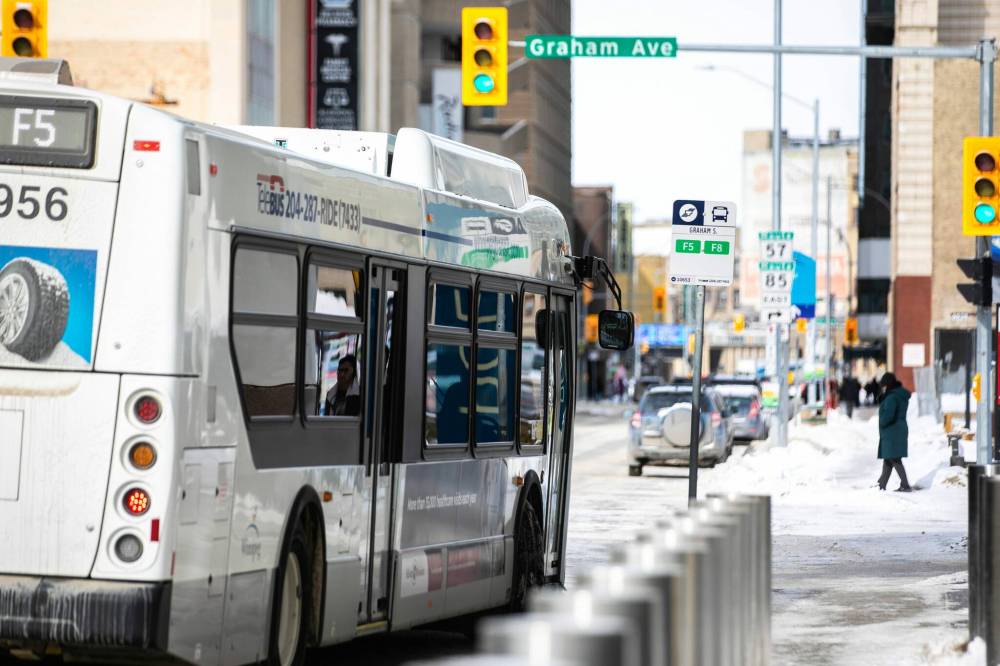
The new version of Winnipeg Transit has come under a lot of criticism — but it actually makes sense, commentator Joe Kornelson writes.
Most of us who ride had learned to live with and even thrive amid these absurdities. But they were absurdities.
These routes were trying to adapt a system serving a city the size of Regina as it grew by hundreds of thousands to become the city we live in today. Those routes would have made even less sense as we grow to the size of Vancouver.
Anyone who has taken transit in Vancouver, Toronto or any large city knows transit works best when the lines are easy to understand, when the service arrives often and when the system allows you to do most trips — not just commuting. The new system is getting us to that style of service with straighter rationalized routes that will make more diverse trips possible.
There have been some complaints about the new network. There are new inconveniences. But there are a great many improvements that more than balance those — it just takes time to realize those as riders try new trips.
Many routes have broken though barriers that the old network produced through arbitrary deviations or due to the exclusive commuter focus of the old network.
The new F7 better connects St. Vital to St. Boniface by following St. Anne’s and then Des Meurons. The new F8 produces an easily understandable straight-line route connecting north and south Winnipeg following Henderson and Pembina and, even better, it deviates a couple blocks off Main Street in downtown, prioritizing a much more pedestrian-friendly part of the core districts. The new F6 has broken the old barrier at Portage where Osborne flowed up to eventually become Isabel and Salter. Where once all Osborne routes deviated in behind The Bay, they now follow a straight north-south line right along the west side of downtown.
These are big barriers broken for riders.
There have been other changes that are bringing major value for some of Winnipeg’s strategic priorities.
The new D12 and D13 routes connect our airport directly to the Forks and the Canadian Museum for Human Rights. Bringing tourists directly to the destinations we’re most proud of immediately upon arriving makes a lot of sense.
Another city priority has been having more people live downtown. Transit and high-density central living go hand-in-hand. One major network improvement supporting that objective is the new D14 and D15 routes, which have significantly improved service on Broadway. The D14 even travels a portion of Erin and Wall Streets — a major central area of both commercial and manufacturing jobs.
These changes are extremely positive.
Of course, there is more to do. But the thing to do is not network-related, it’s service-related — the system needs higher frequency service to meet its full potential. The city has done a significant amount to create the network and fund it with the resources at its disposal.
Now one must ask, where is the province? About 10 years ago, the previous government ended a funding agreement that matched operating funding dollars for any municipality running a transit service. Those operating dollars are critical to having buses arrive at your stop often.

The current provincial government has a tremendous opportunity to create world-class transit in Winnipeg virtually overnight by reintroducing this 50-50 funding agreement. This would go a long way to creating truly frequent service on the new network.
The benefits are obvious. The entire world is staring down a potential energy crisis that demands all governments look for ways to support transportation opportunities less exposed to fuel prices. Further, it only takes a casual look around the continent to see that the biggest urban economies all have great transit systems with high ridership. We need that kind of dedication to our transit network to move workers, residents and visitors efficiently on our infrastructure as we grow to a million people and make our city competitive on the world stage.
The City of Winnipeg has gone boldly where we needed to as we grow to a million people. The new network has been a positive improvement both for Winnipeggers today and for the future. It has its kinks, but all major changes will have those.
All that’s needed now is the provincial backing to make it as convenient to use as the major systems many of us know and love in the economic powerhouse cities around the continent.
Joe Kornelsen was a founder of Functional Transit Winnipeg and has advocated for higher frequency transit service since 2014.