

Is carbon capture the right idea for Manitoba?
Advertisement
Read this article for free:
or
Already have an account? Log in here »
To continue reading, please subscribe:
Monthly Digital Subscription
$1 per week for 24 weeks*
- Enjoy unlimited reading on winnipegfreepress.com
- Read the E-Edition, our digital replica newspaper
- Access News Break, our award-winning app
- Play interactive puzzles
*Billed as $4.00 plus GST every four weeks. After 24 weeks, price increases to the regular rate of $19.95 plus GST every four weeks. Offer available to new and qualified returning subscribers only. Cancel any time.
Monthly Digital Subscription
$4.99/week*
- Enjoy unlimited reading on winnipegfreepress.com
- Read the E-Edition, our digital replica newspaper
- Access News Break, our award-winning app
- Play interactive puzzles
*Billed as $19.95 plus GST every four weeks. Cancel any time.
To continue reading, please subscribe:
Add Free Press access to your Brandon Sun subscription for only an additional
$1 for the first 4 weeks*
*Your next subscription payment will increase by $1.00 and you will be charged $16.99 plus GST for four weeks. After four weeks, your payment will increase to $23.99 plus GST every four weeks.
Read unlimited articles for free today:
or
Already have an account? Log in here »
Canada is in a transition period. The U.S.A., our closest trading partner, is no longer reliable, and both the federal and provincial governments are looking for ways to keep Canada moving forward.
In the face of looming obstacles such as seeking new export deals with other countries, ensuring economic growth, and attracting new investments to Canadian soil, the Manitoba government has taken an interesting approach. The NDP are enticing new business to enter the province by promising our land and resources to the highest bidder.
Enter Deep Sky, a cleantech firm based in Montreal, Quebec, with a grand vision and a bold strategy.
Matt Goerzen/The Brandon Sun
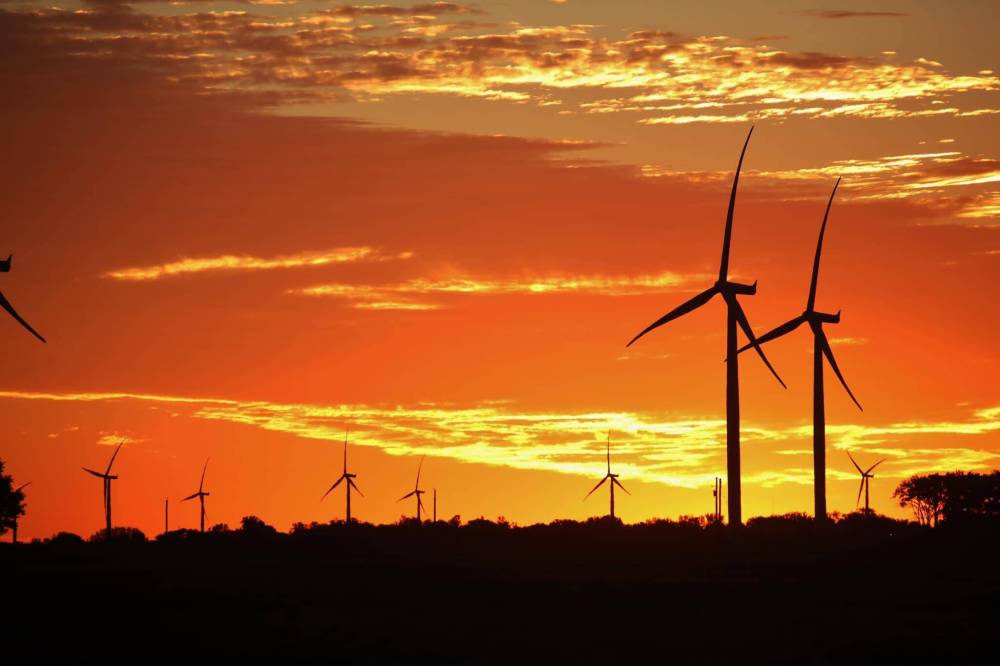
Investing in Manitoba’s wind power potential might be a better idea than moving towards building carbon sequestration facilities.
The company wants to build a first-class, largest-of-its-kind direct air carbon capture facility right here in Manitoba.
Direct air carbon capture is a new technology that works by pulling ambient air into the system via fans, separating the carbon dioxide through chemical reactions, releasing the “clean” air back into the atmosphere, and sequestering the carbon dioxide underground.
In theory, this is a way of reducing carbon emissions after they have already been released. Deep Sky says that this Manitoba-based DAC facility will be an important part of the process of saving the planet, and an opportunity to commercialize carbon removal, but at what cost?
Building the largest facility of its kind in the world is not an easy feat. One of the drawcards of Manitoba, according to Deep Sky, is the province’s natural resources.
The company has pointed towards the fact that most of Manitoba operates on renewable energy through Manitoba Hydro as something that helped them choose the province as the build site for this project. Our water and electricity will be used to build, maintain, and operate the carbon capture facility in large quantities. This may not seem like an issue at first glance, but we are facing issues with maintaining our energy grid as it is.
Manitoba Hydro has been warning for the past several years that the province’s electricity grid is almost at capacity.
Hydro is aiming for increased capacity by 2030, and part of the plan to improve it is to dirty up our energy grid by constructing a multi-billion dollar gas-powered energy plant. While the idea is that this facility will only come into play during peak energy use periods, the chances are high that new projects could be a major power drain on the grid, thus increasing the number of peak energy periods we might encounter and justifying the “need” for a backup power plant.
The cost of use for a gas-powered plant is a lot higher than the hydropower that is used by most of the province at this time. The facility’s use of other resources may also be an issue. What has Deep Sky promised to us in return for the use of our resources?
One of the benefits that the company has promised is economic stimulation through job creation.
The rumoured number of jobs is around 200, but how many will be permanent and full-time? Most of the jobs created will likely be short-term contracts tied to the construction of the facility. It takes more people to build a project than to maintain it.
It’s possible that of those 200 or so promised jobs, only 50 — or even less — will be something that a person could make a career of.
Not only that, but there is no guarantee that the construction contracts for building the facility will be awarded to local businesses. The resource and labour inputs will be massive and attract bids from large construction companies across the province, if not from across the prairies.
In addition, Deep Sky is not a Manitoba-based company; there is no mention of corporate careers becoming available on the company website at the time of writing. Job creation is not necessarily the economic benefit the company is promising, but some would still stand to benefit from the facility being built.
While there is hope that a project like this will bring in new tax dollars to the municipalities and provincial government as well, it’s unlikely that the revenue gained would offset the impacts that the facility could have on the water system and electrical grid.

The DAC facility is an untested, expensive experiment poised to go ahead without the necessary checks and balances to ensure this project is the right thing for Manitoba and Manitobans. Potential hazards such as electricity and water consumption are not being considered with the seriousness they require.
The high number of jobs Deep Sky is projecting feels more like a hollow promise than reality, and the only clear benefit at this point is the tax revenue the government will receive. Yes, something needs to be done to help Manitoba transition to cleaner, greener energy, but Deep Sky is not the investment to gamble on.
Other proven options exist that can contribute to economic growth by creating businesses, jobs, and tax revenue, while still helping to move Manitoba forward. For example, did you know that southwest Manitoba has some of the best wind power potential in the country?
Perhaps we should be looking to the actual sky for a solution instead of betting on shallow promises in the ground.
Ashley Blackshaw writes from Cartier.