

It’s time for a Ness Avenue redesign
Advertisement
Read this article for free:
or
Already have an account? Log in here »
To continue reading, please subscribe:
Monthly Digital Subscription
$1 per week for 24 weeks*
- Enjoy unlimited reading on winnipegfreepress.com
- Read the E-Edition, our digital replica newspaper
- Access News Break, our award-winning app
- Play interactive puzzles
*Billed as $4.00 plus GST every four weeks. After 24 weeks, price increases to the regular rate of $19.95 plus GST every four weeks. Offer available to new and qualified returning subscribers only. Cancel any time.
Monthly Digital Subscription
$4.99/week*
- Enjoy unlimited reading on winnipegfreepress.com
- Read the E-Edition, our digital replica newspaper
- Access News Break, our award-winning app
- Play interactive puzzles
*Billed as $19.95 plus GST every four weeks. Cancel any time.
To continue reading, please subscribe:
Add Free Press access to your Brandon Sun subscription for only an additional
$1 for the first 4 weeks*
*Your next subscription payment will increase by $1.00 and you will be charged $16.99 plus GST for four weeks. After four weeks, your payment will increase to $23.99 plus GST every four weeks.
Read unlimited articles for free today:
or
Already have an account? Log in here »
For residents of St. James, the intersection of Ness Avenue and Ferry Road has become a graveyard of car parts and mangled light standards.
In the last few weeks alone, three separate collisions have occurred. I wish I could say this isn’t a common occurrence, but if you live in the area you know this is happening all of the time.
These are not just accidents, but the predictable result of streets designed for speed over safety. This goes beyond this one intersection. Ness is currently a speedway disguised as a residential street.
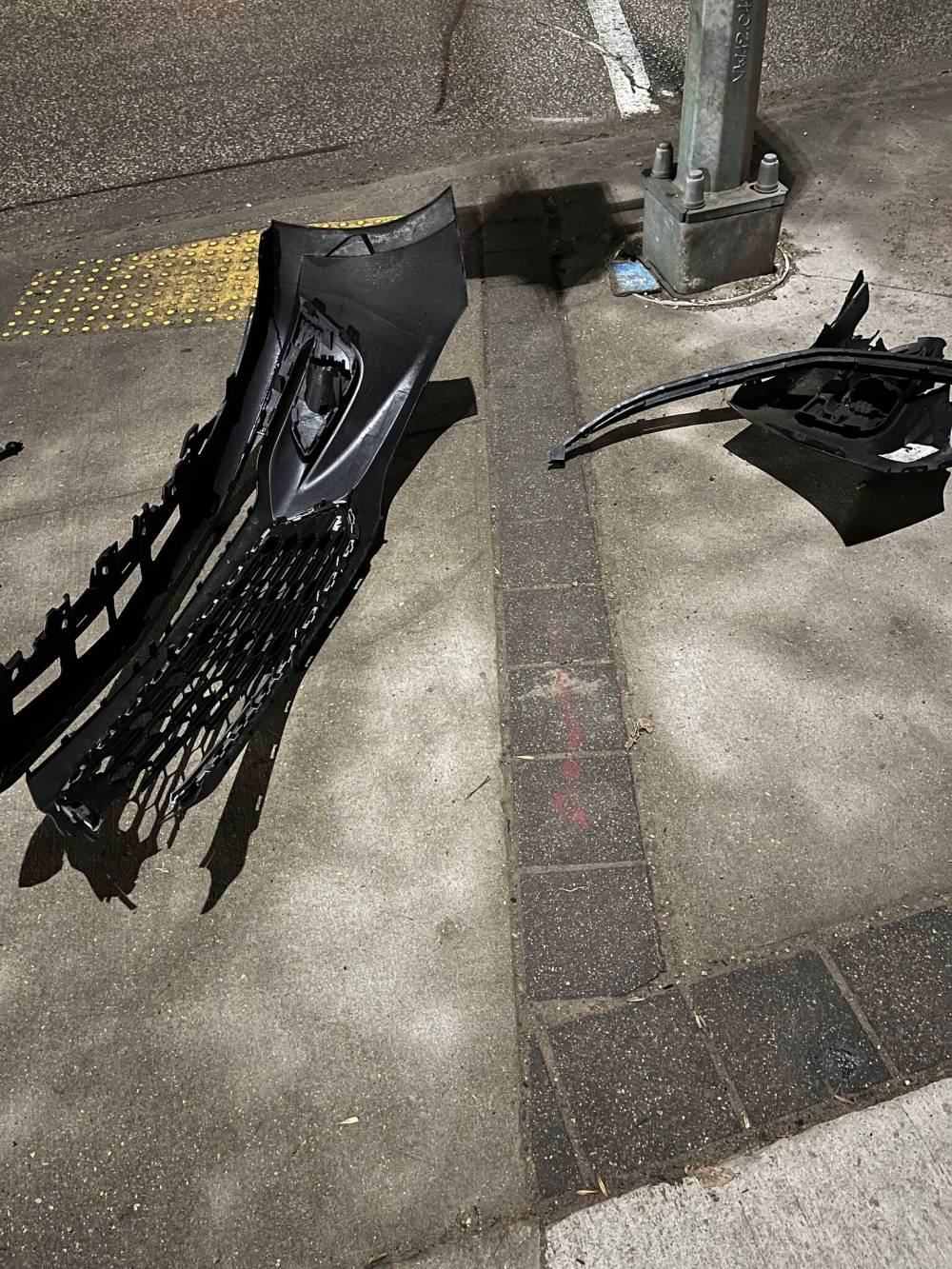
Russell Wangersky/Free Press
Car parts left on Portage after an accident.
Over the last few years on Ness, we’ve seen a pattern of failure. We’ve seen an SUV crash through a hair salon, taking out a local business; pedestrians hit; and a hydro pole knocked over, taking out power for 800 local residents.
It’s also not hard to find evidence of damage that often goes unreported, such as car parts and broken residential fences.
The city recently claimed Ness and Ferry is not one of the highest-rated locations for collisions and that it’s not currently studying a redesign. The city usually refuses to act until a location reaches a certain “score” of major injuries or fatalities.
Why must we wait for a body count before we admit that the design is broken? Every destroyed storefront, broken fence, and snapped hydro pole is not only a financial burden for local businesses, residents and the city, but also a near-miss for a human life.
We shouldn’t need a tragedy to justify a tape measure and a redesign.
The main reason we’re seeing so many issues on Ness is because it’s having an identity crisis. Ness is designed like a highway with long stretches and wide lanes, inviting speeds of 70 k/h or more.
However at the same time, Ness functions as a neighbourhood road, providing direct access to businesses and homes with driveways that back onto it, which invites conflict.
Many will say that this is the fault of the drivers.
While this is technically true, this ignores why the errors happen in the first place. If we’re seeing the same issues over and over, this isn’t the drivers, it’s the interface.
Imagine a doorway that everyone trips on; you don’t blame the people walking, you fix the door. When a road is wide and straight, people will naturally speed. The design is “tricking” drivers into being dangerous.
Others will call for more enforcement. While this is a tool we can use, the city can’t afford to put officers at every corner 24-7 and speed cameras are unpopular. We can’t police our way out of a bad design.
So what can we do? Some are saying we need a left turn arrow at the intersection.
While this would help a small amount, this doesn’t address what is causing drivers to speed here in the first place. Drivers will still knock down light standards trying to beat the yellow. It won’t prevent a vehicle veering into a storefront three blocks away.
If the lights keep getting knocked down, will spending taxpayers money to add more lights just to repair them really solve the issue? The left-turn arrow is just one small piece to a much larger issue. It also doesn’t address every person who uses a road. What about pedestrians, kids walking to school, and people riding bikes?
The real solution to the issues we’re seeing in the neighbourhood is addressing the root causes of the speed in the first place. We need to stop naturally encouraging speeding by way of the road design.
This can be achieved through responsible neighbourhood street design instead of highway design that doesn’t belong in a local neighbourhood. This could include narrower lanes, more visible crosswalks, or curb bump outs. These designs can usually be tested immediately with inexpensive, temporary materials before permanent changes are made during future road renewals.

This is especially important because most of Ness Avenue is residential homes, there are plenty of schools nearby, bus stops, and we’re seeing so many of our neighbours getting hurt. We need safer streets for all road users.
Adding a few minutes to a trip to slow traffic down is worth it to create a vibrant and safe community. A transportation system that only considers the flow of speeding cars is failing the citizens of St. James, and the city of Winnipeg.
Ness Avenue is a highway that’s been rebranded as a residential street. It’s carving a divide in our neighbourhood that shouldn’t exist. Based on everyone’s reactions to recent collisions and calls for people to slow down, it’s clear that we all wish to take it back.
It’s time to reclaim the classic St. James feel of the street that welcomes local business and neighbours to enjoy.
Tyler Crichton has tripped on one too many car parts on the sidewalk, and may or may not be (a little too) obsessed with Winnipeg.