

Resilience: Prime Minister Mark Carney’s favourite word
Advertisement
Read this article for free:
or
Already have an account? Log in here »
To continue reading, please subscribe:
Monthly Digital Subscription
$0 for the first 4 weeks*
- Enjoy unlimited reading on winnipegfreepress.com
- Read the E-Edition, our digital replica newspaper
- Access News Break, our award-winning app
- Play interactive puzzles
*No charge for 4 weeks then price increases to the regular rate of $19.95 plus GST every four weeks. Offer available to new and qualified returning subscribers only. Cancel any time.
Monthly Digital Subscription
$4.99/week*
- Enjoy unlimited reading on winnipegfreepress.com
- Read the E-Edition, our digital replica newspaper
- Access News Break, our award-winning app
- Play interactive puzzles
*Billed as $19.95 plus GST every four weeks. Cancel any time.
To continue reading, please subscribe:
Add Free Press access to your Brandon Sun subscription for only an additional
$1 for the first 4 weeks*
*Your next subscription payment will increase by $1.00 and you will be charged $16.99 plus GST for four weeks. After four weeks, your payment will increase to $23.99 plus GST every four weeks.
Read unlimited articles for free today:
or
Already have an account? Log in here »
It’s official. Mark Carney’s favourite word is “resilience.” Understanding this is key to divining the path the prime minister is taking and what his government will do next.
Carney summons the word repeatedly to explain where he’s taking Canada. He does so in many ways. It serves as a goal: build resilience in the long run. As a process — shifting from reliance to resilience. As a condition — resilience of the economy. And even as a value — collective resilience.
These are all phrases lifted from the first Carney budget. The word resilience appears dozens of times, including one whole chapter called “Shifting from Reliance to Resilience” with more than $16 billion to be spent over the next five years on items in that chapter. By contrast, the word surfaced just nine times in the last Justin Trudeau budget, mostly as a benign and defensive descriptor of the state of the economy. His successor has instead elevated resilience to a matter of national imperative.
Sean Kilpatrick / The Canadian Press
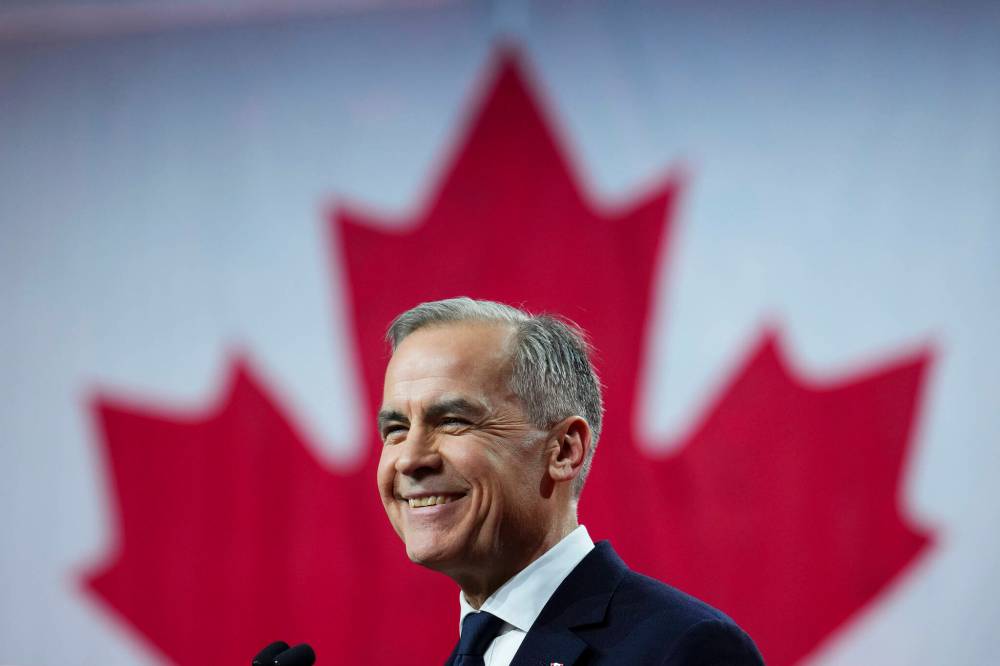
Prime Minister Mark Carney likes ‘resilience.’ But what’s important, David McLaughlin writes, is what the word actually means when it comes to changes in Canada.
What exactly though does “resilience” mean, and what does our prime minister mean by it? Its etymology reveals that it comes from the Latin word resilio, meaning “to bounce back.” The English philosopher Sir Francis Bacon placed the word in a scientific context to describe the rebounding strength of echoes. Its more modern usage around personal fortitude and recovering from adversity, particularly in the field of psychology, dates from the 19th century. Today, it has descended into a popular buzzword in boardrooms and cabinet rooms. It crops up ubiquitously as a descriptor of everything from ecosystems being resilient to climate change to banks being resilient to financial shocks.
It’s no surprise then that Carney, a former central banker who helped guide Canada through the global financial crisis and has an abiding interest in climate change, has pushed the word to centre stage in his guiding vision as prime minister. “A core mission of the new government” states the budget, “is to help households and businesses emerge stronger from global economic shifts by investing in the economy to catalyze growth and build resilience in the long run.”
The delight of resilience to political leaders lies in its obvious ambiguity. It is unthreatening in tone and even agreeable in content. Who can argue with someone or something becoming more resilient in the face of disruption? As a result, it has become comfort food for speechwriters and policy makers; a throwaway phrase, an allusion, or worse, a meiosis to minimize the import of something unpalatable to voters; the literary sugar to make the tough economic medicine go down.
But Carney seems to want to rescue resilience from grammatical overreach and give it substantive meaning. This is notable as it presages a consistent lens through which to view and evaluate his government’s actions. Already, the Major Projects Office has been assigned criteria for designating whether a project is in Canada’s national interest. One criterion is that it must “strengthen Canada’s autonomy, resilience, and security.” Trade support to sectors affected by American tariffs has been billed as making the economy “stronger, more self-sufficient, and resilient to global shocks” as part of “transform(ing) our economy from one that is reliant on a single trade partner.”
Put this way, resilience becomes the explanatory zeitgeist of the Carney moment in Canada. It is both the means to an end and an end unto itself.
But this is where meaning overwhelms moment, demanding more from the prime minister in explanation. What does a “resilient Canada” of the future look like? Are we resilient only to the point of getting through the current state and reverting to our original form as a country or are we resilient to a future state of shocks and disruptions? In other words, does resilience bring long-term security or simply temporary relief?
The word’s ambiguity could mean either, neither or both. The budget attempts one explicit definition among the many sprinklings of the word. Cited as one of seven Canadian advantages, it is spelled out unsatisfyingly in classic speechwriter overreach as: “a strong social safety net and stable institutions.” The document redeems itself a few pages on introducing the term “domestic resilience,” which involves “securing critical sectors and supply chains.” That, at least, is clearer.

Why does all of this matter? Because the disruptive moment we are in will not end any time soon. Canada needs a new economic model based on clear policy directions and involving hard financial trade-offs on what government spends to get through it and beyond. To do this, though, requires a clearer definition of what this means by the Carney government.
In the wake of the COVID-19 pandemic, we prided ourselves on the resilience of our public institutions. But then our institutions “snapped back” to business-as-usual. We missed the chance to use the experience to make the changes necessary for those institutions to work better for citizens and taxpayers.
We should not make the same mistake twice. Resilience cannot just mean withstanding today’s economic shock. It must become more than getting through the current crisis. Canada needs to adapt and learn — the root of resilience — to create something better and stronger out of it.
It’s a reckoning we have postponed far too long.
David McLaughlin is a former clerk of the executive council and cabinet secretary in the Manitoba government.