Manitoba announces operators of legal cannabis stores
Advertisement
Read this article for free:
or
Already have an account? Log in here »
To continue reading, please subscribe:

Digital Subscription
One year of digital access for only $205*
- Enjoy unlimited reading on winnipegfreepress.com
- Read the E-Edition, our digital replica newspaper
- Access News Break, our award-winning app
- Play interactive puzzles
*First annual payment billed as $205.00 + GST for one year. This annual subscription will automatically renew at $233.00 + GST every 52 weeks (10% off the regular annual price of $259.35). Offer available to new and qualified returning subscribers only. Cancel any time.
To continue reading, please subscribe:
Add Free Press access to your Brandon Sun subscription for only an additional
$1 for the first 4 weeks*
- Enjoy unlimited reading on winnipegfreepress.com
- Read the E-Edition, our digital replica newspaper
- Access News Break, our award-winning app
- Play interactive puzzles
*Your next Brandon Sun subscription payment will increase by $1.00 and you will be charged $17.95 plus GST for four weeks. After four weeks, your payment will increase to $24.95 plus GST every four weeks.
Read unlimited articles for free today:
or
Already have an account? Log in here »
Hey there, time traveller!
This article was published 16/02/2018 (3102 days ago), so information in it may no longer be current.
The Manitoba government has unveiled the four companies that will retail cannabis in the province after legalization, after whittling down a list of about 100 applicants.
The winners, announced Friday morning, include a joint venture between Manitoba cannabis producer Delta 9 Cannabis and Ontario producer Canopy Growth Corp., as well as National Access Cannabis, which currently operates medical cannabis access clinics in Manitoba and other provinces.
The other two companies on the list are Tokyo Smoke and 10552763 Canada Corp., a consortium led by Avana Canada of Ontario.
The agreements to open retail cannabis locations in Manitoba are still conditional, the province said.
Executives from all four companies said Friday they were unable to give details about how many stores they will open and where those stores will be located, citing negotiations with the province.
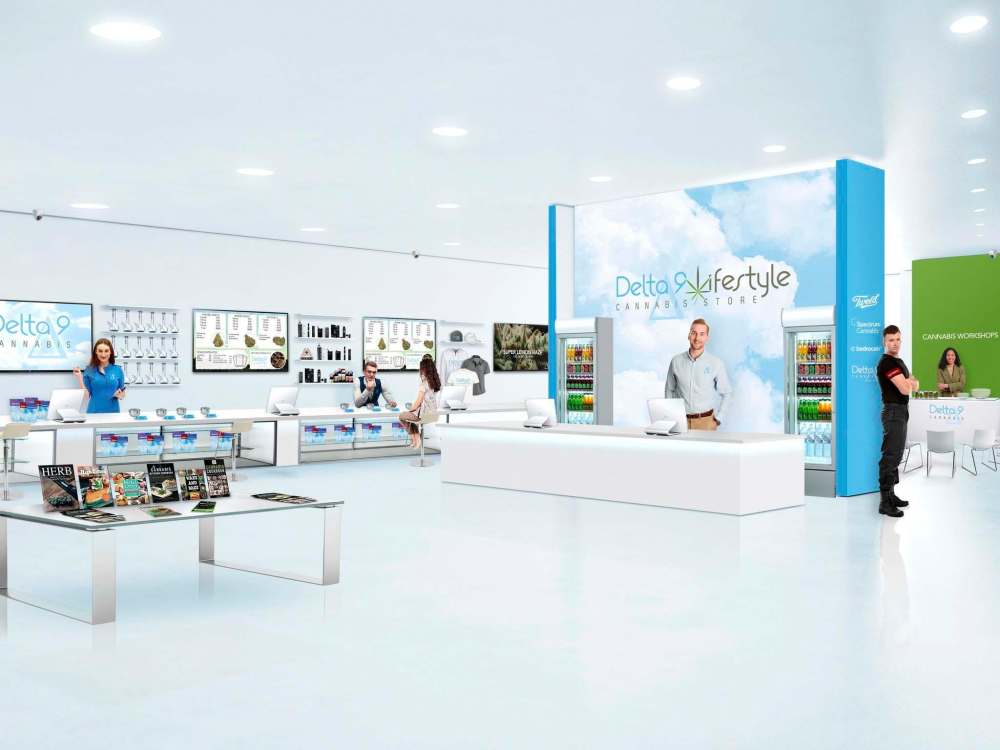
“Delta 9 Lifestyle Cannabis Stores” coming to Manitoba
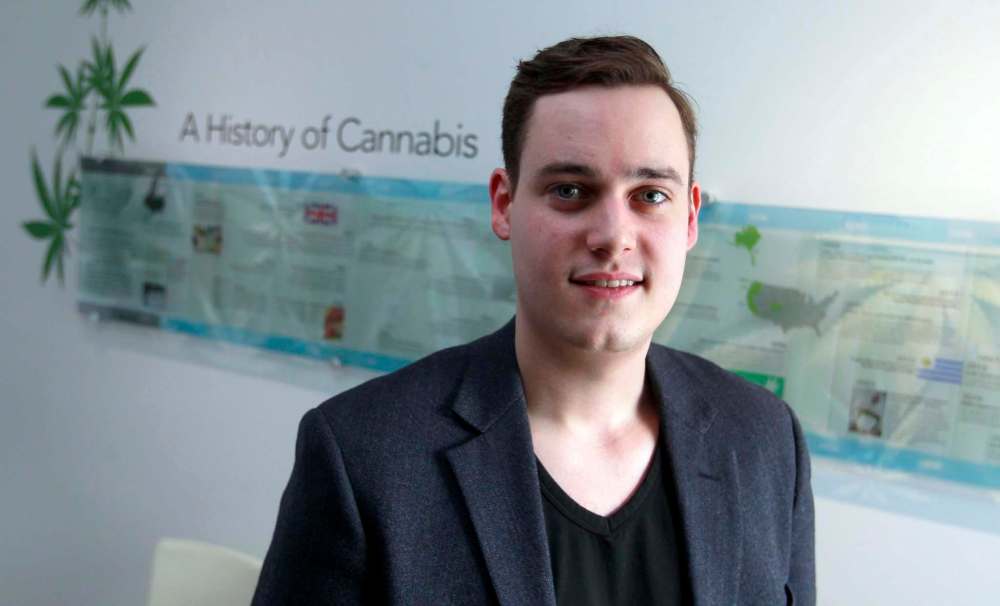
Delta 9 Cannabis CEO John Arbuthnot, however, said his company’s consortium with Canopy Growth plans to open as many as 36 stores over the next three years.
“We have identified potential locations across the entire province and across the entire city of Winnipeg, (we) still need to do a little bit of work on where the final storefronts will land,” said Arbuthnot, who added that those initial stores will be opened in existing real estate “in the interest of timeliness for openings.”
“That’s not to say, over the term, you might not see Delta 9 stores that are stand-alone and that are newly built.”
Delta 9’s joint venture with Canopy Growth Corp. will operate stores under different names, Arbuthnot said. Delta 9’s stores will be “branded as the Delta 9 Lifestyle Cannabis Store brand.”
“I can’t understate the importance of this announcement for Delta 9,” said Arbuthnot. “A big part of our corporate strategy as we’re approaching (the legalization of recreational cannabis) is that vertical integration into retail.”
National Access Cannabis “trying to find a great balance”
Future cannabis stores operated by National Access Cannabis in Manitoba will feature “a safe environment that has great consumer experience, education, and a good vibe to it,” said Mark Goliger, CEO of National Access Cannabis.
“But we would not do the vibe at the expense of safety and security, so we’re trying to find a great balance.”
Goliger said his company hopes “to have stores in Winnipeg and in Brandon, and some of the other highly populated areas.”
“However, we also have plans to have locations in less-populated, more rural-type settings. For example, we are partnered with Brokenhead (Ojibway Nation) out of Scanterbury,” explained Goliger.
“So our partnership would be to have a location in Scanterbury, just like it is to have a location in Opaskwayak.” (Opaskwayak Cree Nation has invested in and partnered with National Access Cannabis, which has also partnered with Long Plain First Nation and Peguis First Nation.)
Goliger said National Access Cannabis also plans to sell cannabis online in Manitoba.
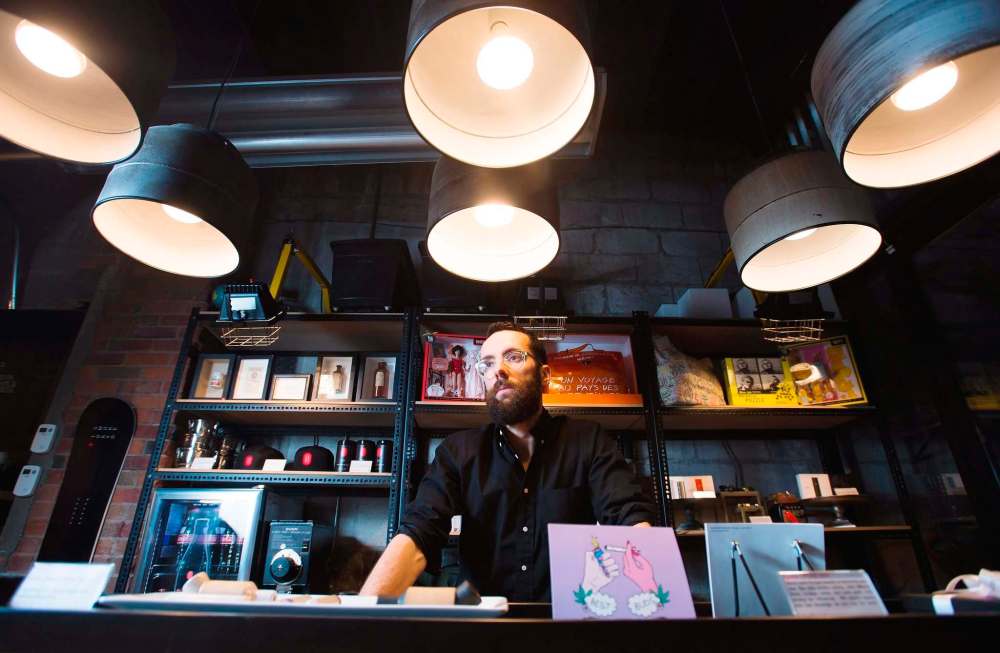
The company also announced Friday that it had signed a letter of intent with licensed cannabis producer Tilray. According to a news release, Tilray will supply NAC’s Manitoba stores with “up to 3,000 kilograms of cannabis and up to 4,000 litres of cannabis oil per year for five years.”
Tokyo Smoke “excited to deliver”
Tokyo Smoke, which operates coffee-shop-themed cannabis accessory stores in Toronto and Calgary, is a subsidiary of Hiku Brands.
“We have, over the past couple years, worked really hard to build and refine a modern retail approach for cannabis that focuses on approachability and education, and we’re excited to deliver on that promise in Manitoba,” said Hiku Brands CEO Alan Gertner on Friday.
Tokyo Smoke has partnered with B.O.B. Headquarters, a head-shop and cannabis accessory distributor with retail and online sales based in Brandon, Man. B.O.B. Headquarters president Robert Ritchot said his company brings a great deal of experience with cannabis accessories to the table.
“We excel at all of the hard goods, the devices that are going to used, the vaporizers, the different storage containers,” said Ritchot.
“We have exclusive contracts with many manufacturers that provide different packaging and everything, all of the things that are going to be needed to roll out a dispensary responsibly.”
Numbered company includes Ontario firms, First Nations, and U.S. dispensary chain
10552763 Canada Corp. is a consortium led by a Avana Canada of Ontario that includes the Fisher River Cree Nation in Manitoba, Chippewas of the Thames First Nation in Ontario, MediPharm Labs of Ontario, and U.S. cannabis dispensary brand Native Roots.
“Our goal is really to provide service to everyone within the province,” said Zubin Jasavala, CEO of Avana Canada, from his office in Oakville, Ont. Avana is currently applying to Health Canada to become a licensed cannabis producer, and is working on a production facility in St. Thomas, Ont.
“Geographically, we are going to be obviously concentrated around larger population bases, but we are going to ensure that we are able to provide coverage across the entire province.”
Jasavala said his company is looking at offering online cannabis sales in Manitoba.
“When we were looking at structuring our company, we wanted to be sure that we were incorporating Indigenous communities both from our home province as well as the province in which we were planning to operate. We have plans for a lot of involvement of Indigenous communities throughout the province, not only in the establishment of these retail operations but in ongoing employment as well.”
The Avana-led consortium, he said, is “looking at expansion across Canada for other retail opportunities as well,” possibly including Alberta, Saskatchewan, B.C., and Newfoundland.
The consortium also includes Colorado-based Native Roots Dispensary.
“Really what they’re bringing to the table is probably the most incredible amount of retail experience within a retail environment for cannabis,” said Jasavala.
The Fisher River Cree Nation and the Chippewas of the Thames First Nations are “equity partners in the company,” he said. “They both have board seats, and additionally they’ll be involved with our ongoing strategy and expansion.”
Pedersen: “This is private enterprise”
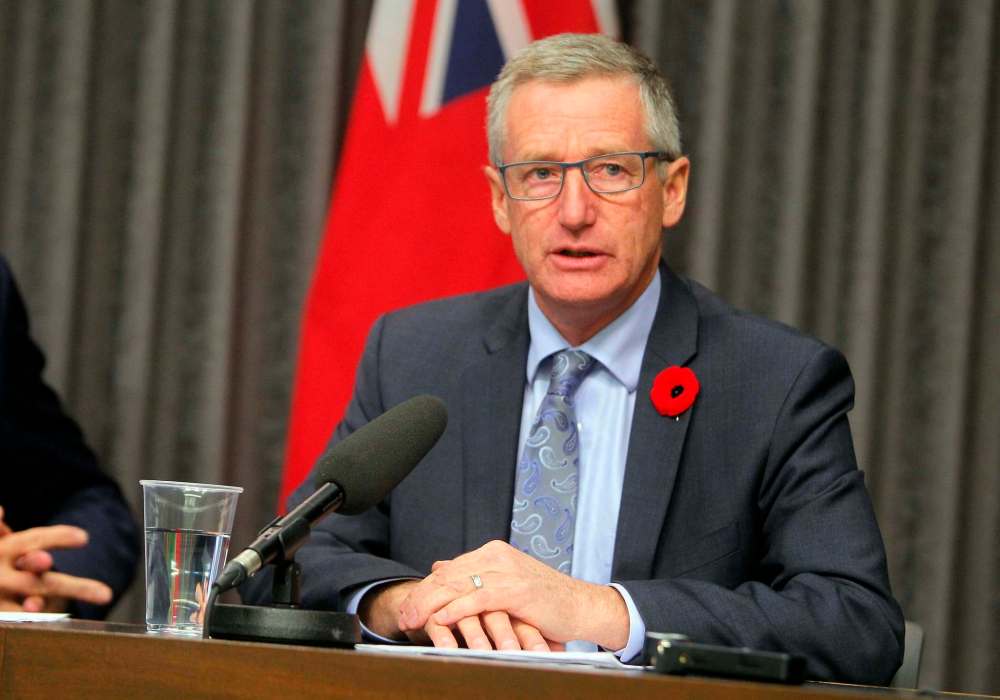
Growth, Enterprise and Trade Minister Blaine Pedersen said Friday that the Pallister government has no idea how many cannabis stores will open in Manitoba on July 2, or which communities will have at least one store operating that day.
“That information is what we’re still working on — when we know, you’ll know,” Pedersen said. “Today, I don’t have a ballpark figure for you.”
Among the many details still to be worked out are “the number and location of the retail stores each proponent will be permitted to operate,” Pedersen said.
As for how many stores each of the four chosen retailers told government it’s capable of operating, and where and by when, “There were different numbers from different companies,” Pedersen said. “They outlined their potential, what they felt they could.”
He said the four companies which the province has conditionally accepted best met the government’s criteria, which include financial capacity, Indigenous participation, the ability to open stores, and the ability to operate a network of stores.
The province is still conducting background checks on the proposed retailers, he said, but, “They need to start looking for rental space” and dealing with permits to operate in municipalities and on First Nations.
“We’ve said from the outset, this process has been rushed,” Pedersen said. “The long-term goal is to eliminate the black market from this. On day one, I don’t think we can eliminate the black market.”
Pedersen said the Pallister government wants to create “a highly competitive retail environment” for legal cannabis, but dismissed any notion that the province will require more than one operator to have a store in each community in order to create competition.
The government won’t interfere with private enterprise by telling it where to set up shop or what its outlets should look like inside or outside, he emphasized.
“We don’t want to get prescriptive,” the minister told reporters. “That’s why we’re leaving it to the private retailers. We don’t want to prescribe how you set up your own store — this is private enterprise.”
Questions such as whether children can accompany their parents into the cannabis stores, in which buyers must be 19, are among the many details yet to be decided, he said. The province has told retailers that if there is another business being conducted on the property — such as a beer vendor — the cannabis store must have a separate entrance and cannot be physically connected directly to any other business.
“All these companies have online sales capacity,” Pedersen pointed out.
Cannabis legalization date bumped back
The July 2 opening date referenced by Pedersen appears highly unlikely, after the federal government’s timeline for cannabis legalization was pushed back this week.
On Tuesday, Senator Peter Harder, who represents the government in the Senate, raised the possibility of procedural measures to fast-track debate on Bill C-45.
On Thursday, Harder and other Senate leaders announced a new timetable for reviewing and voting on the bill. Senators will have their final vote on cannabis legalization “on or before June 7,” according to a Thursday press release from Harder’s office.

On Thursday, Health Minister Ginette Petitpas Taylor sketched out a revised timeline for reporters. After the Senate vote, she explained that Bill C-45 “has to come back to the House.”
“Then from there, we also have to recognize that we’ve advised the Senate last week that provinces and territories have made it very clear to us that they are going to need 8 to 12 weeks for implementation.”
“Therefore, if you do the math, you can certainly see that it certainly won’t be July 2018,” said Petitpas Taylor.
solomon.israel@freepress.mb.ca
@sol_israel
Related Articles
Would-be cannabis retailers hope to get another chance
Advertisement Advertise With Us
Advertisement Advertise With Us
History
Updated on Friday, February 16, 2018 6:34 AM CST: Adds photos, corrects typo
Updated on Friday, February 16, 2018 4:09 PM CST: Complete write-through, fresh art.