

Mayor backs new way to handle 911 mental health, addiction calls
Report suggests switch could divert 10,000 calls away from police, firefighters, paramedics

Advertisement
Read this article for free:
or
Already have an account? Log in here »
To continue reading, please subscribe:

Digital Subscription
One year of digital access for only $205*
- Enjoy unlimited reading on winnipegfreepress.com
- Read the E-Edition, our digital replica newspaper
- Access News Break, our award-winning app
- Play interactive puzzles
*First annual payment billed as $205.00 + GST for one year. This annual subscription will automatically renew at $233.00 + GST every 52 weeks (10% off the regular annual price of $259.35). Offer available to new and qualified returning subscribers only. Cancel any time.
To continue reading, please subscribe:
Add Free Press access to your Brandon Sun subscription for only an additional
$1 for the first 4 weeks*
- Enjoy unlimited reading on winnipegfreepress.com
- Read the E-Edition, our digital replica newspaper
- Access News Break, our award-winning app
- Play interactive puzzles
*Your next Brandon Sun subscription payment will increase by $1.00 and you will be charged $17.95 plus GST for four weeks. After four weeks, your payment will increase to $24.95 plus GST every four weeks.
Read unlimited articles for free today:
or
Already have an account? Log in here »
Mayor Scott Gillingham is enthusiastically endorsing a proposal to change the city’s crisis-response system, potentially diverting 10,000 calls away from overburdened police, fire and paramedic services every year.
The “fourth crisis response pathway” would allow 911 calls that aren’t violent or criminal in nature to be transferred to citywide crisis-response teams, staffed in part through current community resources, which could include the Downtown Community Safety Partnership and The Link’s mobile crisis teams.
A community crisis dispatch and co-ordination hub would receive triaged calls and match them with the teams, which would move them out of the Winnipeg Police Service and Winnipeg Fire and Paramedic Service calls for service.
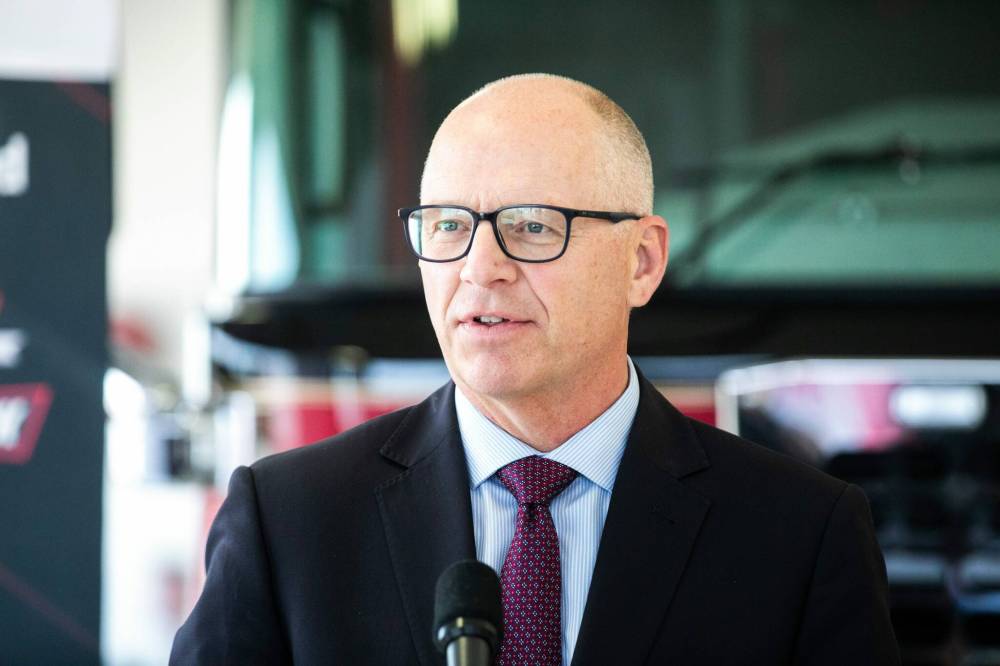
Mikaela Mackenzie/Free Press files
Mayor Scott Gillingham
“Every day, our 911 dispatchers receive calls from Winnipeggers who are in distress, dealing with complex mental health struggles, addiction, or wellness concerns,” Gillingham said after releasing a report on the proposal Tuesday.
“Right now, the system defaults to sending police, firefighters, or paramedics because, really, (those are) the only options that are available at this moment. But a police car, a fire truck or an ambulance isn’t always the right tool for the job, nor the most appropriate response to every call.”
The third-party report led by Pensa Consulting Inc. found the city doesn’t struggle with the lack of services, but the “limited integration and formal pathways connecting existing services and systems.”
“The opportunity is to better connect these existing strengths through a co-ordinated system that delivers compassionate, culturally responsive, trauma-informed care and connects people to the supports they need,” said Maria Cotroneo of Pensa Consulting.
In the future, a secondary line that people could call to access the hub directly would be implemented, Cotroneo said.
A preliminary cost breakdown in the report suggests the model could cost about $6 million yearly, including upgrades to tech infrastructure, staffing and the implementation of a dispatch hub, based on reviews of comparable services across North America. The report notes that actual budget estimates could vary.
After an analysis, the report concluded that 3,855 Winnipeg Police Service calls, or nearly 8,000 hours of officer time, and 6,356 Winnipeg Fire Paramedic Service calls could be redirected to a community response model annually.
WFPS chief Ryan Sneath said this new model “strengthens our ability to work alongside our community partners, who are already doing exceptional work.”
The Winnipeg Police Service handles approximately 20,000 wellness checks a year, and about 53 every day, said Chief Gene Bowers.
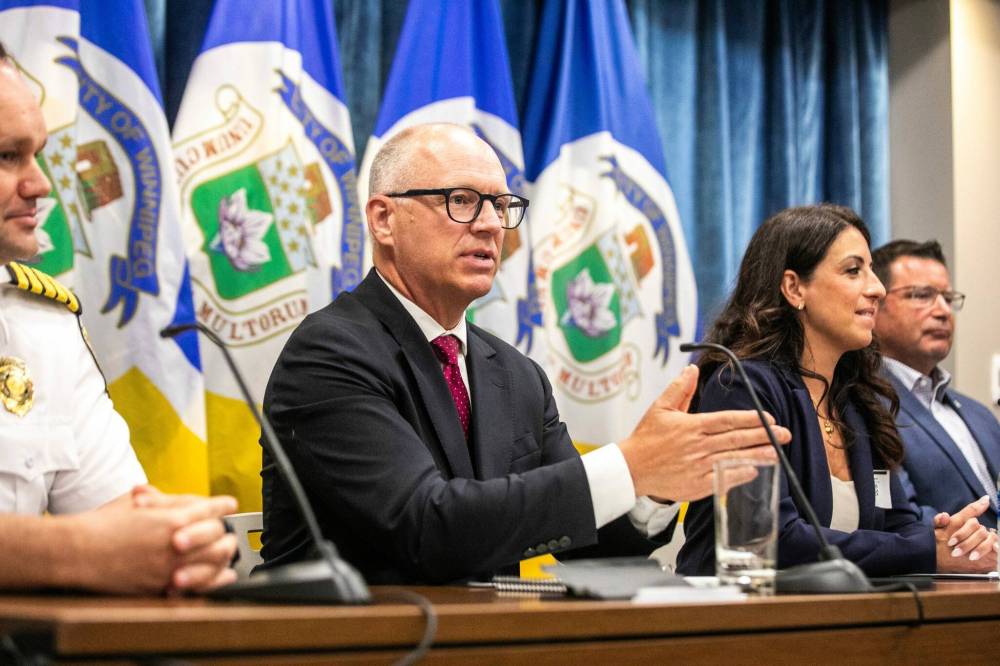
MIKAELA MACKENZIE / FREE PRESS
Mayor Scott Gillingham speaks at the release of the Community Crisis Response report on Tuesday.
MIKAELA MACKENZIE / FREE PRESS Mayor Scott Gillingham speaks at the release of the Community Crisis Response report on Tuesday, July 28, 2026. For Malak story. Free Press 2026
“I’ve been to many mental-health calls, and I can tell you the majority of them are non-violent; it’s people who are looking for help,” he said.
“And over the years, the police have become the go-to, and not because we wanted those calls, it’s just we were the only 24-7 other than fire that was available, so we found ourselves the ones that are addressing these calls.”
City council will consider the proposal in September. Gillingham did not have a proposed start date, but said if it is approved, a pilot project would get the ball rolling before it could be expanded.
Another step, Gillingham said, is buy-in from the province, which he said would “kind of co-own” the program. He expressed confidence that city council and the provincial government will get on board.
Housing, Addictions and Homelessness Minister Bernadette Smith had no comment Tuesday as to whether the province would support the proposal, instead pointing to government funding for mental-health workers in various city programs.
“We are committed to ongoing collaboration with the city, first responders, police and community partners to ensure our front line is well prepared to support the needs of Manitobans,” she said in an emailed statement.
This initiative would operate separately from existing homelessness outreach services, but could integrate them in the future. The Alternative Response to Citizens in Crisis program, which has paired mental-health clinicians with police on some wellness calls since it was launched in 2021, would continue to operate.
Winnipeg’s Police Accountability Coalition has long called for an aspect of emergency response that is based in community organizations and does not involve police presence.
“We’ve just had far too many instances of when police are called in to assist, to help, and they turn out badly, but they turn out badly for the person they were there to help,” said Kate Kehler, a member of the coalition.
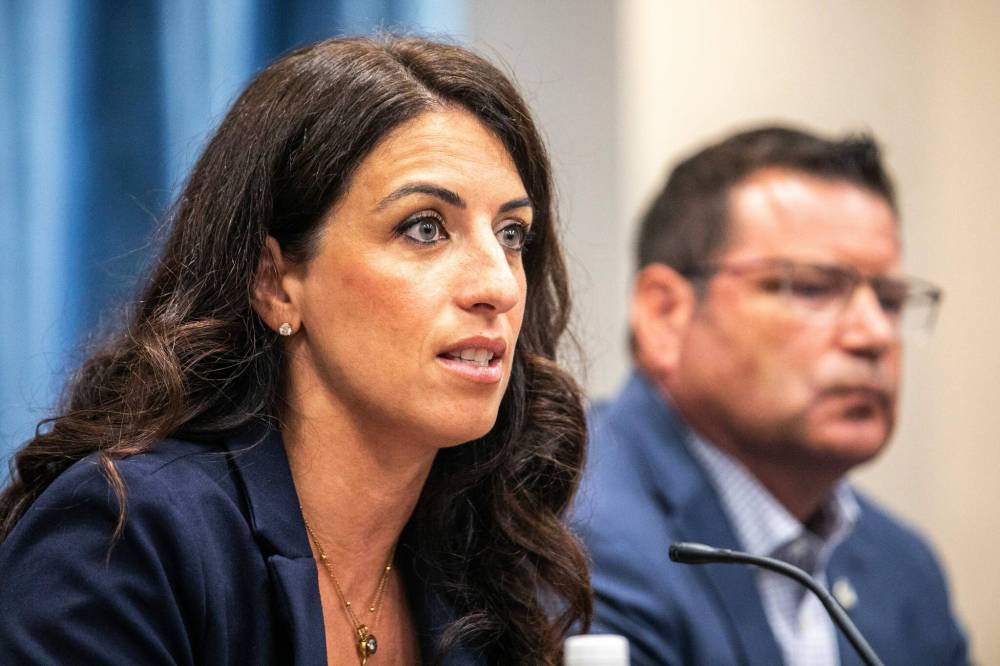
MIKAELA MACKENZIE / FREE PRESS
Maria Cotroneo, with Pensa Consulting Inc, says there is an opportunity for the city to better connect city services at the release of the Community Crisis Response report
“And when I say badly, that’s euphemistically, people have been harmed to outright being killed in these incidents…. We have (police oversight agency Independent Investigation Unit) report after IIU report that basically says it couldn’t have happened differently. Our position would be it could not have happened differently under our current conditions. We could change the current conditions so another response is possible, and therefore another outcome is possible.”
Kehler said governance needs to be separate from other systems while working with them, Indigenous-led and informed and focused on ensuring the community organizations tasked with the project are funded well enough to do the job properly.
City council’s executive policy committee voted in favour of contracting Pensa Consulting to build a proposal for a service that would direct non-emergency calls away from police, firefighters and paramedics in December.
At the time, the United Firefighters of Winnipeg were concerned that a new, separate emergency service would duplicate service while further straining under-resourced fire crews.
Union president Nick Kasper said the results of Tuesday’s report, which suggests the response be integrated into existing infrastructure rather than as a stand-alone emergency service, is a “meaningful evolution” of the original idea.
“We’ve long advocated for sending the right resource to the right call,” Kasper said in a statement.
The Manitoba Government and General Employees’ Union, which represents paramedics and 911 dispatchers, would have liked to have seen vacancies filled first, said president Kyle Ross.
“The idea is not a bad idea at the outset (but) I would much rather (have) seen this report done once we have a fully staffed paramedic service, including 911, to ensure where they’re at and understand what that looks like, and then see if there’s another path that could be better,” he said.
Community services committee chair Coun. Vivian Santos said she has some questions on how the city’s service providers could handle the planned 24-7 model but called the focus on followup with people calling the service “fantastic.”
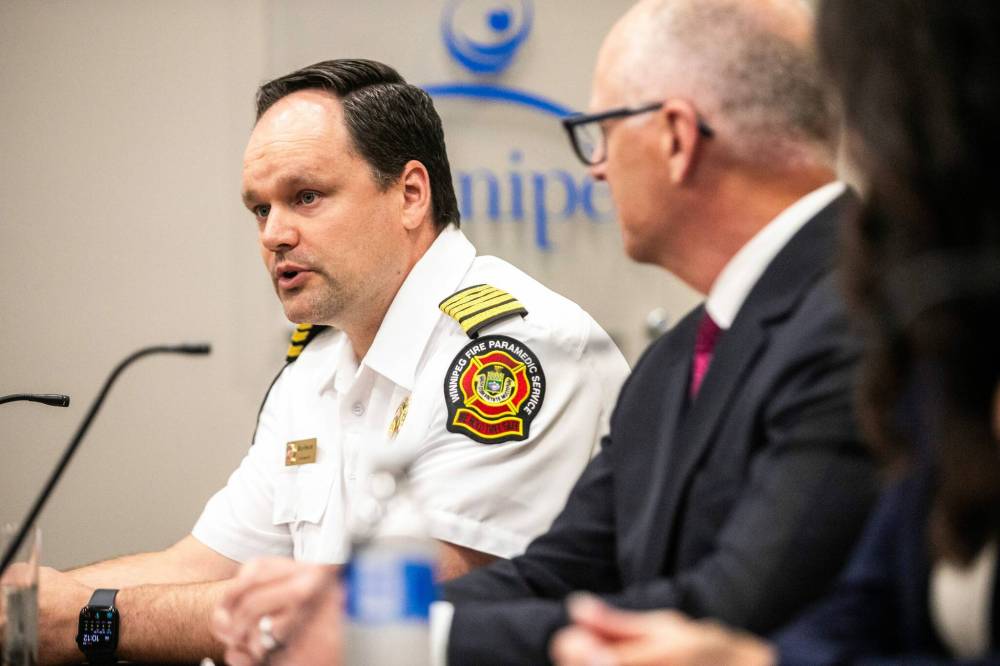
MIKAELA MACKENZIE / FREE PRESS
Winnipeg Fire Paramedic Service chief Ryan Sneath speaks at the release of the Community Crisis Response report on Tuesday.
“That there is a wraparound after-support care… we follow up with them, I think that’s a very important note that I saw in here, which is really highly needed,” said Santos (Point Douglas).

But other councillors were not as enthusiastic.
Coun. Sherri Rollins said the report doesn’t make clear if existing community crisis response organizations are ready to accept the expansion of work.
“There are questions; this report hasn’t been through anyone in the administration in the city, and the report hasn’t been through anyone in the administration at the province,” said Rollins (Fort Rouge-East Fort Garry).
Gillingham first suggested the idea of an additional emergency service that focused on mental-health and addictions crises in 2024.
malak.abas@freepress.mb.ca
Our newsroom depends on a growing audience of readers to power our journalism. If you are not a paid reader, please consider becoming a subscriber.
Our newsroom depends on its audience of readers to power our journalism. Thank you for your support.
Toronto, Ottawa in spotlight
A number of similar crisis response services were considered by the authors of Tuesday’s report.
Maria Cotroneo, who authored the report, said the Winnipeg proposal would operate similar to response teams in Toronto and Ottawa.
Toronto’s Community Crisis Service can be accessed by calling 911 or directly by calling 211. The service, which is fully funded by the city, intervenes in a crisis, provides harm-reduction tools, mental health checks, and cultural supports for Indigenous and Black communities.
It was launched in 2022. Toronto’s 2026 operating budget for social development included $37.3 million in gross and net funding for the service.
In 2025, 84 per cent of the 12,000 calls made to it were completed without police involvement.
In Ottawa, the Alternate Neighbourhood Crisis Response is accessible in certain neighbourhoods through 911 or 211.
The program focuses on mental health and substance use crisis support, while providing wellness checks, referrals to resources and other supports.
Program data from its launch, on Aug. 15, 2024, to March 31, 2026, shows 93.4 per cent of the 6,812 calls received were completed without police involvement.
The pilot project cost $2.5 million in its first year.
This summer, the program was expanded to include more areas. Council approved $700,000 in its 2026 budget for the expansion.
Our newsroom depends on a growing audience of readers to power our journalism. If you are not a paid reader, please consider becoming a subscriber.
Our newsroom depends on its audience of readers to power our journalism. Thank you for your support.
Advertisement Advertise With Us
Advertisement Advertise With Us
History
Updated on Tuesday, July 28, 2026 5:47 PM CDT: Adds details, comments, photos.