


Health-care fix must start with bureaucracy reduction

Advertisement
Read this article for free:
or
Already have an account? Log in here »
To continue reading, please subscribe:

Digital Subscription
One year of digital access for only $205*
- Enjoy unlimited reading on winnipegfreepress.com
- Read the E-Edition, our digital replica newspaper
- Access News Break, our award-winning app
- Play interactive puzzles
*First annual payment billed as $205.00 + GST for one year. This annual subscription will automatically renew at $233.00 + GST every 52 weeks (10% off the regular annual price of $259.35). Offer available to new and qualified returning subscribers only. Cancel any time.
To continue reading, please subscribe:
Add Free Press access to your Brandon Sun subscription for only an additional
$1 for the first 4 weeks*
- Enjoy unlimited reading on winnipegfreepress.com
- Read the E-Edition, our digital replica newspaper
- Access News Break, our award-winning app
- Play interactive puzzles
*Your next Brandon Sun subscription payment will increase by $1.00 and you will be charged $17.95 plus GST for four weeks. After four weeks, your payment will increase to $24.95 plus GST every four weeks.
Read unlimited articles for free today:
or
Already have an account? Log in here »
Hey there, time traveller!
This article was published 10/10/2023 (1093 days ago), so information in it may no longer be current.
Manitoba’s incoming NDP government will have plenty of dragons to slay as it attempts to fulfill its election pledge to “fix” the province’s beleaguered health-care system.
But it won’t be able to do much to slash wait times or improve patient care until it takes care of job No.1: reducing the size of the health-care bureaucracy that ballooned under the outgoing Progressive Conservative government.
When the Tories won office in 2016, there were three layers of bureaucracy in health care, some of which had grown considerably under the previous NDP government: hospital administrations and their boards of directors, regional health authorities and Manitoba Health.
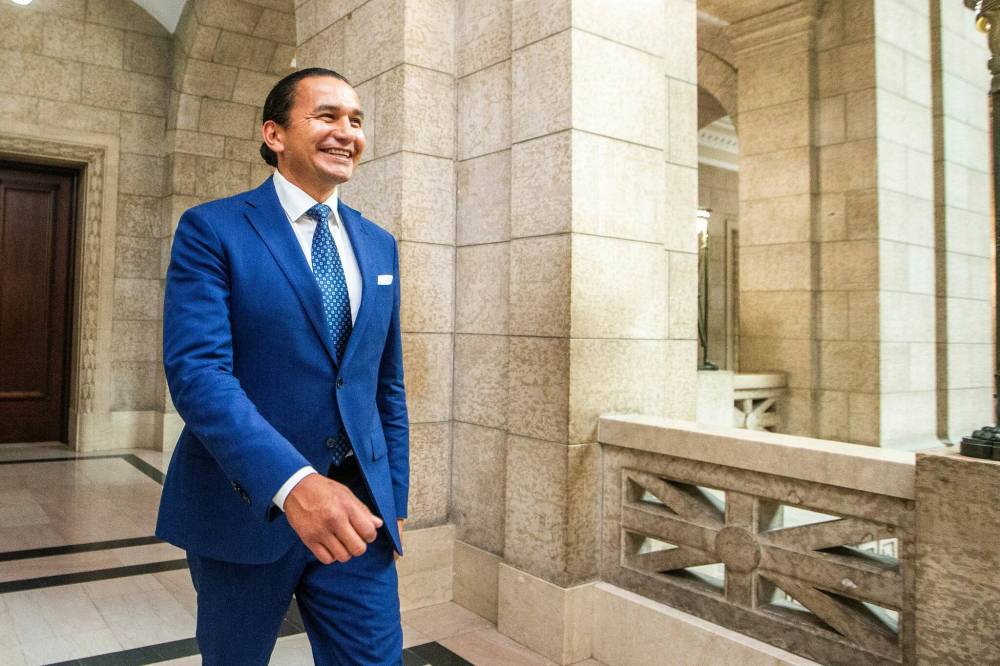
MIKAELA MACKENZIE / WINNIPEG FREE PRESS
The day after the NDP won the Oct. 3 election, premier-designate Wab Kinew was asked whether Manitobans can expect fewer layers of bureaucracy in health care under his government. His answer was “yes.” He explained why:
The Tories kept those, and added two more: Shared Health, a large government bureaucracy that oversees health care across the province, and, more recently, the Diagnostic and Surgical Recovery Task Force.
The latter was initially created to find ways to clear hospital backlogs that built up during the COVID-19 pandemic. As government bureaucracies often do, however, the task force morphed into something bigger. It now has its own budget and directly funds hospital operations.
There are now five layers of bureaucracy in health care, each with its own budget, office space, senior executives, support staff, analysts and communications personnel. Their mandates are fuzzy and their areas of responsibility overlap. No one really knows who is calling the shots, including who has the authority to approve new programs or fill job vacancies.
Hospitals can barely order a box of paper clips these days without having to get the green light from a senior bureaucrat.
It’s a rat’s nest. It causes confusion and inertia in the system and it undermines patient care. And it often prevents hospitals and front-line workers from quickly responding to changing circumstances.
It’s the furthest thing from a patient-focused system. Until that’s fixed, it’s hard to imagine how a new government can make significant improvements in health care.
The day after the NDP won the Oct. 3 election, premier-designate Wab Kinew was asked whether Manitobans can expect fewer layers of bureaucracy in health care under his government. His answer was “yes.” He explained why:
“One of the things we campaigned on … is to simplify the bureaucracy so there’s more resources for the front lines but also more empowerment, more decision-making on the front lines,” said Kinew. “I think a lot of health-care workers, whether they’re the physician, the nurse, the x-ray tech or the lab tech, they feel they’ve been infantilized by too much bureaucracy in the health-care system.”
Kinew wouldn’t say specifically which layers he would roll back. As with all the questions he fielded that day, the answer was stay tuned, there’s more to come.
But he did elaborate further on why there needs to be less bureaucratic control in health care and more decision-making at the front lines. He said it’s part of “fixing the culture” of health care.

“Yes, we need better working conditions, but we also need to show more respect by ensuring the people who devoted so many years to training, and devoted their lives to building their clinical experience, that we show them that is valued,” he said.
It’s a mammoth task. Government bureaucracies aren’t easily dismantled or reduced in size. Well-paid bureaucrats find ways to protect their empires. Nevertheless, it will be imperative for the incoming government to reduce the size of the bureaucracy and bring decision-making closer to patient care.
Hospitals need to regain their identities. They need to be freed from the central control of government bureaucracies. Sure, it’s important for health-care facilities to co-ordinate services, avoid unnecessary duplication and pool resources where needed. But there’s a difference between that and having to go cap-in-hand to a central bureaucracy every time a hospital wants to make an operational change.
Reducing the size of the health-care bureaucracy will require strong political direction from the new government. It will need more than just lip service.
It’s not enough to just spend more money in health care to improve patient care. The system is in desperate need of reform. Part of that includes recruiting more health-care professionals and employing fewer pencil-pushers. It will be one of the NDP’s most daunting tasks.
Tom has been covering Manitoba politics since the early 1990s and joined the Winnipeg Free Press news team in 2019.
Our newsroom depends on a growing audience of readers to power our journalism. If you are not a paid reader, please consider becoming a subscriber.
Our newsroom depends on its audience of readers to power our journalism. Thank you for your support.
Tom has been covering Manitoba politics since the early 1990s and joined the Winnipeg Free Press news team in 2019.
Our newsroom depends on a growing audience of readers to power our journalism. If you are not a paid reader, please consider becoming a subscriber.
Our newsroom depends on its audience of readers to power our journalism. Thank you for your support.
Advertisement Advertise With Us
Advertisement Advertise With Us