Interactive Map: Mosquito Watch

About mosquito counting Every spring, the City of Winnipeg’s Insect Control Branch fires up a nuisance-mosquito control program that begins with applying larvicides bodies of standing water, monitoring the development of mosquito larvae and counting the bloodsuckers that show up in city traps.

Read this article for free:

or

Already have an account? Log in here »

To continue reading, please subscribe:

Subscribe and receive a limited-edition Free Press branded hat or tote.

Digital Subscription

One year of digital access for only $205*

  • Enjoy unlimited reading on winnipegfreepress.com
  • Read the E-Edition, our digital replica newspaper
  • Access News Break, our award-winning app
  • Play interactive puzzles

*First annual payment billed as $205.00 + GST for one year. This annual subscription will automatically renew at $233.00 + GST every 52 weeks (10% off the regular annual price of $259.35). Offer available to new and qualified returning subscribers only. Cancel any time.

To continue reading, please subscribe:

Add Free Press access to your Brandon Sun subscription for only an additional

$1 for the first 4 weeks*

  • Enjoy unlimited reading on winnipegfreepress.com
  • Read the E-Edition, our digital replica newspaper
  • Access News Break, our award-winning app
  • Play interactive puzzles
Start now

*Your next Brandon Sun subscription payment will increase by $1.00 and you will be charged $17.95 plus GST for four weeks. After four weeks, your payment will increase to $24.95 plus GST every four weeks.

Winnipeg Nuisance Mosquito Trap Counts

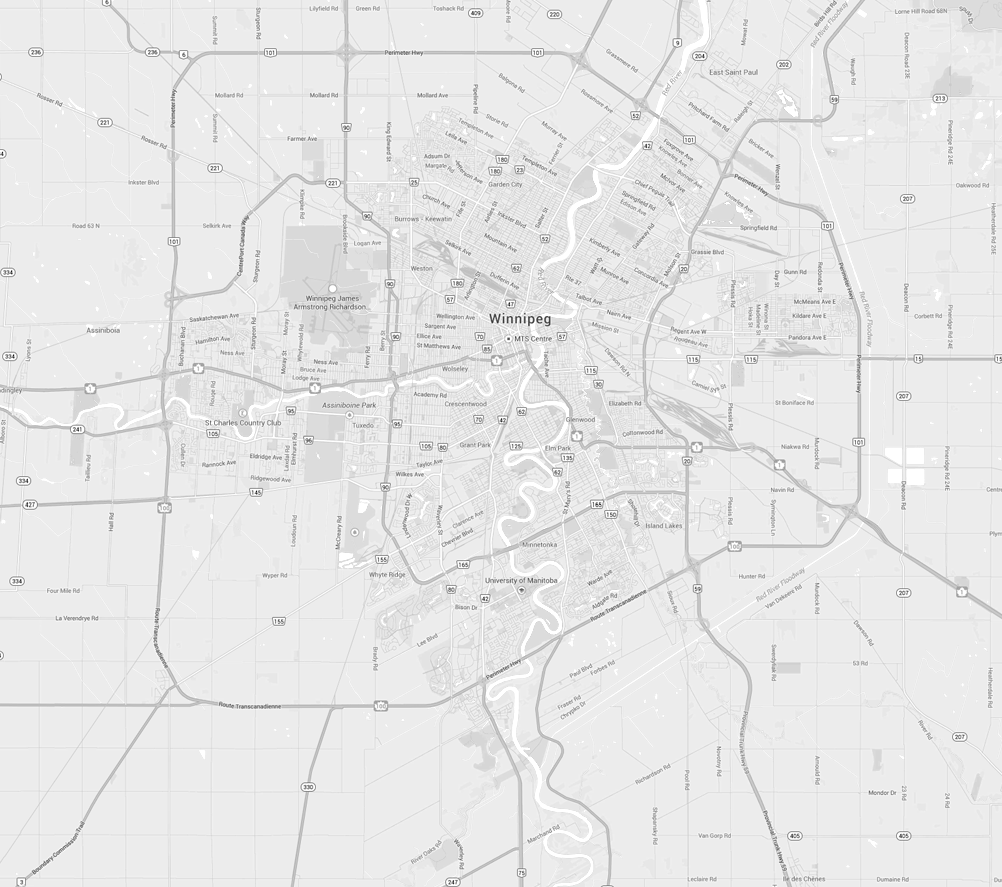
The graphic below shows the number of adult female nuisance mosquitoes last observed in each of the city’s traps. In the summer this count is usually updated daily.

Trap locations and descriptions are approximate; the city doesn't release exact locations of traps to avoid tampering and vandalism.

If looking at this graphic makes you itchy — or if you want to also monitor adulticiding factor analysis, quadrant averages, or other city skeeter stats — visit the city’s own trap-count site.

Legend
 

Below 25


25 and 50


50 and 100


Over 100

Counts for date:  

Click on any circle for a graph of recent trap counts for that location.


Winnipeg Map

About mosquito counting

Every spring, the City of Winnipeg’s Insect Control Branch fires up a nuisance-mosquito control program that begins with applying larvicides bodies of standing water, monitoring the development of mosquito larvae and counting the bloodsuckers that show up in city traps.
Jeff De Booy / Winnipeg Free Press Archives
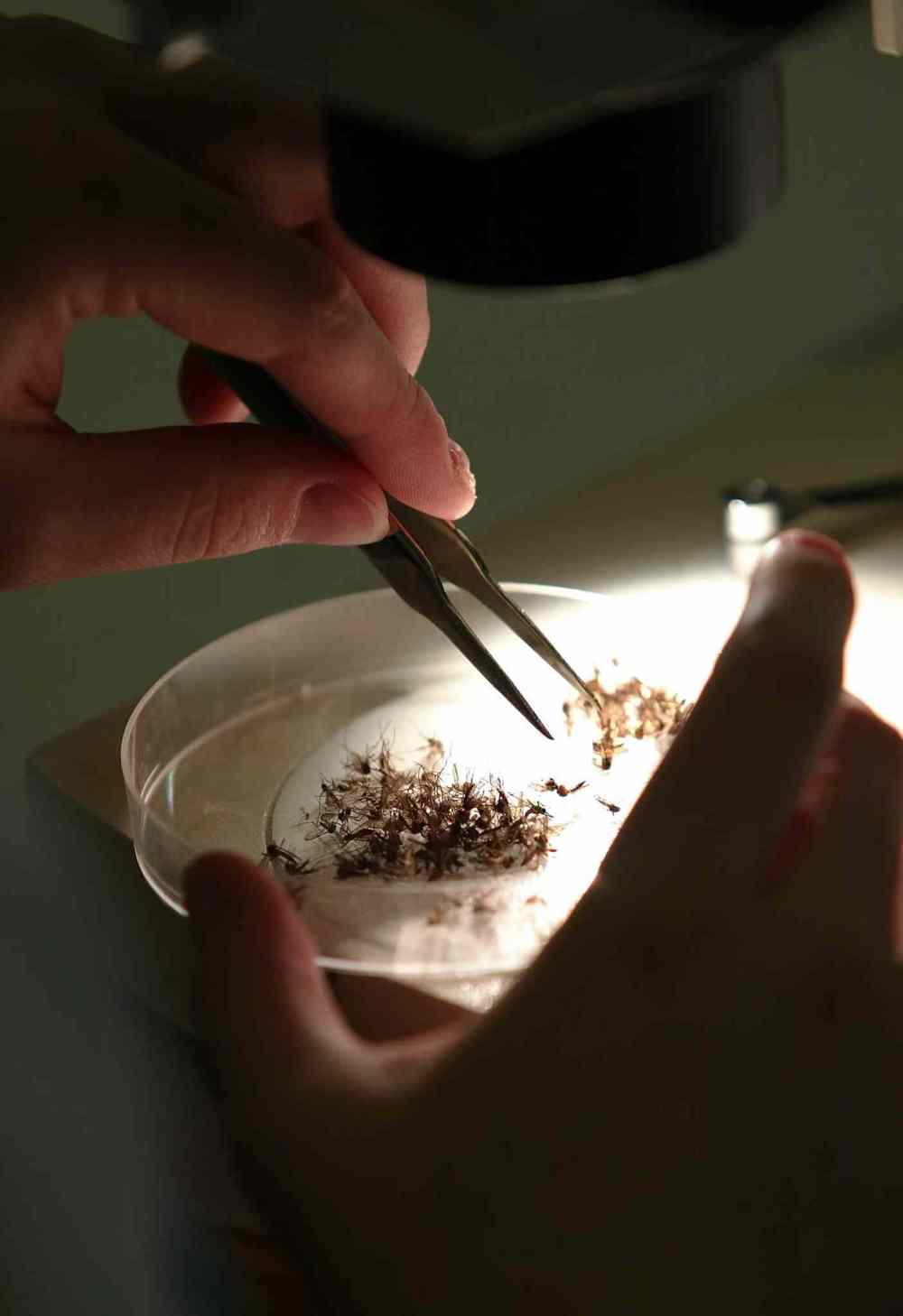
A Winnipeg Insect Control Branch worker counts mosquitoes caught in one of the city's traps.
Jeff De Booy / Winnipeg Free Press Archives A Winnipeg Insect Control Branch worker counts mosquitoes caught in one of the city's traps.

Nuisance mosquito species are those that are not known to transmit diseases to people. They include Ochlerotatus dorsalis and Ochlerotatus fitchii, which usually mature in the spring, and Aedes vexans, a nasty biter that matures closer to the summer.

The Insect Control Branch monitors 28 traps inside the city and another nine on the fringes of the city. Thanks to a council-approved policy created to prevent politicians from monkeying around with mosquito control, the city can not spray for adult mosquitoes until the “adulticiding factor analysis” is rated as high — essentially, we have a lot of nuisance mosquitos, and conditions are favourable to breed even more of them.

It’s widely accepted mosquito fogging is cosmetic: It only reduces the number of adults on a temporary basis. Preventative measures such as larviciding and eliminating bodies of standing water are considered way more effective. More than anything, precipitation, temperature and soil moisture — basically, the weather — determines whether we wind up with a lot of mosquitoes in any given summer.

Nuisance-mosquito monitoring is entirely separate from a provincial program that monitors the numbers of Culex tarsalis, a species that begins biting people later in the summer and is known to convey West Nile virus to humans. The province — not the city — determines whether the city will fog for West Nile-carrying mosquitoes.

History

Updated on Tuesday, August 9, 2022 2:29 PM CDT: Updated in new platform.

Report Error Submit a Tip

More Stories

Jets’ Copp rarin’ to go, but COVID restrictions put crimp in plans

Jason Bell 7 minute read Preview

Jets’ Copp rarin’ to go, but COVID restrictions put crimp in plans

Jason Bell 7 minute read Wednesday, May. 27, 2020

Andrew Copp is amped up to rejoin his Winnipeg Jets teammates on the ice but isn’t considering a return to Manitoba any time soon.

The 25-year-old forward, spending the coronavirus-caused pause to the NHL’s 2019-20 season at his home in Michigan, wants to begin skating in preparation for the proposed Stanley Cup playoffs later this summer but would need to quarantine at his Winnipeg apartment for two weeks before hitting the ice.

And while he understands why the health directive is in place, he said being cooped up is key preparation time wasted.

“I’ve been staying in shape, I’ve worked so hard to continue to train and try to do the best I can with what’s at my disposal. I feel that would go out the window if I was just sitting in my apartment for two weeks,” Copp said Wednesday during a video chat with reporters.

Read
Wednesday, May. 27, 2020

Interactive Map: Mosquito Watch

Map by Andrew Burton and Eric Bailey 2 minute read Preview

Interactive Map: Mosquito Watch

Map by Andrew Burton and Eric Bailey 2 minute read Tuesday, Aug. 9, 2022

Heading outdoors? Need repellent? Find out with our interactive map showing the number mosquitoes caught in traps around the city.

Read
Tuesday, Aug. 9, 2022

Trudeau urges 'peaceful' end to blockades

Mia Rabson, The Canadian Press 5 minute read Preview

Trudeau urges 'peaceful' end to blockades

Mia Rabson, The Canadian Press 5 minute read Monday, Feb. 24, 2020

OTTAWA - The spirit of reconciliation requires a "peaceful resolution" to the blockades that have kept rail traffic from operating across the country, Prime Minister Justin Trudeau said Monday, hours after Ontario Provincial Police began dismantling one in eastern Ontario.

Trudeau convened an early morning meeting of his cabinet's incident-response group about an hour after the police moved in to take down barriers across the rail line on Tyendinaga Mohawk Territory in eastern Ontario, arresting several people in the process.

That meeting also came about 12 hours after Teck Resources Ltd. announced it was withdrawing its application to build a massive new oilsands mine in northern Alberta, a decision Conservative Leader Andrew Scheer said is entirely a result of Trudeau's doing "literally nothing" to end the blockades for almost three weeks.

The blockades have gripped the government's attention as Trudeau has tried to find a path forward that respects Indigenous rights as he has also called for the rule of law to be followed. The one at Tyendinaga was the most economically damaging but others have gone up intermittently on rail lines, roads and bridges from coast to coast.

Read
Monday, Feb. 24, 2020

Students must be at forefront in strike talks

Editorial 4 minute read Preview

Students must be at forefront in strike talks

Editorial 4 minute read Tuesday, Nov. 16, 2021

New Manitoba premier Heather Stefanson and senior ministers have gone to considerable lengths to distance themselves from many unpopular aspects of the legacy of former premier Brian Pallister. The strike by University of Manitoba faculty is an opportunity to show how the new PC team is different from the old.

About 1,200 professors and librarians went on strike Nov. 2 after contract talks broke down over salary increases. There is a discouraging sense of déjà vu to seeing professors on the picket line instead of lecturing to a class — the last U of M faculty strike, in 2016, lasted for 21 days.

Ms. Stefanson and Advanced Education Minister Wayne Ewasko might say they want to stay out of the matter and let collective bargaining proceed without direct government interference but, like it or not, the past actions of their government are at the crux of the job action.

Faculty say they are striking because Mr. Pallister’s government imposed restrictive measures that froze wages in 2016, giving U of M professors some of the lowest salaries of Canadian research universities. They say this rock-bottom pay scale makes it hard to attract and keep good staff, with the inevitable result that students will look to other provinces for a highly regarded education.

Read
Tuesday, Nov. 16, 2021

Festival runs on their spirit

Erin Lebar and Jen Zoratti 9 minute read Preview

Festival runs on their spirit

Erin Lebar and Jen Zoratti 9 minute read Saturday, Jul. 7, 2018

It takes a lot of people to create the temporary village known as the Winnipeg Folk Festival.

The hands that shape the event belong to more than 2,800 volunteers who contribute more than 60,000 hours of work every year. Whether they’re wrangling artists, serving food, hauling gear, marshalling the parking lot, keeping the site clean and safe or painting faces, volunteers make up the 61 crews that run every part of the four-day festival, which is in its 45th year.

The volunteers also contribute to the community spirit that folk fest is known for.

“Every year, we create a ‘Volunteer Wall of Love’ located just inside the main gate on the way to Shady Grove, as a tribute to the hard work and incredible dedication of our 2,850 volunteers,” says Karla Ferguson, the festival’s volunteer co-ordinator. “It’s usually an interactive mural where people can sign their names or leave a note of thanks, but we wanted to do something special for our 45th festival.

Read
Saturday, Jul. 7, 2018

A decade of deadly delay

Ryan Thorpe 13 minute read Preview

A decade of deadly delay

Ryan Thorpe 13 minute read Wednesday, Feb. 23, 2022

For the past 11 years, independent researcher and traffic-safety activist Christian Sweryda has been urging the City of Winnipeg to install eye-level safety lights at pedestrian corridors.

It has been a long, drawn-out battle, featuring a forgotten report, a pilot project bordering on the absurd, a spate of major crashes and dead children.

Despite the deaths and near-tragedies, the city has resisted the mass rollout of a cheap and proven safety initiative. To this day, the vast majority of pedestrian corridors in Winnipeg do not have eye-level safety lights.

The financial cost of delays is minuscule, but the human cost has been immeasurable.

Read
Wednesday, Feb. 23, 2022