Forced to look, after generations of looking away Canadians were shocked by news of unmarked children’s graves at the sites of residential schools, but the stories just confirmed what has long been known and ignored; what matters now is how far the outrage takes us toward reconciliation
Read this article for free:
or
Already have an account? Log in here »
To continue reading, please subscribe:
Digital Subscription
One year of digital access for only $1.44 a week*
- Enjoy unlimited reading on winnipegfreepress.com
- Read the E-Edition, our digital replica newspaper
- Access News Break, our award-winning app
- Play interactive puzzles
*Billed as $5.77 plus GST every four weeks. After 52 weeks, price increases to the regular rate of $19.95 plus GST every four weeks. Offer available to new and qualified returning subscribers only. Cancel any time.
To continue reading, please subscribe:
Add Free Press access to your Brandon Sun subscription for only an additional
$1 for the first 4 weeks*
- Enjoy unlimited reading on winnipegfreepress.com
- Read the E-Edition, our digital replica newspaper
- Access News Break, our award-winning app
- Play interactive puzzles
*Your next Brandon Sun subscription payment will increase by $1.00 and you will be charged $17.95 plus GST for four weeks. After four weeks, your payment will increase to $24.95 plus GST every four weeks.
Read unlimited articles for free today:
or
Already have an account? Log in here »
Hey there, time traveller!
This article was published 27/12/2021 (1753 days ago), so information in it may no longer be current.
This was the year that Canada could no longer look away.
It was the year that it came face-to-face with a history it had long tried to forget, because the forgetting was convenient, because the forgetting meant that it was possible to plead innocence, or to insist that it had no more responsibility for the wreckage or that there were no more amends to make.
Now, as we look back on the year’s biggest stories, we cannot forget the discoveries of unmarked residential school graves.
It took a lot, in 2021, for news of significance to cut through the deluge of headlines thrown off by COVID-19. As with the year before, the pandemic sucked up most of Canada’s news gathering resources and also most of its reserves of attention, leaving little space for other stories to receive due consideration; there will be much that we missed, in these years.
The discovery of the graves was different. It was a headline that shocked the nation, and that shock told a story of its own, and that story kept rolling through the summer, gathering steam until it had convened a difficult but long-awaited public discussion about what exactly must be reconciled with, in this country, and what the road forward must mean.
Is it all about timing? Reconciliation in Canada has long moved in fits and starts, as if the truth of what happened on these lands is too hot for non-Indigenous Canadians to touch all at once. The way it seems to work is that stories that force us to reckon with these truths pile up, building pressure until something finally bursts and the truth is poured out to see.
That is what happened in late May, when the Tk’emlúps te Secwepemc First Nation near Kamloops, B.C., announced that ground-penetrating radar had located 215 unmarked graves near the site of the former residential school on its territory, where the National Centre for Truth and Reconciliation has documented the names of at least 51 children who died.
Over the months that followed, other communities finished ground searches, turning up their own fields of grief. In June, the Cowessess First Nation in Saskatchewan’s Qu’Appelle Valley announced it had found 751 unmarked graves on the site of the Marieval Indian Residential School; so far, about 300 have been identified. (Not all belong to children.) In B.C., the Lower Kootenay Band found 182; the Penelakut Tribe, 160.
There will be more of these discoveries in the years to come. Other communities are now planning ground radar searches, including here in Manitoba. For them, finding and potentially identifying the graves is part of a long and painful journey to healing, at knitting together a world rent asunder when the Catholic Church and the RCMP took their children.
What was, perhaps, most remarkable about how much traction the story got, is how little of it was actually new. If you were watching only the headlines, you might think that this was the first time Canada had become aware of the scope of deaths in residential schools, but that information had been sitting right out in the open for generations.
Survivors knew it. First Nations communities knew it. The government of Canada knew it a century ago, when even a federal official tried to raise the alarm about the schools’ appalling conditions. Contemporaneous newspaper accounts proved it, as did witness accounts and records collected during the Truth and Reconciliation Commission’s seven-year mission.
All of that evidence was there all along, and it hadn’t really been hidden. It had been gathered and studied and reported in media. It wasn’t news that thousands of children perished in dismal conditions, or that their deaths had been treated with casual disdain by the Catholic Church that ran the schools, and the federal government that supported them.
But the graves forced Canada to look, after it had, for so long, allowed itself to look away.
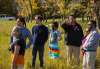
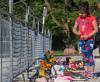
Now, the nation was watching, and it was mourning. For a while, orange bloomed all over the country, on T-shirts worn to rallies and signs displayed in house windows. Canada Day festivities were muted everywhere, due both to the pandemic but also the cresting awareness of what all we celebrate, when we cheer the creation of the Canadian state.
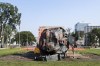
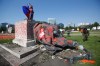
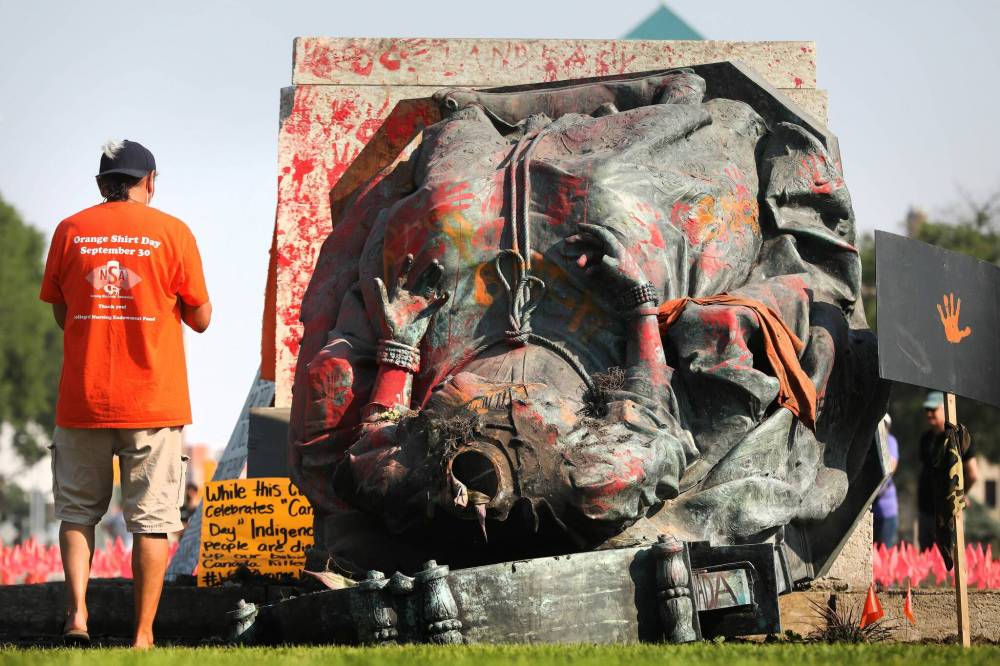
In Winnipeg, activists at a July 1 protest pulled down a statue of Queen Victoria, under whose reign the residential school system was created. On Sept. 30, the first National Day for Truth and Reconciliation, thousands of people — different people — flowed through downtown, marching from The Forks to St. John’s Park, where they stood together in hope.
These events made ripples that went further than anyone might have expected. In Manitoba it was, at least in part, former premier Brian Pallister’s ham-fisted response to these events that led the Tory caucus to show him the door; the time for Canadian politicians to ignore — or worse, inflame — if still far from over, is evidently coming to an end.
What remains to be seen is what this national reckoning with the truth of residential schools will change. In the summer, Canadians wore orange shirts in a show of solidarity with Indigenous grief; there’s still far less interest in connecting that with the concrete ways the schools’s legacy still impact Indigenous peoples and what the future of reconciliation must mean.
When unhoused Indigenous people are forced by police from the bus shacks where they take shelter in winter, that is the legacy residential schools wrought. When Indigenous children are seized from their families, that is the legacy residential schools wrought. The legacy of the schools is one of generations of disconnection, poverty, trauma and pain.
It’s easier for Canada to mourn children who died, than to care for the adults the children who survived became.
Yet in truth, there is hope. Because, in the wake of this national conversation about residential schools and reconciliation, there were so many moments of beauty, often at the most grassroots levels of our communities. Conversations made new relationships, and relationships became collaborations, and each new step brings us closer to what sharing can mean.
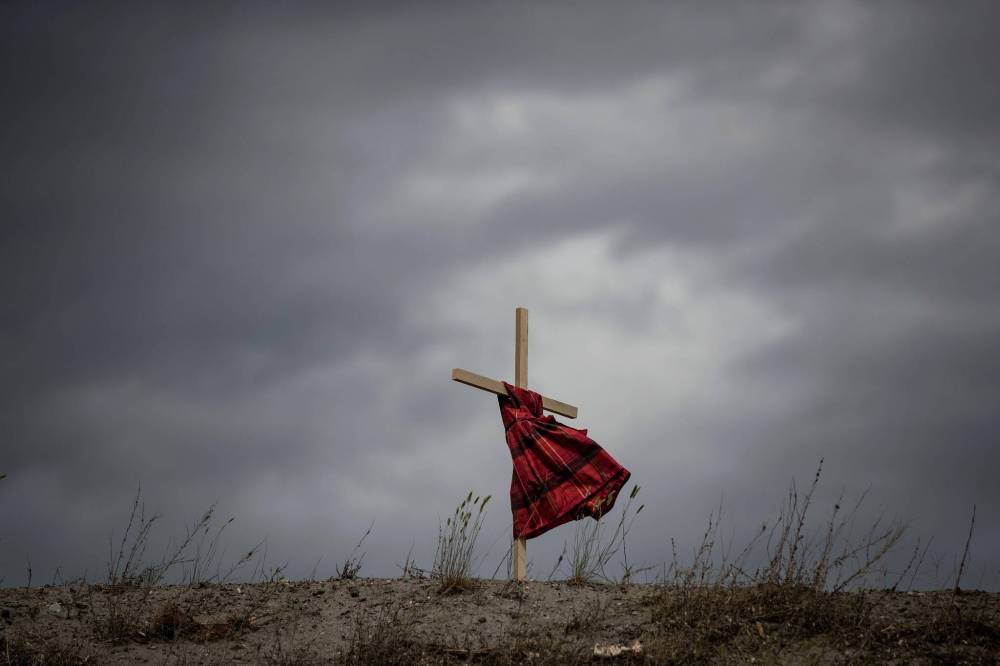
There are a lot of things we don’t know about the graves. We don’t know how many of them hold the remains of children taken to residential schools; the same graveyards were often used as community cemeteries. We don’t know if they were always unmarked, or if some once had wooden crosses that time has eaten away.
But the importance of this story has never been the graves. It’s how the graves tell the story we’ve known since the start: that children in residential schools perished at devastating rates, even compared to the shorter, harsher lives of the era. We know they died mostly from disease, to which they had been rendered especially vulnerable due to overcrowding and malnutrition.
We know that their families weren’t always notified. We know that when the schools recorded these deaths, they sometimes did not even note the children’s names. We know that children were often taken away under threat of RCMP force and put on trains and planes that whisked them hundreds of kilometres away from their families, their people, their homes.
There is a word for all of this. There is a word for a system into which people from specific ethnic groups are taken without consent and thrown into machine that aims to wrest away their names, language, stories, families and traditions, all with a goal to ensure that, within a few generations, they would no longer exist as a people who can define who they are.
We know the word. We ought to say it. This was the year Canada could no longer ignore its genocide.
melissa.martin@freepress.mb.ca

Our newsroom depends on a growing audience of readers to power our journalism. If you are not a paid reader, please consider becoming a subscriber.
Our newsroom depends on its audience of readers to power our journalism. Thank you for your support.
Related Articles
Toppled Manitoba statues led to big changes